Accounting Firm Website Design: 6 Full-Page Teardowns
See six accounting firm websites analyzed section by section, with practical guidance for client fit, service tiers, specialization, consultation, pricing, secure portals, and lead qualification.
 Anvisha Pai, Co-founder & CEO, Moda
An accounting firm website should make fit obvious before it asks for a consultation. A venture-backed startup, a local owner preparing a tax return, and a company seeking outsourced finance leadership need different expertise, proof, and intake. Strong pages reveal whom the firm serves, how deep the relationship can become, and what belongs in a secure client workflow rather than a public form.
The accounting website framework
- Ideal client: Can visitors identify their business type, stage, location, and problem?
- Service depth: Does the firm distinguish bookkeeping, tax, compliance, reporting, controller, and CFO work?
- Expertise: Are credentials, niches, people, resources, and relevant evidence visible?
- Engagement model: Is pricing fixed, packaged, scoped, or consultation-led?
- Qualification: Does the inquiry collect enough context without requesting confidential documents or sensitive financial data?
- Client boundary: Are secure portal, payment, upload, and support routes clearly separated from marketing forms?
1. Kruze Consulting: make specialization compound
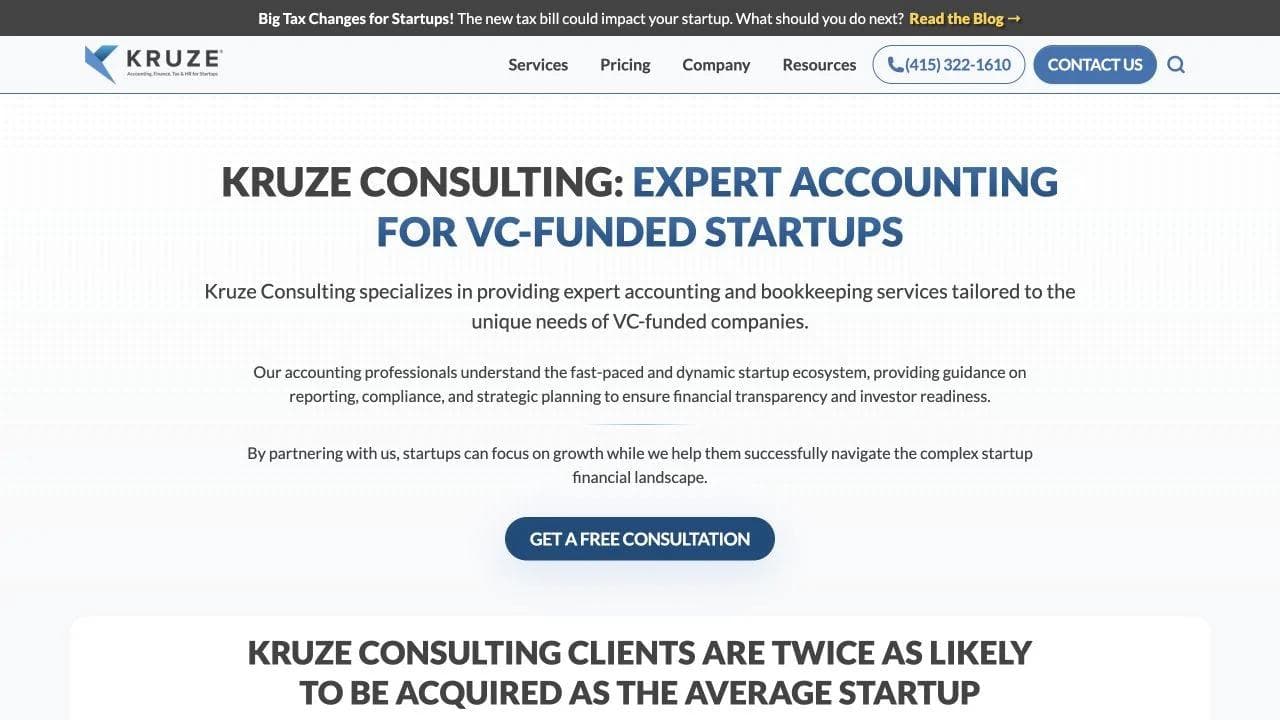
Kruze Consulting states that it serves venture-funded startups. That narrow position makes the rest of the page easier to design: the proof, services, resources, and consultation can all speak to the same operating model.
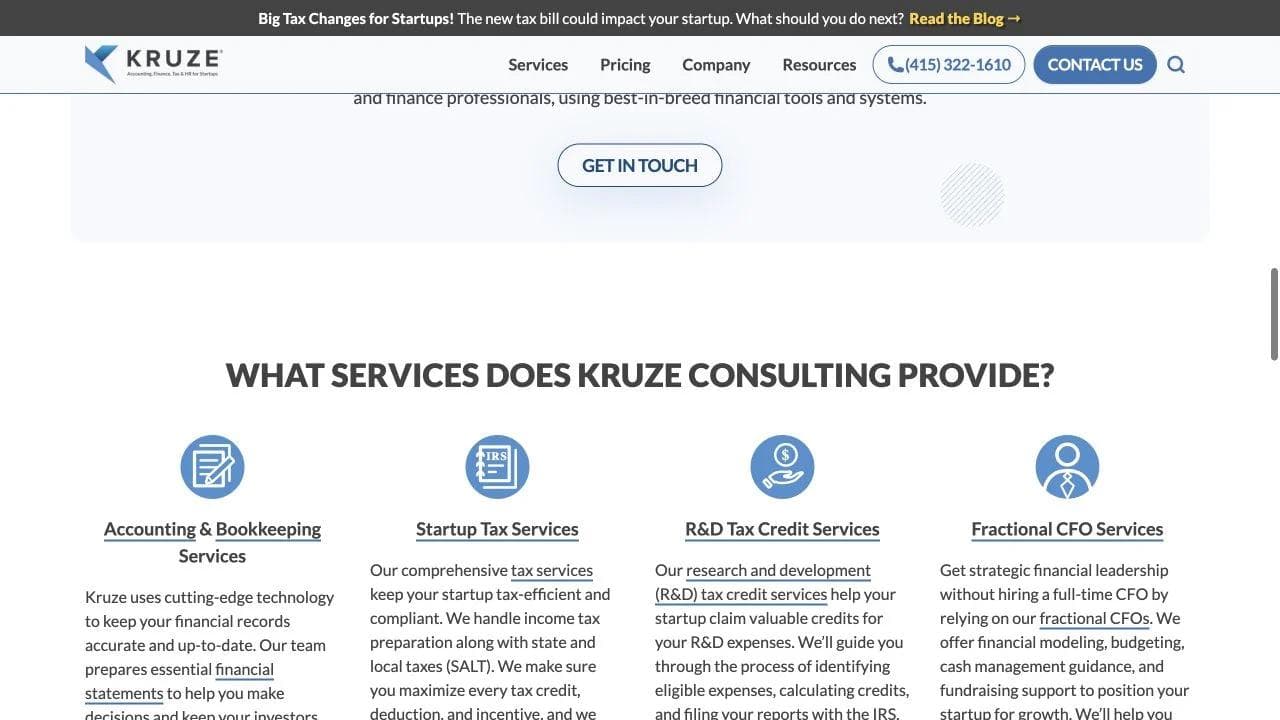
The center of the page connects accounting services with startup-specific questions, customer evidence, and educational depth. The resources are not an unrelated blog. They demonstrate that the firm understands fundraising, runway, taxes, reporting, and finance operations over the startup lifecycle.
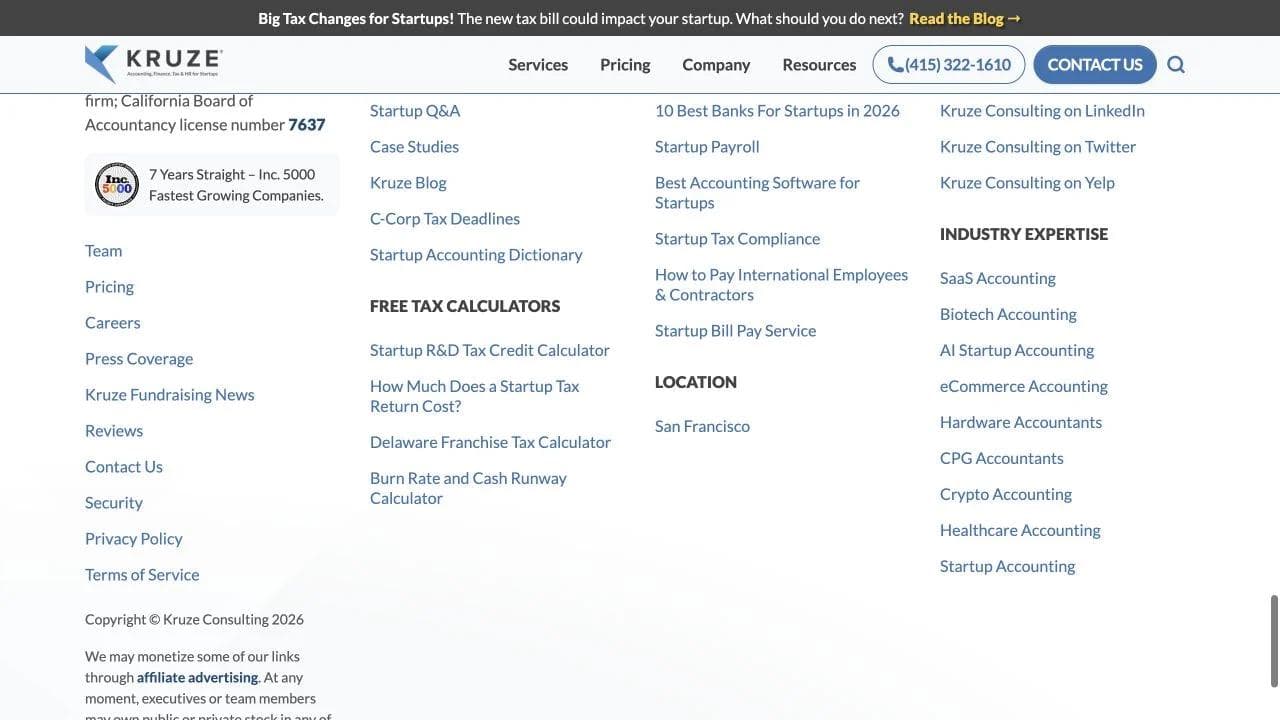
The closing routes qualified prospects toward a conversation after they have seen specialization and evidence. That is a stronger sequence than opening with a long contact form.
What to borrow
- Choose a niche that changes the services, proof, and content, not only the headline.
- Turn recurring client questions into an expertise layer.
- Qualify the consultation around company stage and finance needs.
What to improve
Dense expertise can overwhelm an early-stage visitor. A short decision path for bookkeeping, tax, controller, and CFO needs would make the service ladder easier to scan.
2. Acuity: organize outsourced finance by business maturity
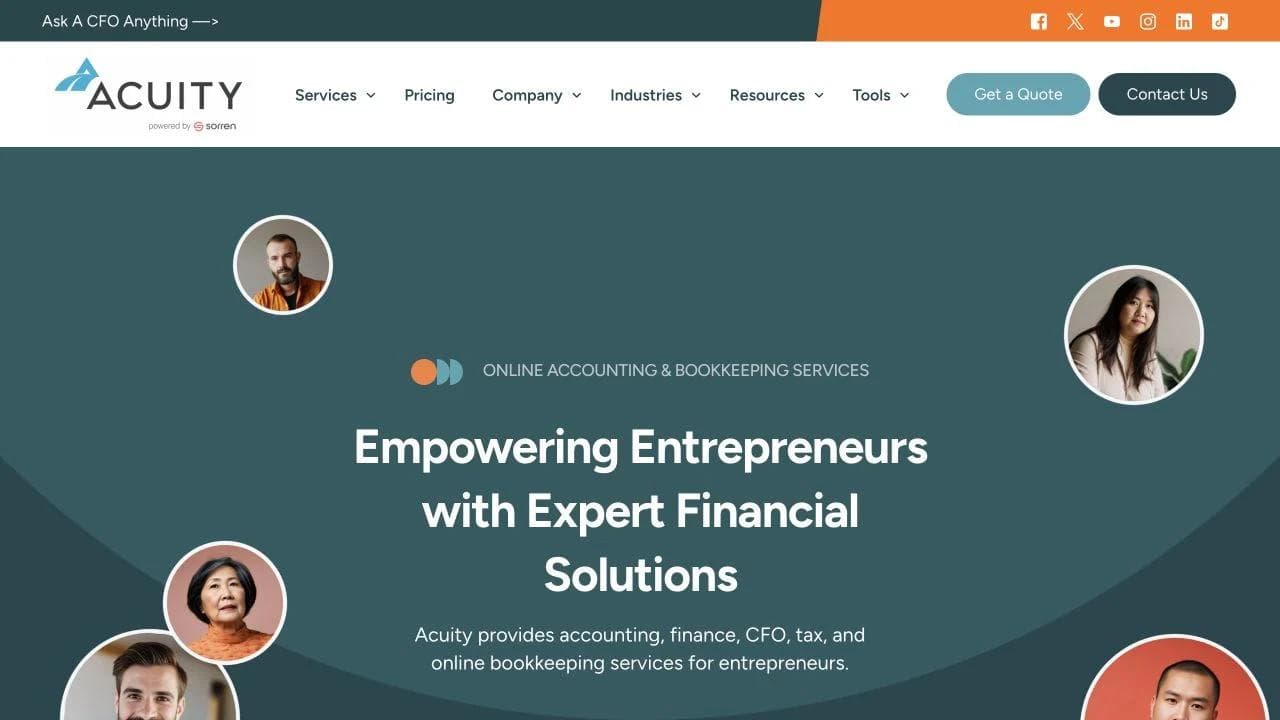
Acuity serves entrepreneurs with online bookkeeping and broader finance support. The opening positions a scalable relationship rather than a one-time tax transaction.
The middle of the page explains services across different stages. This is a useful model for firms that grow from bookkeeping into controller or advisory work: show the operating problem each layer solves instead of presenting an undifferentiated service list.

The lower journey uses proof, resources, and a consultation route. These elements should answer distinct questions: Can the team handle a business like mine? Do they understand the work? What information is needed to begin?

What to borrow
- Describe the finance function as a maturity path.
- Match bookkeeping, controller, tax, and advisory services to recognizable stages.
- Use customer evidence and educational content for different forms of trust.
What to improve
Broad outsourced-finance language can make ownership unclear. Each service should say who does the work, what cadence the client receives, and when the firm brings in a more senior role.
3. Dark Horse CPAs: make the individual relationship visible
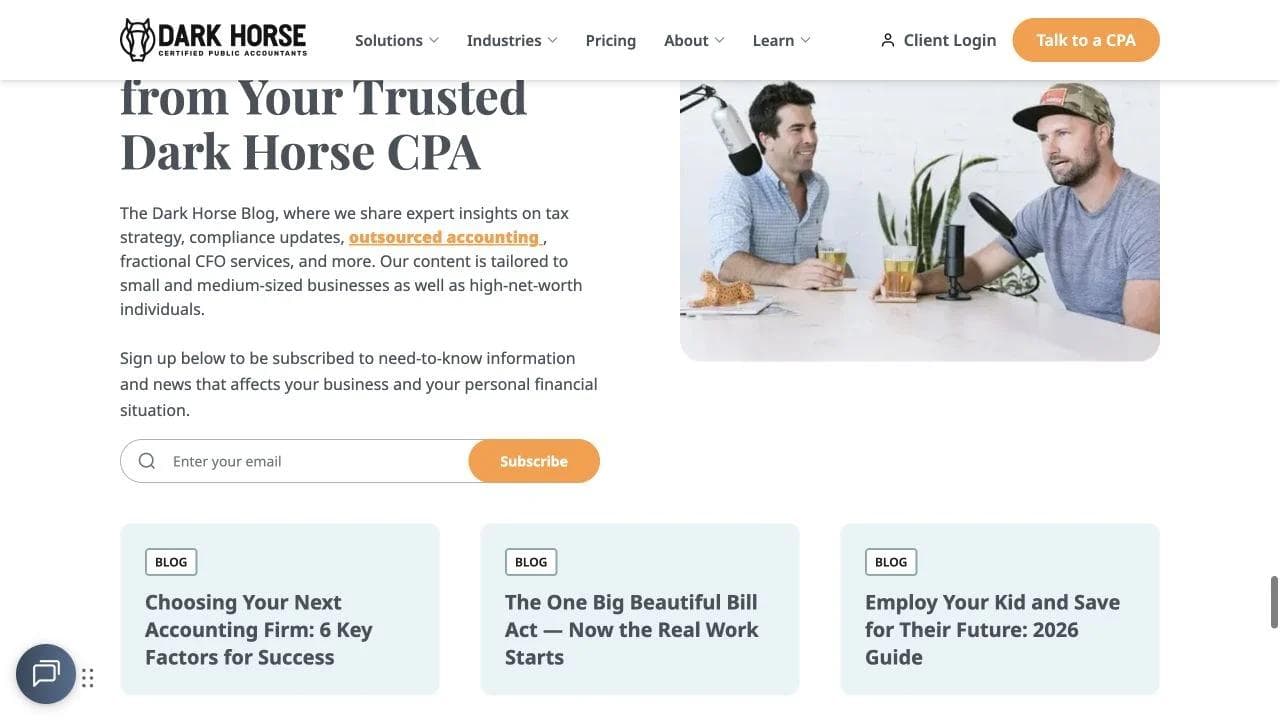
Dark Horse CPAs combines a larger network with the promise of a named accounting relationship. The opening balances firm-scale credibility with the idea that clients work with an identifiable professional.

The middle of the page uses services, people, and company model to explain why the network exists. This matters because visitors want to know whether the experience will feel like a local advisor, a centralized service, or a marketplace.

The closing returns to fit and contact after presenting the operating model. A strong inquiry path should route by client need and location without asking someone to send financial records through an ordinary form.
What to borrow
- Show the actual advisor relationship instead of only a corporate brand.
- Explain how a distributed or partner model maintains accountability.
- Separate prospect contact from existing-client support and secure portal access.
What to improve
A network model benefits from clearer service consistency: what is standardized, what varies by partner, and how clients choose or are matched to the right professional.
4. Carrie Braswell: use personal authority for a local firm
Carrie Braswell represents the solo or small local practice. The opening puts a person, local market, and practical services at the center rather than imitating a national advisory firm.
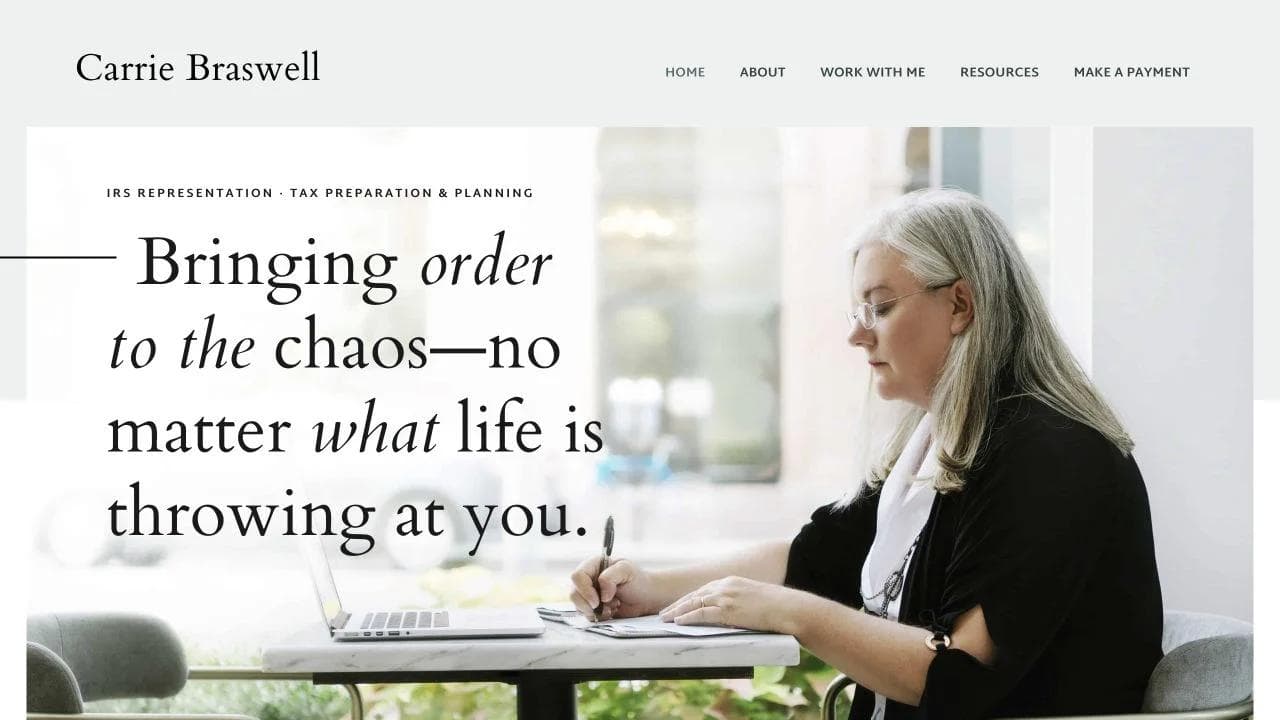
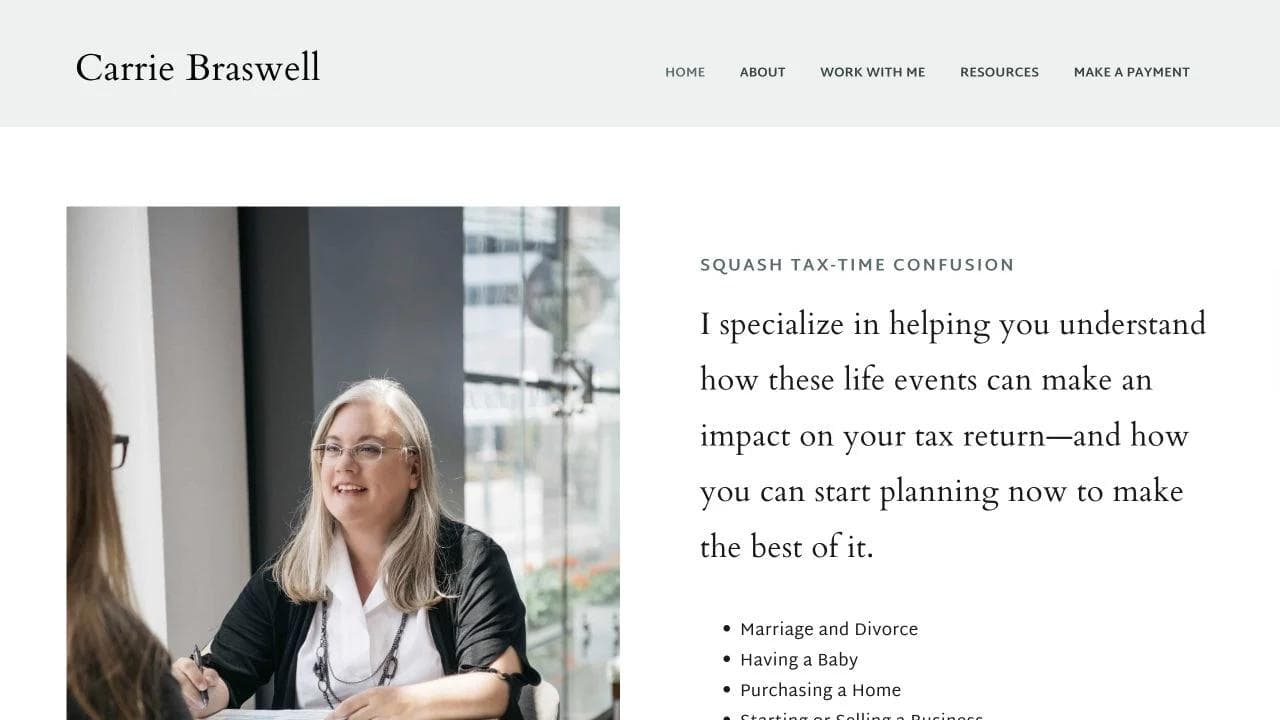
The middle of the page combines services and personal context. For a small firm, the founder is often the strongest trust asset, but the page still needs to explain capacity, response, secure document exchange, and which clients are a fit.
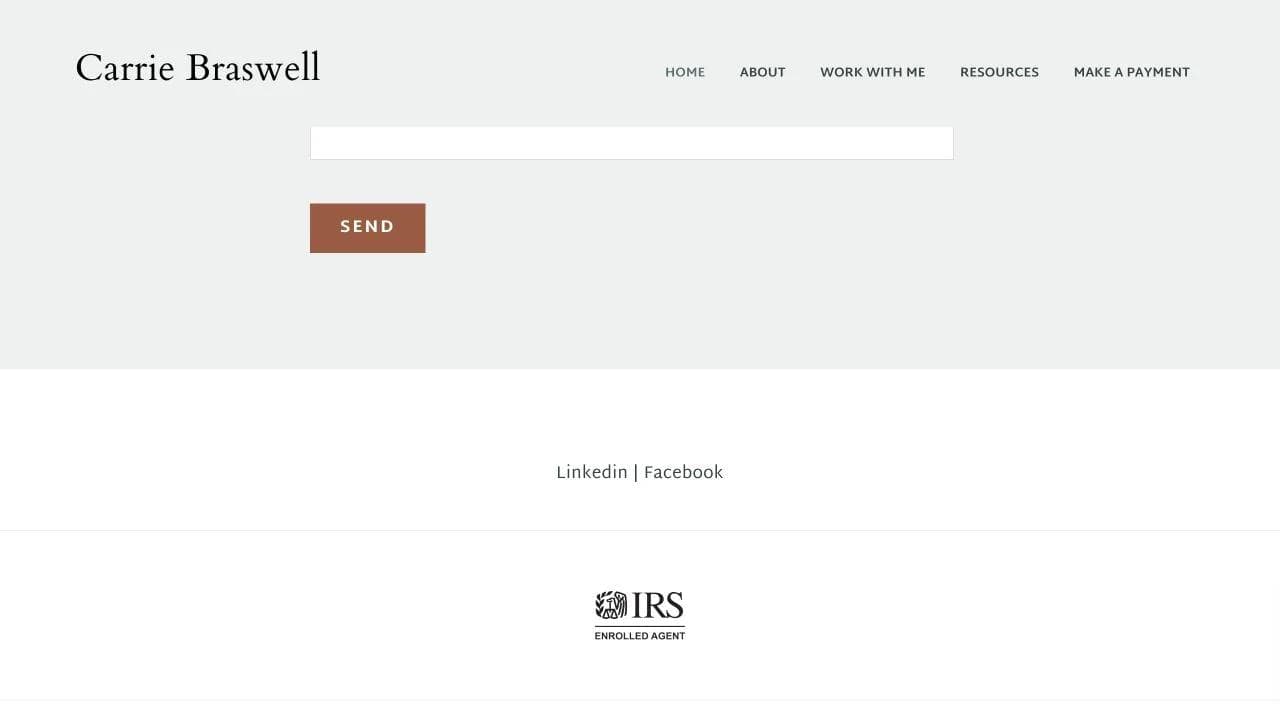
The closing exposes contact and client actions. This is where public inquiry, payments, portal access, and document exchange must be labeled carefully so visitors do not place confidential information in the wrong channel.
What to borrow
- Let a recognizable owner carry the trust story.
- State the real geographic and client focus.
- Keep prospect inquiry separate from secure client workflows.
What to improve
Small-firm sites often rely on warmth but underspecify process. Explain onboarding, recurring cadence, typical communication, turnaround expectations, and how documents are exchanged securely.
5. Skeehan & Young: make service tiers operationally precise
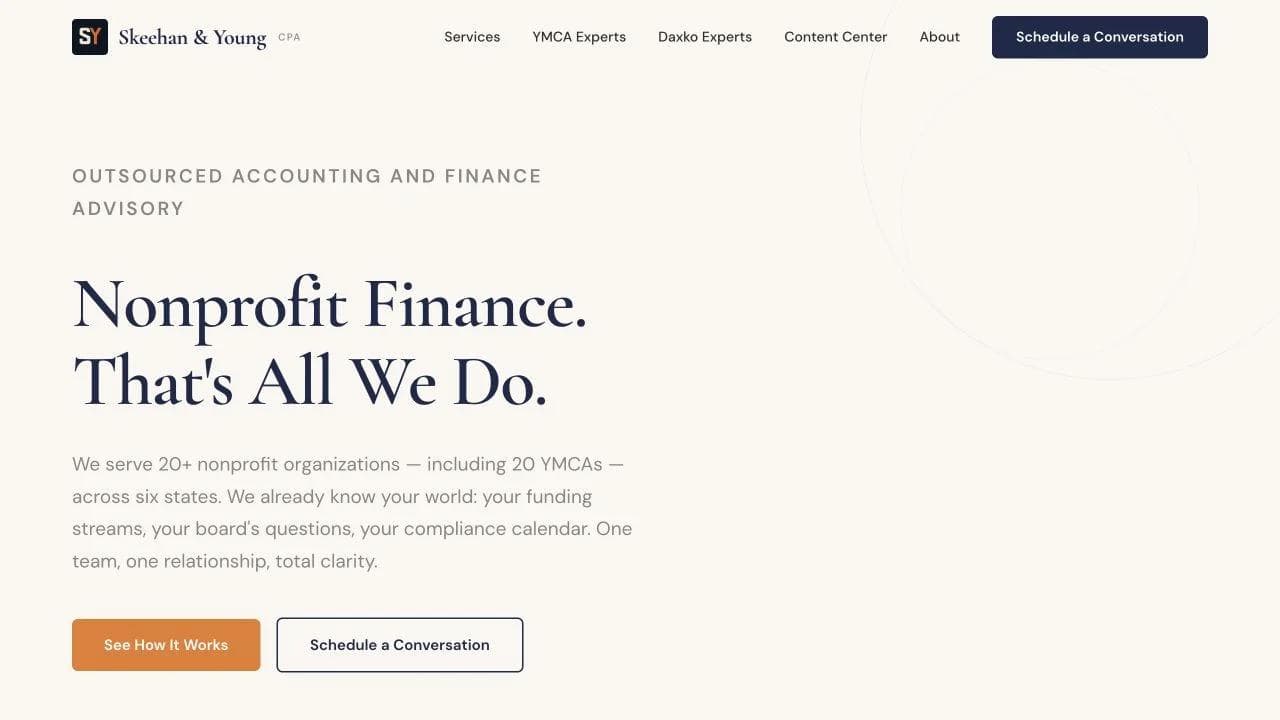
Skeehan & Young serves nonprofit organizations and states that specialization immediately. The opening names the buyer, the board and audit problems the firm addresses, and the consultation route.
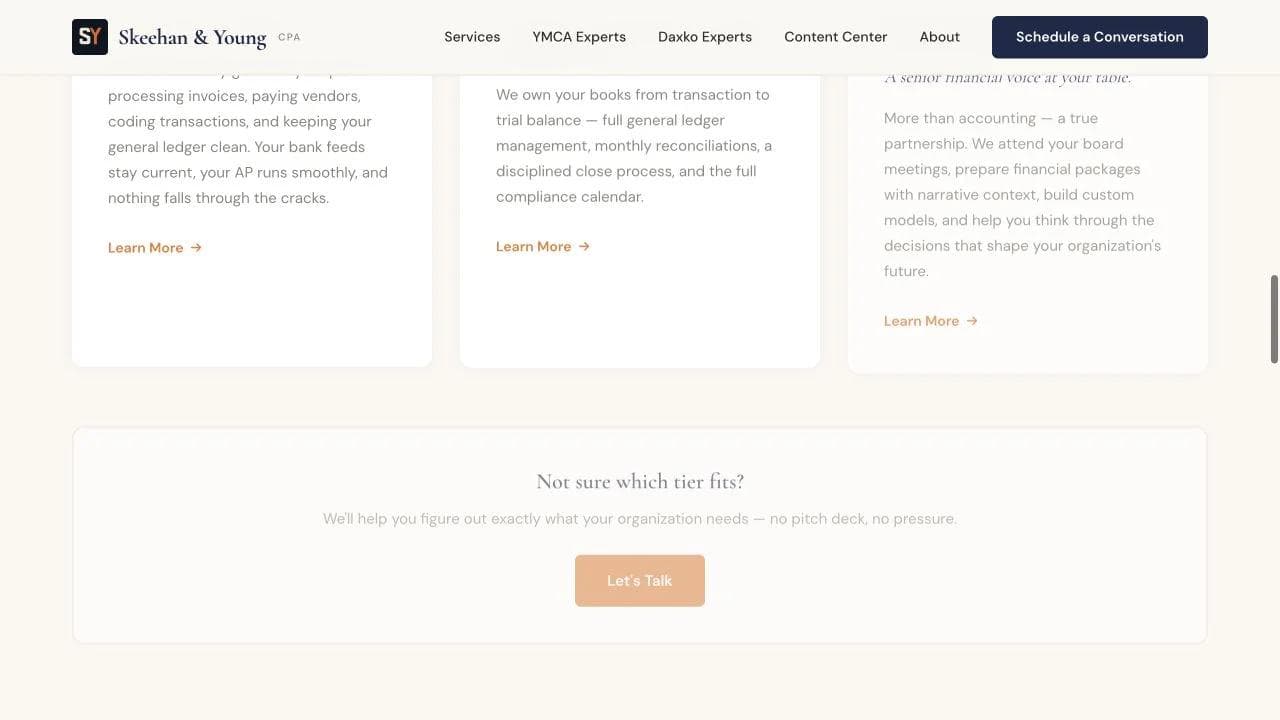
The middle separates bookkeeping, close and compliance, and financial advisory. It also states what the entry tier does not include. This is unusually valuable because service boundaries prevent a low-level package from sounding like a complete finance department.
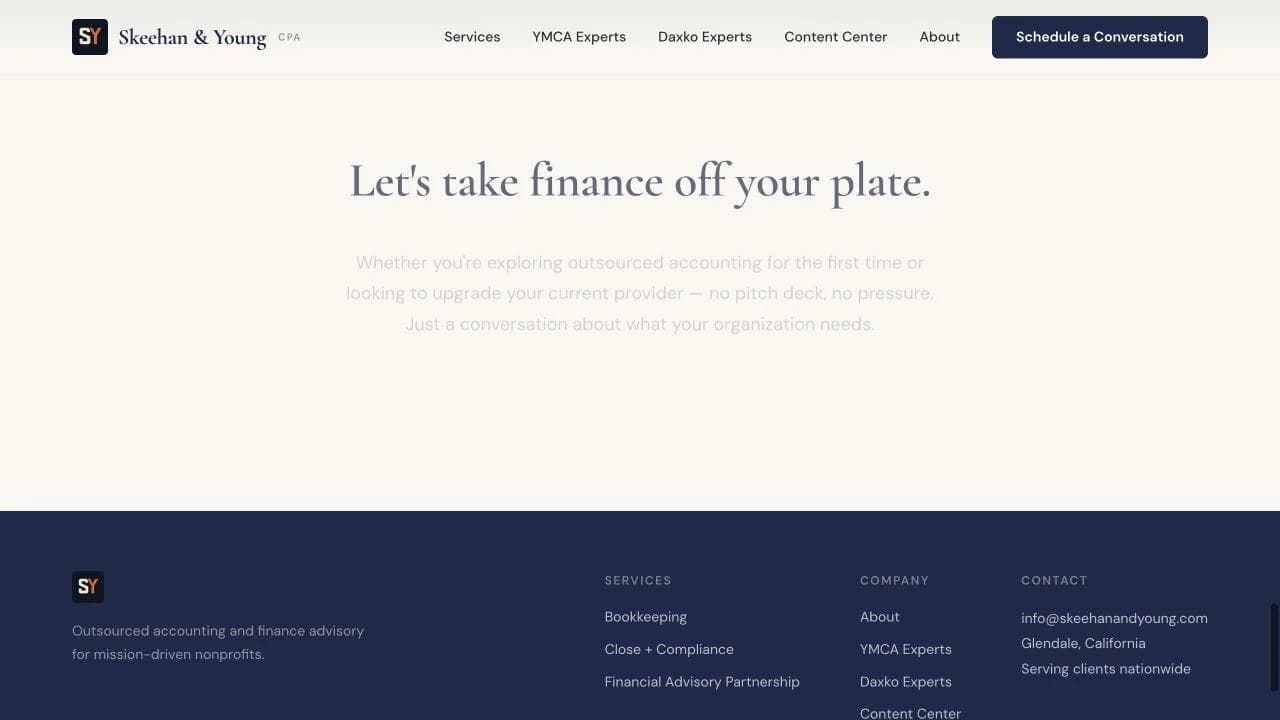
The closing explains assessment, onboarding, and partnership before another conversation route. A nonprofit buyer can see how the relationship starts and when the firm becomes accountable for recurring work.
What to borrow
- Make specialization change the problems, terminology, services, and proof throughout the page.
- State what each tier includes and excludes.
- Explain onboarding ownership and the cadence after handoff.
What to improve
Tier clarity should continue into qualification. Organization size, transaction volume, funding complexity, internal staff, audit needs, and desired leadership level help both sides identify fit before the first call.
6. S&P Accounting: route a broad local practice without hiding its range
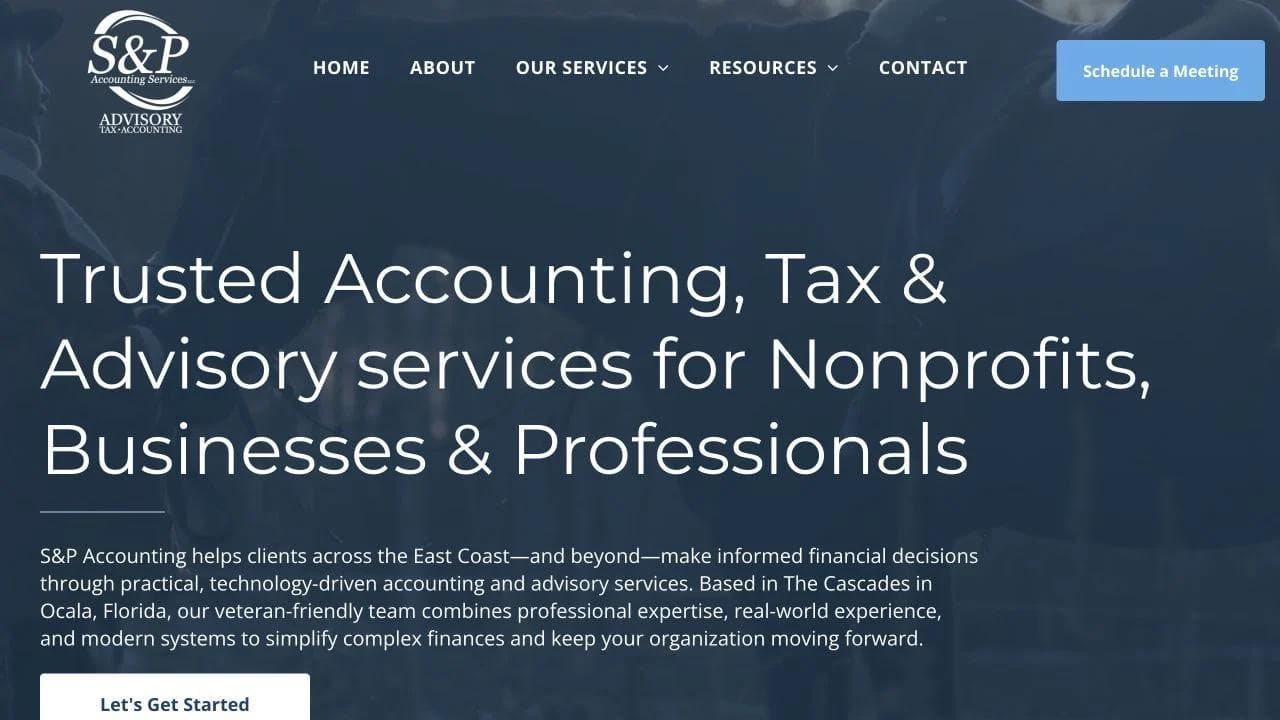
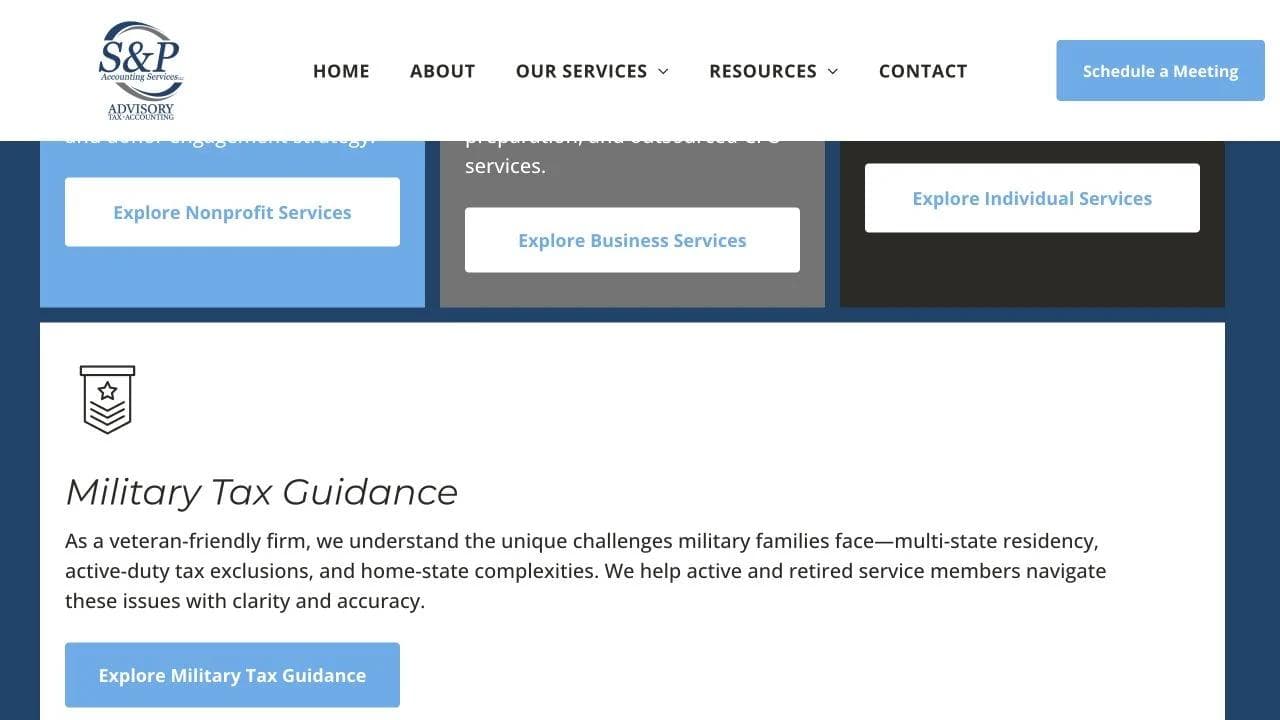
S&P Accounting serves nonprofits, small businesses, individuals, professionals, and military families. The opening presents a modern local firm but must quickly separate audiences whose needs have little overlap.
The middle gives nonprofit accounting, business services, individual tax, and military guidance distinct entry points. This is the right response to breadth: audience paths are more useful than one generic "tax and accounting" list.
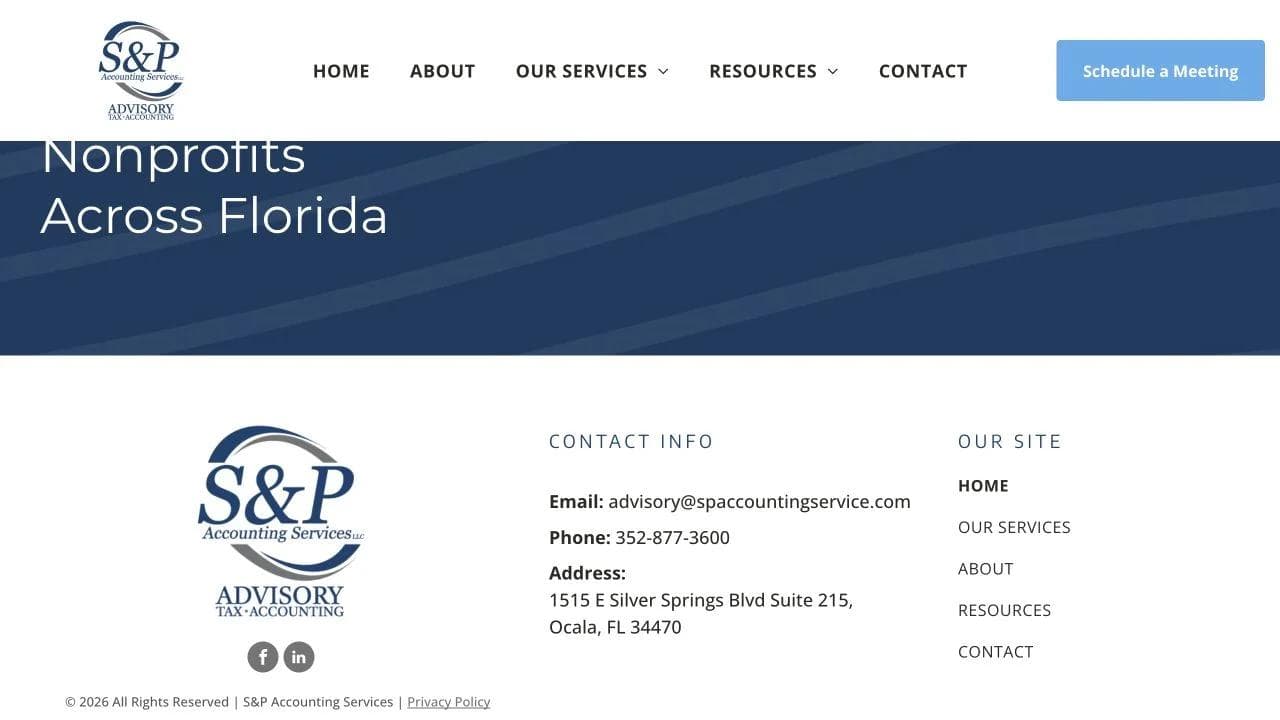
The lower page adds a resource hub, secure client portal access, company context, reviews, and contact. The portal is correctly treated as a client utility rather than mixed into the prospect form.
What to borrow
- Route broad practices by customer and situation, not only by internal service department.
- Keep public education, prospect contact, client resources, and secure portal access separate.
- Use the founder and local office to make accountability visible.
What to improve
A broad practice should state which relationships are recurring, which are seasonal or project-based, and how capacity affects availability. Otherwise every audience can appear equally central when they are not.
Six accounting examples at a glance
- Kruze Consulting: strongest lesson in making a startup niche compound across services and resources.
- Acuity: strongest lesson in organizing outsourced finance by business maturity.
- Dark Horse CPAs: strongest lesson in making a named professional relationship visible inside a network.
- Carrie Braswell: strongest lesson in using personal authority for a local solo practice.
- Skeehan & Young: strongest lesson in defining service tiers and exclusions.
- S&P Accounting: strongest lesson in routing a broad local practice by audience and keeping client utilities separate.
These are not interchangeable designs. A niche firm should go deeper rather than broader. A generalist should make audience routing and scope unusually explicit. A network must explain accountability. A solo practice must explain capacity and process.
The real forking paths in accounting website design
Transactional work versus ongoing finance leadership
Tax preparation and monthly bookkeeping are not the same decision as controller or CFO support. Show the outputs, cadence, decision rights, and level of senior involvement for each.
Niche specialist versus general local firm
A specialist can use industry language and deep resources. A generalist should make service, geography, credentials, and personal relationship unusually clear. Broad claims such as "businesses of all sizes" usually reduce fit rather than expand it.
Local relationship versus remote delivery
Remote firms should explain communication, time zones, systems, cadence, and secure exchange. Local firms should not rely on proximity alone. They still need a clear service model.
Published pricing versus scoped engagement
Fixed packages work when deliverables and client conditions are standardized. More complex tax, cleanup, advisory, or multi-entity work may require scoping. Explain what determines price and whether the first consultation is paid.
Recommended accounting homepage anatomy
- Opening: ideal client, market or delivery model, core outcome, consultation action, and one factual proof point.
- Fit: industries, stages, entity types, and situations the firm is built for.
- Service ladder: bookkeeping, tax, compliance, reporting, controller, and CFO layers with clear outputs.
- How engagement works: discovery, access setup, cleanup, recurring cadence, review, and support.
- People and credentials: named professionals, relevant experience, licenses, and responsibilities.
- Evidence: client stories, testimonials, and representative problems solved without exposing confidential data.
- Expertise: resources tied to the questions ideal clients actually ask.
- Pricing model: package, starting point, or transparent scope drivers.
- Secure boundary: separate prospect form, client portal, payments, and document upload.
- Final qualification: business type, stage, services, urgency, and preferred follow-up.
Where Moda fits
Moda can help an accounting firm build a branded static marketing site, service explainers, client-facing PDFs, reports, webinar graphics, and social content. It is not a secure client portal, document vault, payment processor, tax platform, or accounting system. Keep confidential financial records and authenticated client actions in dedicated systems.
Frequently asked questions
What should an accounting firm website include?
Include ideal client, service depth, people and credentials, engagement process, relevant evidence, expertise content, pricing or scope drivers, consultation qualification, and separate secure client actions.
Should accounting firms publish prices?
Publish prices when deliverables and client conditions are standardized. For cleanup, complex tax, advisory, or multi-entity work, explain the factors that determine scope and whether the initial consultation is paid.
What belongs in an accounting inquiry form?
Ask for business type, stage, location, services, timing, and preferred follow-up. Do not ask prospects to upload tax returns, bank records, credentials, or other confidential information through an ordinary marketing form.
How should an accounting site show expertise?
Use named professionals, relevant credentials, niche experience, client stories, and resources that answer the recurring questions of the ideal client. Generic financial tips do little to prove fit.
Can Moda serve as an accounting client portal?
No. Moda can create the public marketing site, explainers, PDFs, reports, and campaign content, while secure document exchange, payments, tax work, and authenticated client actions stay in dedicated systems.

Real editable visuals. Real canvas. Full control.
Fly through design work