Electrician Website Design: 6 Full-Page Teardowns
See six electrician websites analyzed section by section, with practical lessons for emergency response, residential service, generators, EV charging, commercial work, and lead routing.
 Anvisha Pai, Co-founder & CEO, Moda
An electrician website has to route urgency, prove competence, and reveal the company's actual operating range. A homeowner with a failed panel, a facility manager planning an upgrade, and a developer pricing a tenant build-out should not enter through the same undifferentiated "contact us" path.
This guide analyzes six complete electrician homepages. The examples include residential service, emergency response, generators, EV charging, commercial design-build, industrial work, and hurricane-related demand. The goal is not to choose the prettiest site. It is to understand which page decisions help the right customer act safely and confidently.
A framework for electrician websites
Evaluate the page across six jobs:
- Urgency: Can a visitor distinguish a dangerous condition, a service outage, and a planned project?
- Scope: Does the site state residential, commercial, industrial, voltage, project size, and specialty limits?
- Trust: Are licenses, insurance, named people, reviews, warranties, and experience specific?
- Diagnosis: Does service copy help the visitor name the problem without pretending the website can inspect it?
- Project evidence: Do case studies identify customer type, constraint, scope, and result?
- Handoff: Does the form collect the minimum information needed to route the request?
The biggest fork is service work versus project work. Service buyers need response expectations, dispatch coverage, safety guidance, and pricing process. Project buyers need capabilities, coordination, documentation, schedule, procurement, and comparable work.
Six electrician websites at a glance
- D'Angelo Electrical Contractors: clear residential, commercial, industrial, and design-build lanes.
- 4th Generation Electric: a specialist site built around home generators.
- Hennessy Electric: commercial and EV infrastructure credibility with a residential path.
- Newman Electric: commercial design-build positioning backed by detailed scope.
- The Electricians: emergency, residential, and major commercial work routed from one page.
- American Electrical Contracting: local residential demand shaped by hurricanes, insurance, and older homes.
1. D'Angelo: make a broad contractor legible
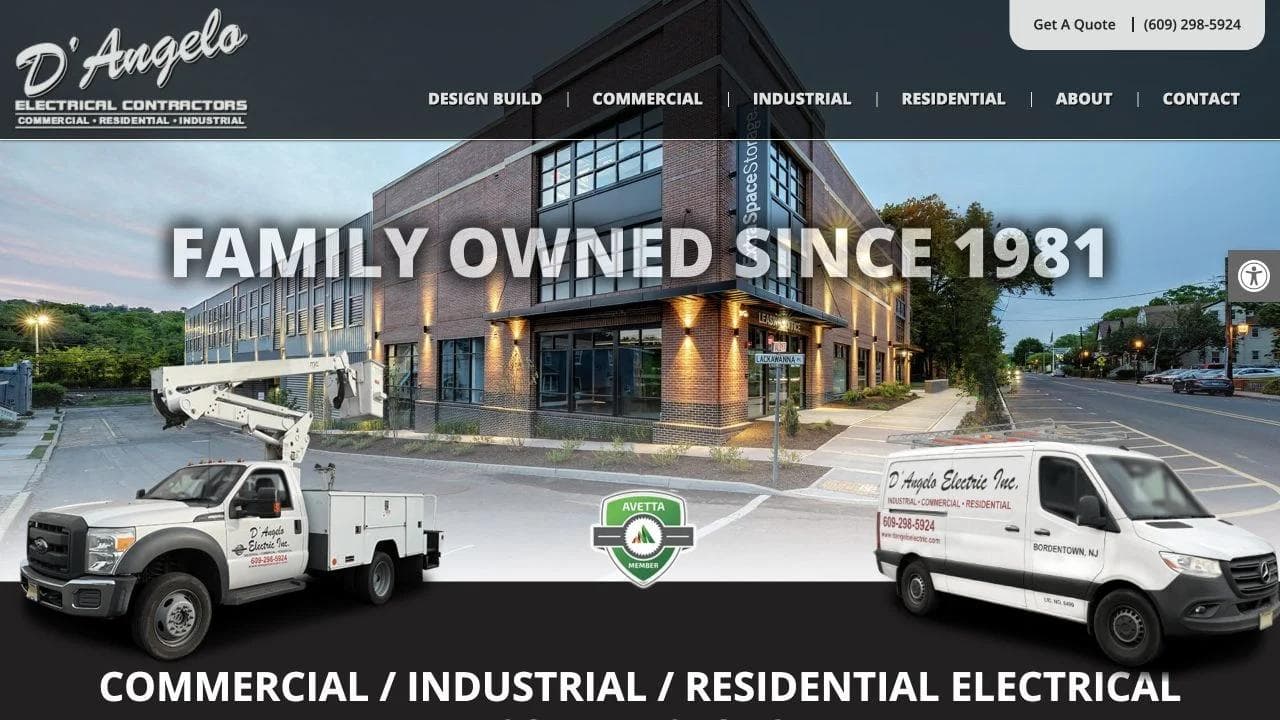
D'Angelo Electrical Contractors opens with family ownership since 1981 and immediately identifies four lanes: design-build, commercial, industrial, and residential.
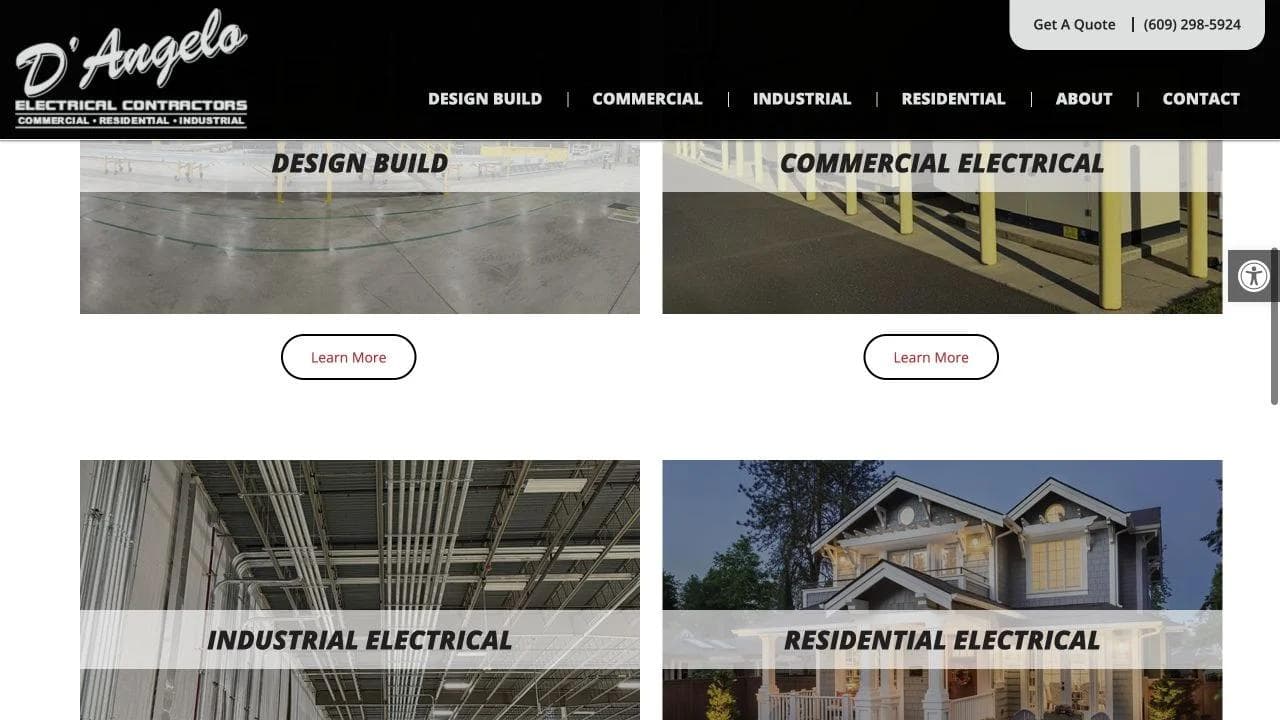
The middle page gives each lane its own entry point. This prevents broad capability from reading as generic capability. A commercial buyer can move toward relevant work without wading through residential repairs.
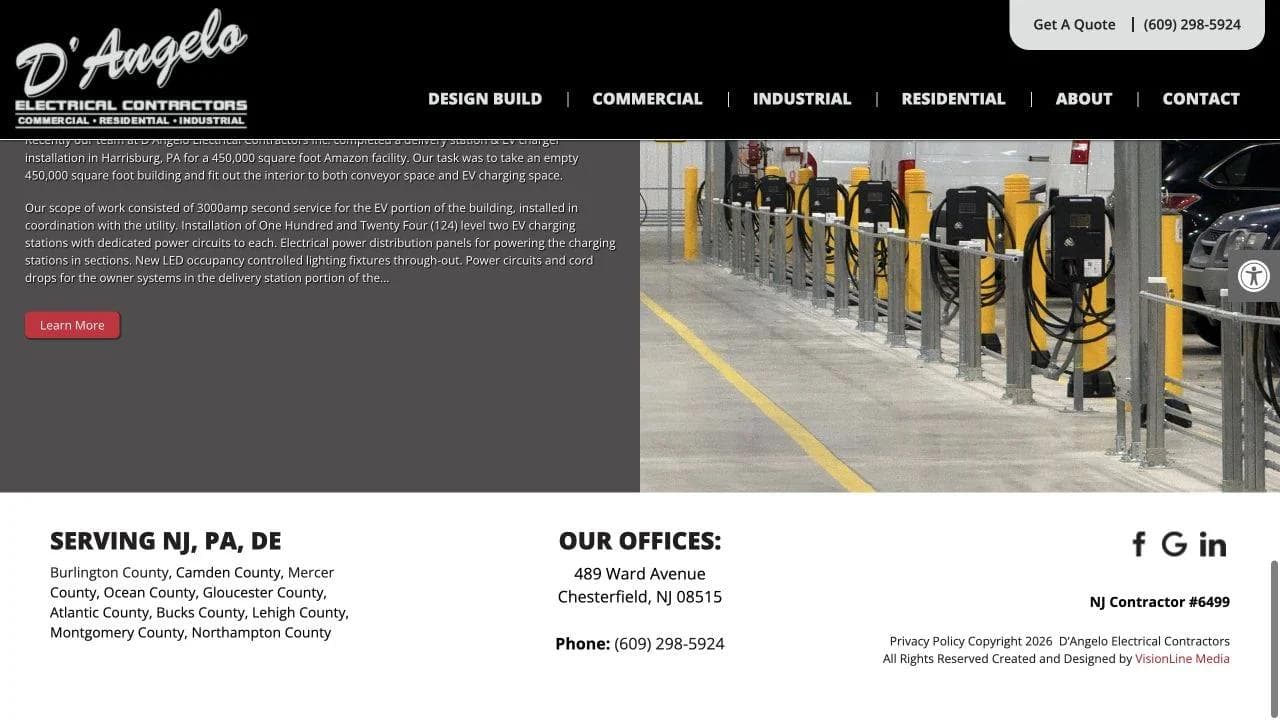
The closing adds customer reviews, geographic coverage across New Jersey, Pennsylvania, and Delaware, office information, and a quote path.
What to borrow
- State sectors and regions before the visitor contacts you.
- Give design-build a separate explanation because it changes accountability.
- Pair longevity with a concrete promise about standing behind the work.
What not to copy blindly
Four equal lanes can still feel broad. A company should reveal which work it prioritizes and provide sector-specific project evidence, not only four service cards.
2. 4th Generation: build a specialist page around the full purchase
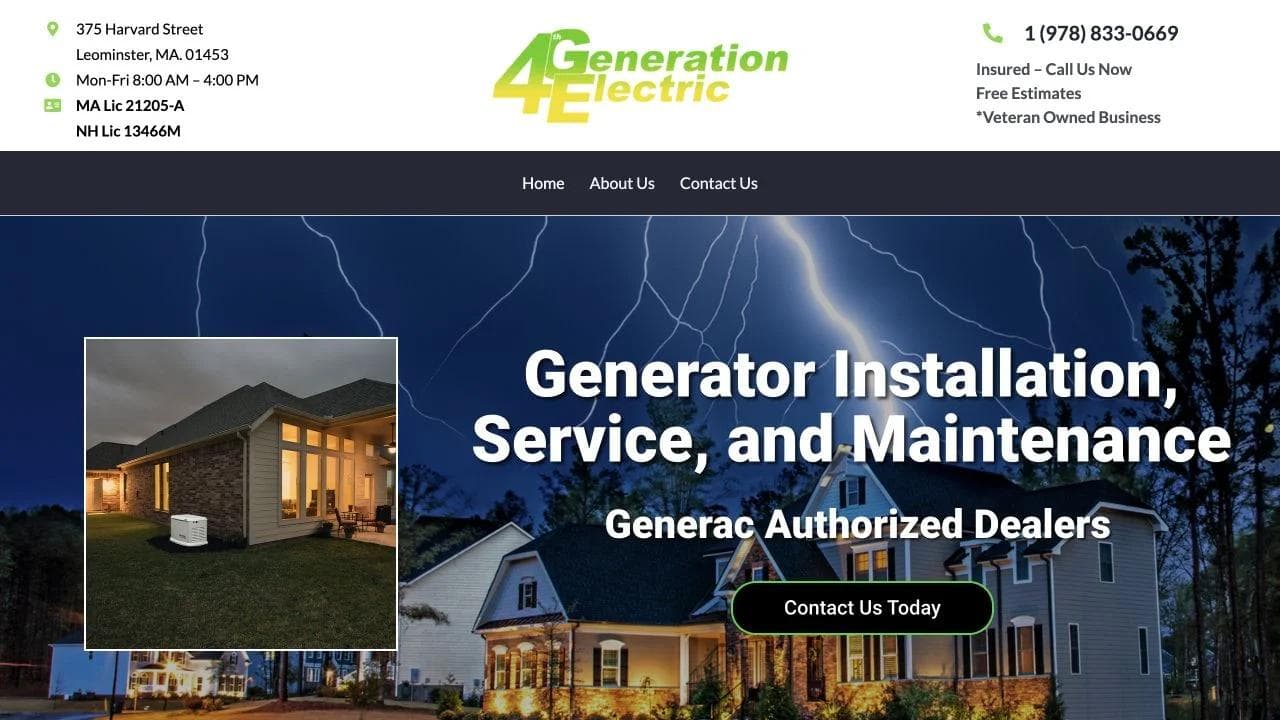
4th Generation Electric leads with Generac generator installation and a precise Massachusetts and southern New Hampshire service area. The specialty is unmistakable.
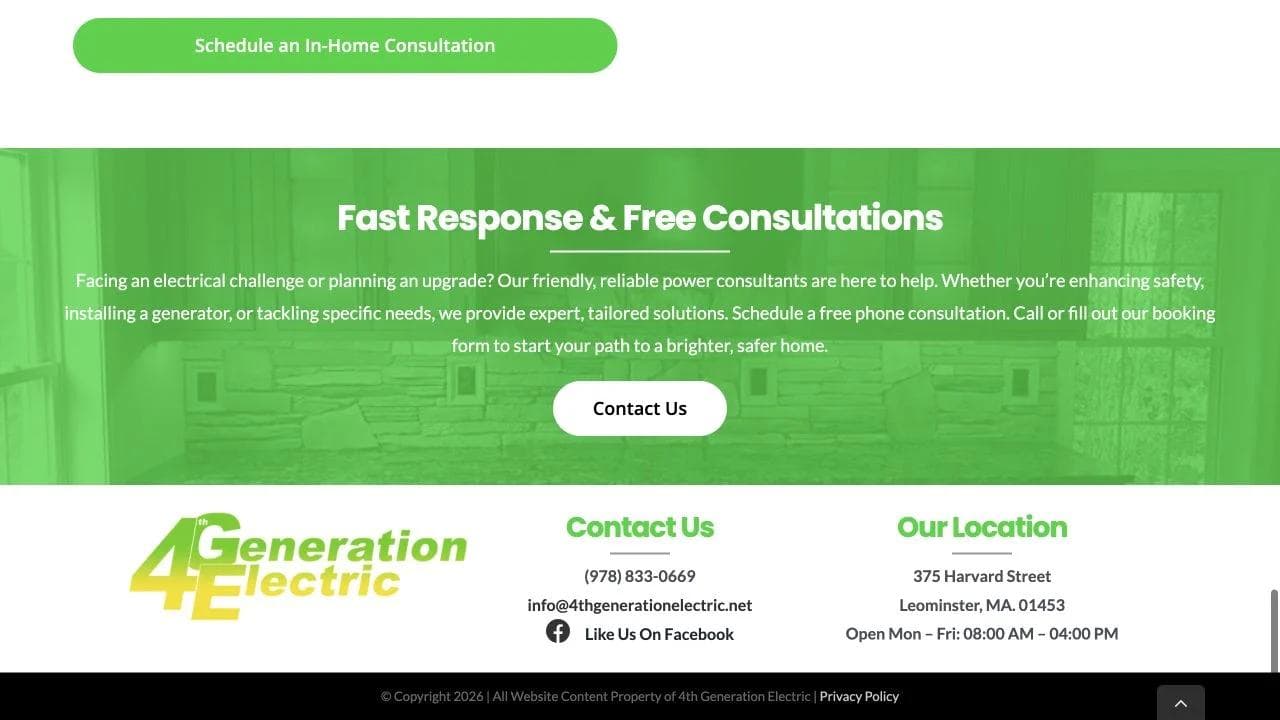
The middle addresses whole-home and portable products, consultation, warranty, financing, maintenance, and the practical benefit of a fully managed installation.
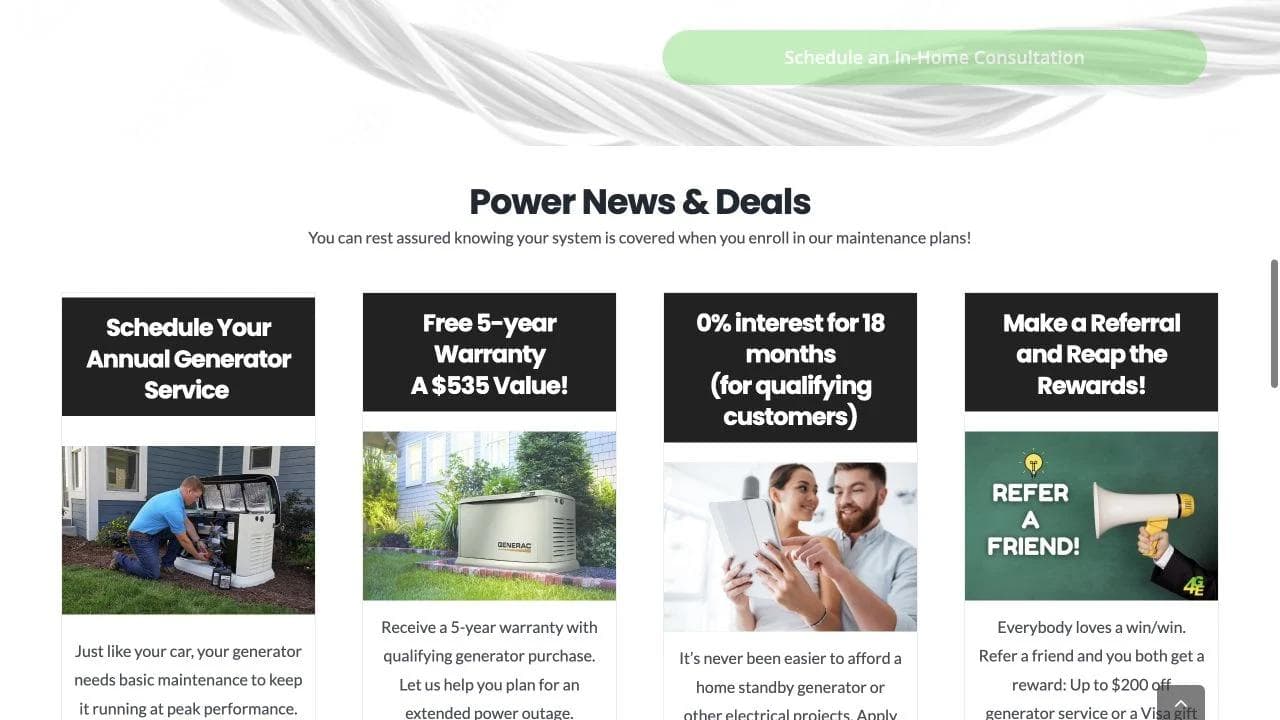
The closing reinforces dealer credentials, response expectations, service territory, and contact. The page supports the whole ownership lifecycle rather than treating installation as a one-time transaction.
What to borrow
- If one specialty drives demand, own it in the headline.
- Explain installation, annual service, warranty, and financing together.
- Name towns and licensing jurisdictions precisely.
What not to copy blindly
Promotions and warranty language need dates, eligibility, exclusions, and ownership. An offer should not look permanent if the underlying manufacturer program changes.
3. Hennessy: use a site walkthrough as the commercial call to action
Hennessy Electric positions veteran master electricians around commercial, industrial, and EV charging projects in Toronto and the GTA, while retaining a residential service path.

The middle distinguishes commercial and industrial electrical, EV charging, and residential work. For condo and commercial EV projects, it offers a site walkthrough to assess capacity. That call to action matches the complexity of the purchase better than a generic estimate button.
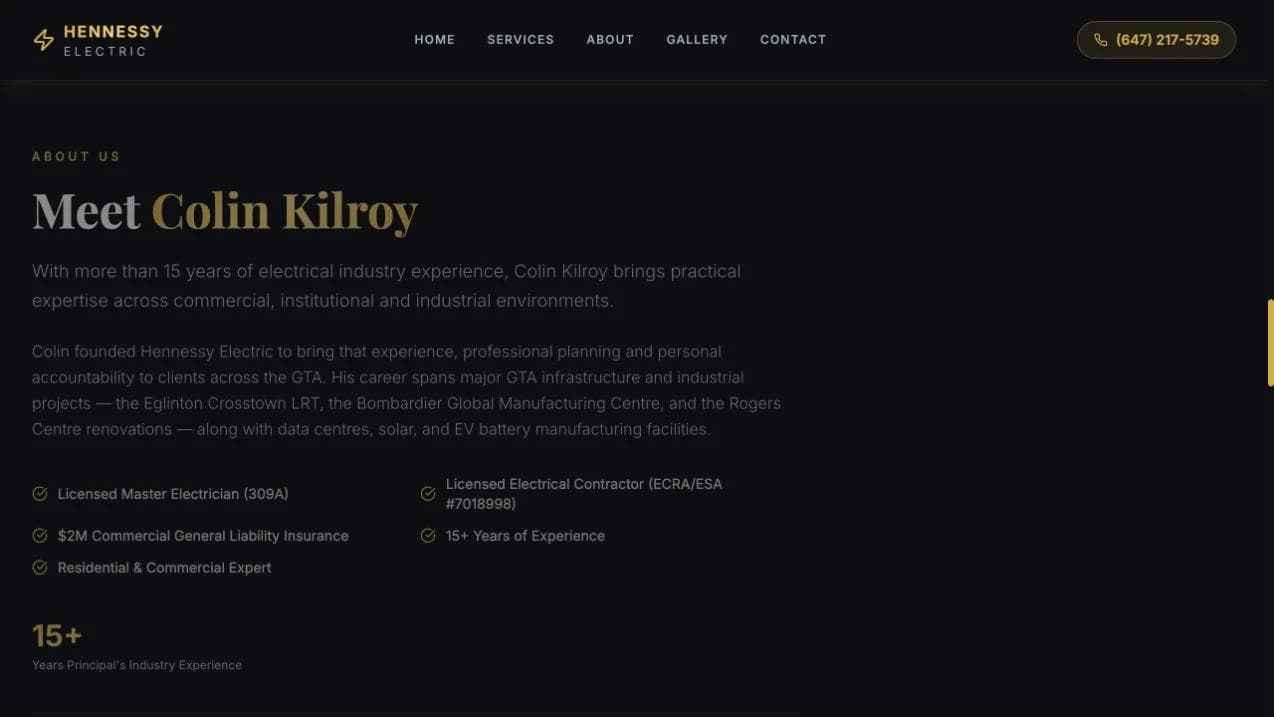
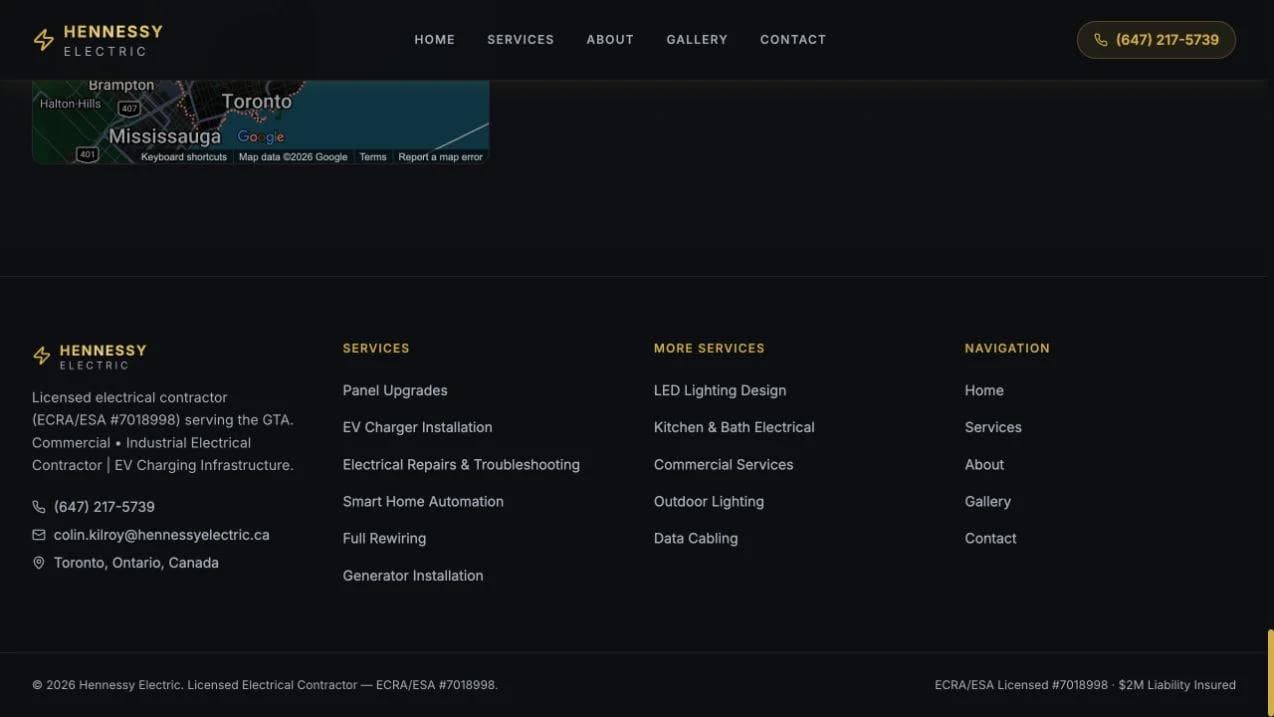
The lower page introduces leadership, project experience, selected work, and a quote request. Named experience makes a new firm feel less anonymous.
What to borrow
- Match the first action to the technical uncertainty of the project.
- Separate building-wide EV infrastructure from a residential charger install.
- Let named principals carry prior project credibility.
What not to copy blindly
Experience claims should distinguish the firm's completed work from an individual's earlier career. Project captions should make that provenance clear.
4. Newman Electric: qualify commercial work through specificity
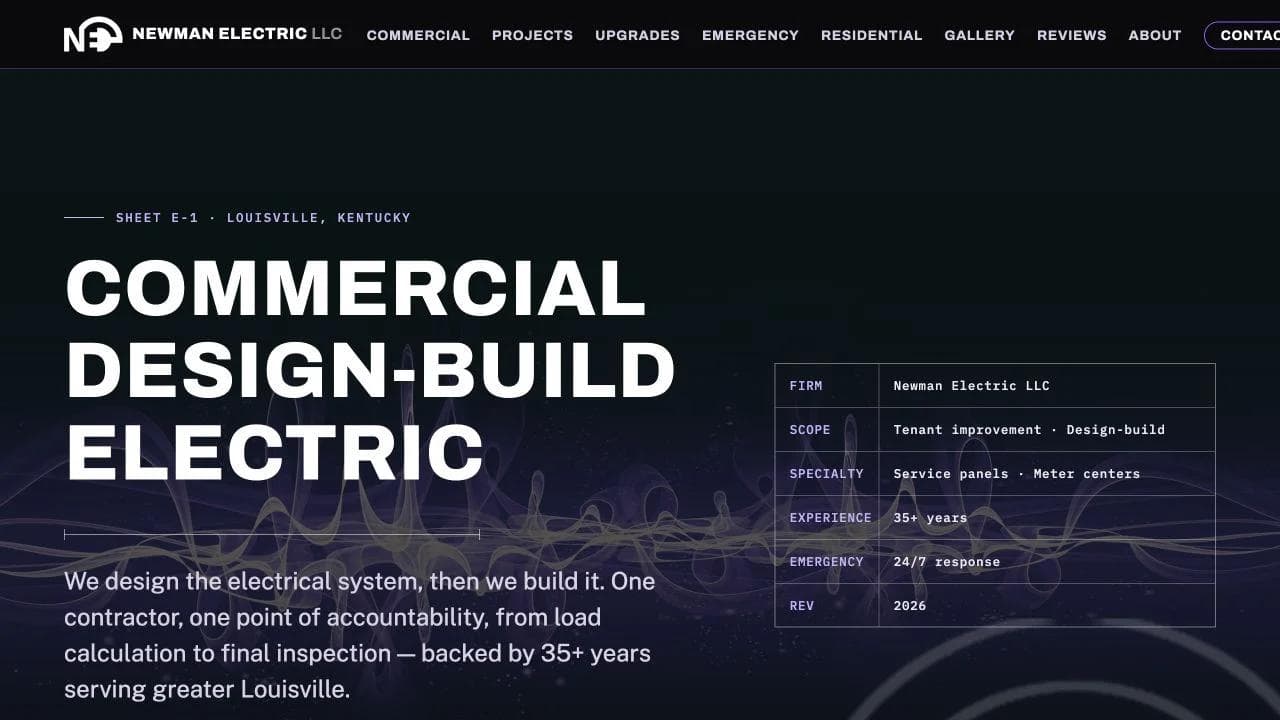
Newman Electric opens with commercial design-build and explains the benefit in operational terms: one contractor, one point of accountability, from load calculation through inspection.
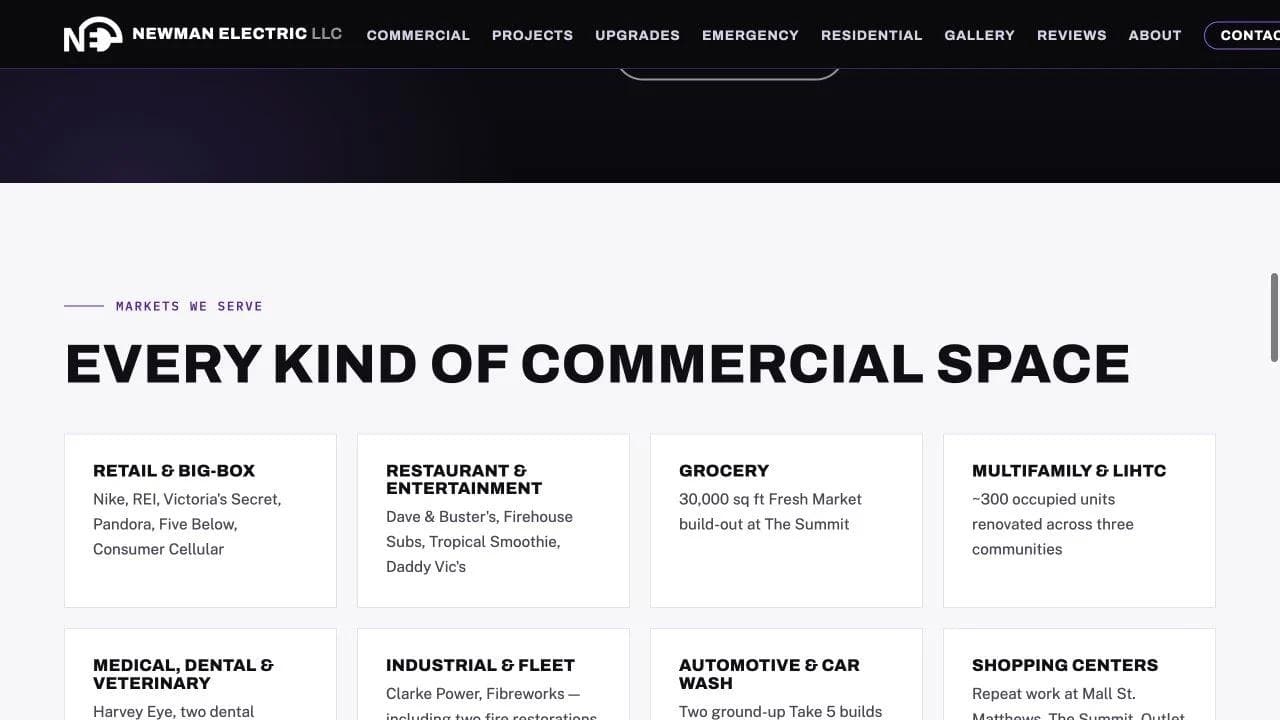
The middle identifies design-build, tenant improvement, emergency service, and residential panel upgrades, then names the commercial environments it understands, including retail, restaurants, multifamily, medical, industrial, and automotive.
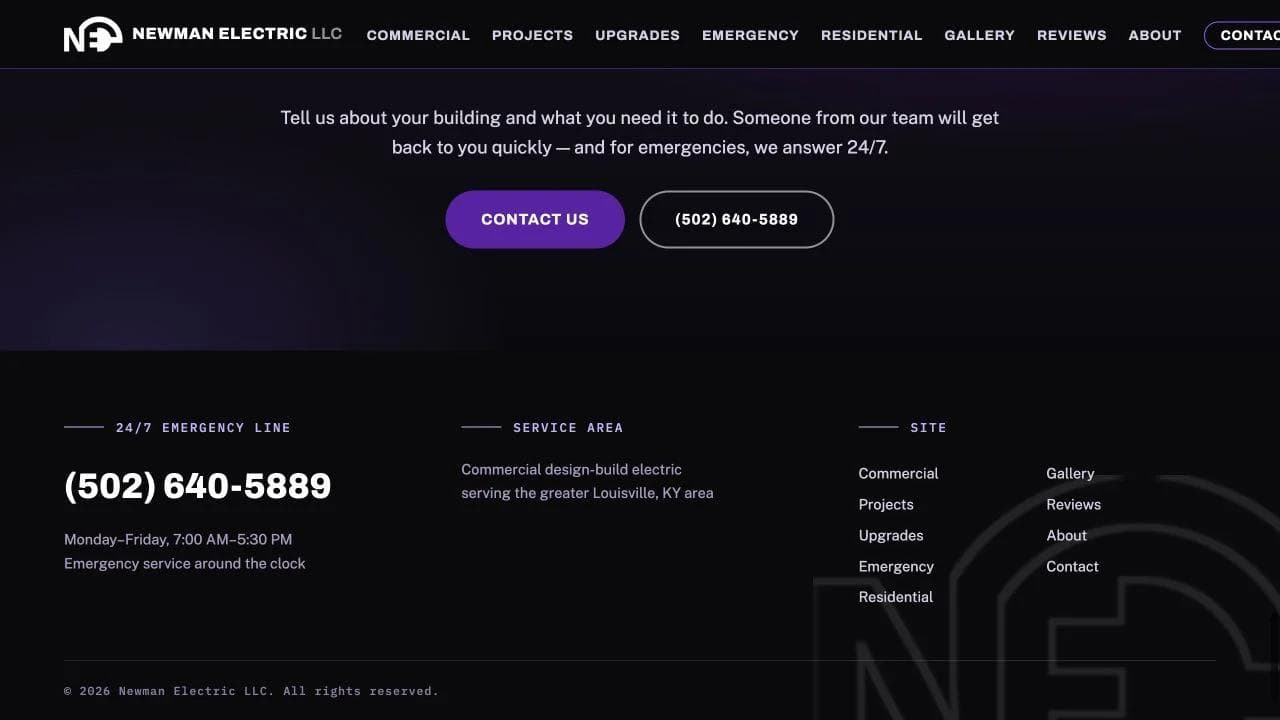
The closing supports those claims with recognizable projects, testimonials, metrics, and a project conversation.
What to borrow
- Explain a delivery model through the coordination problem it solves.
- Name the building types and scopes the team knows.
- Use project evidence to prove range without saying "no job too big or small."
What not to copy blindly
Large numbers need definitions. A service size, unit count, or project area is useful only when the visitor understands whether it describes one job, cumulative experience, or current capacity.
5. The Electricians: route emergency and planned work on one page
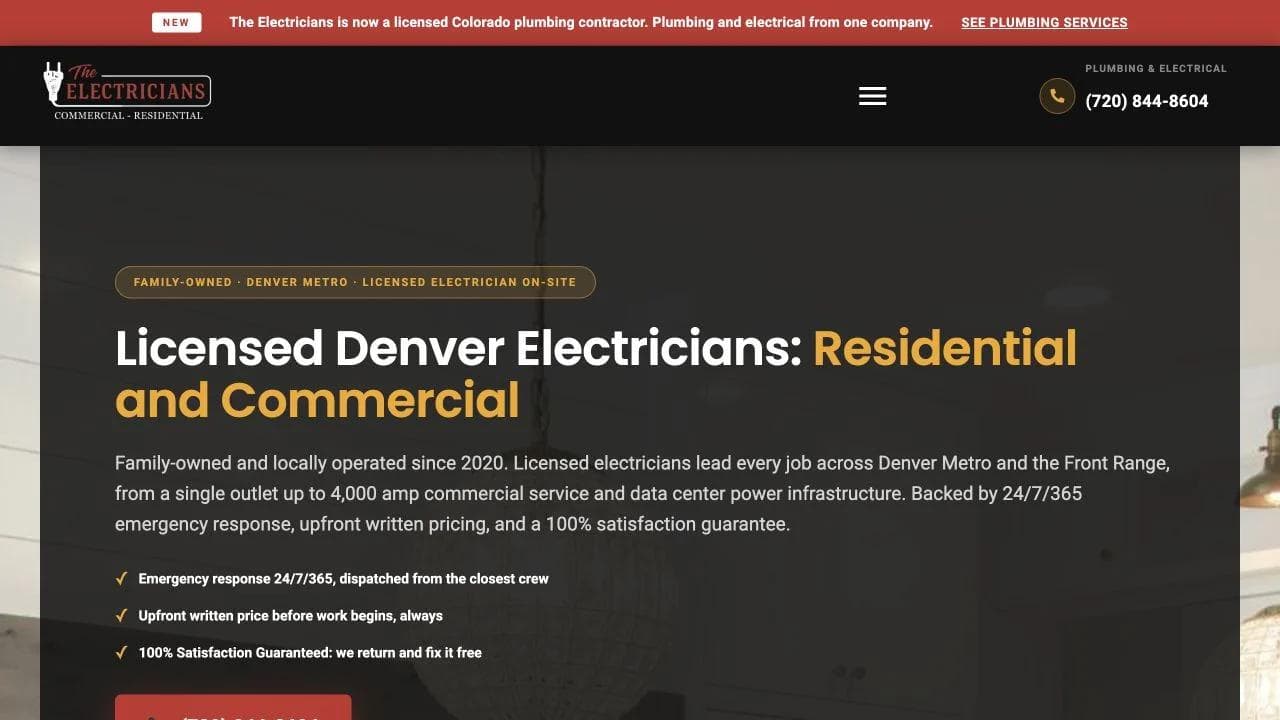
The Electricians opens with Denver coverage, licensed leadership, 24/7 emergency response, written pricing, insurance, reviews, and a short job form.
The middle compares operating standards, routes residential, commercial, emergency, EV, panel, generator, and mission-critical work, and explains major commercial capabilities in detail.
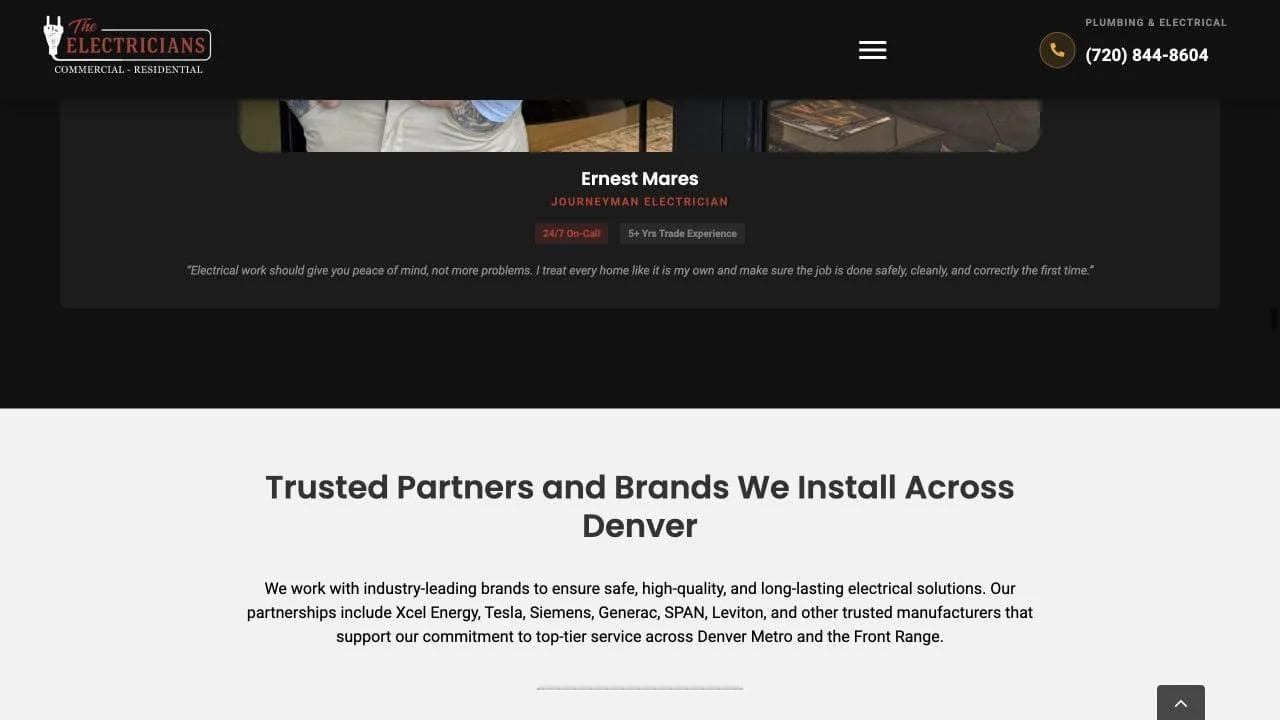
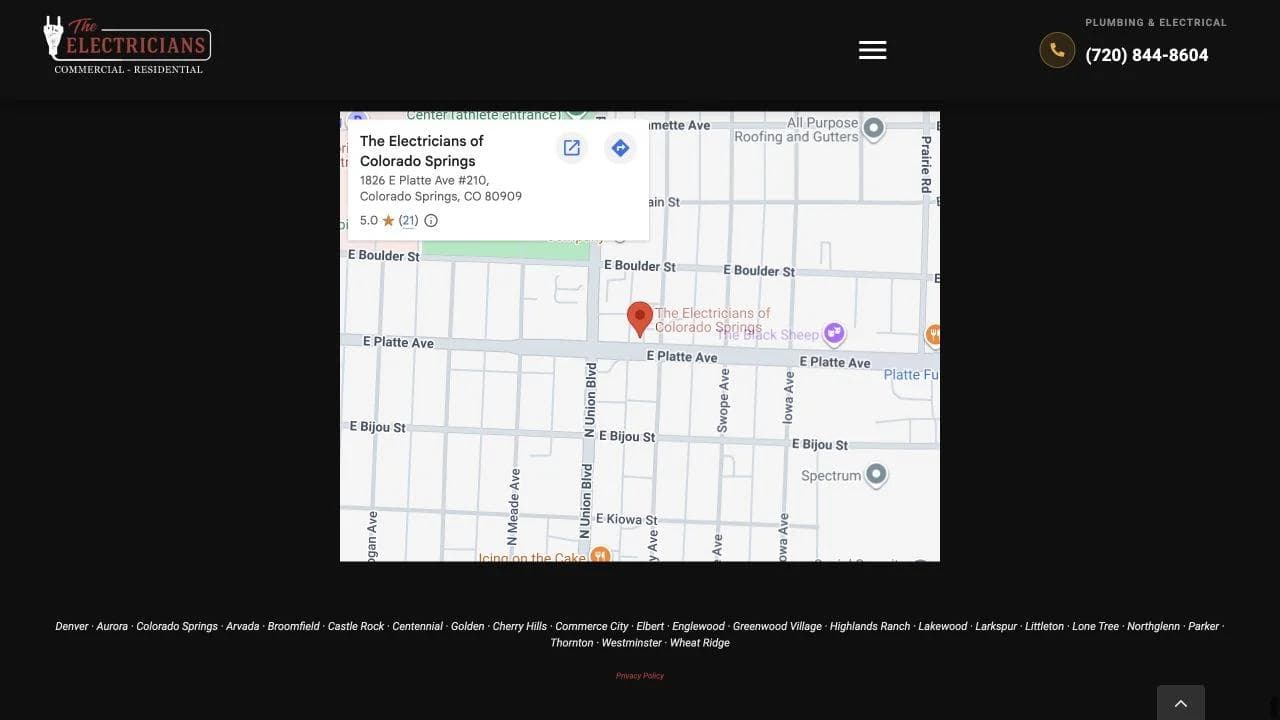
The closing introduces team members, recognized customers, financing, popular upgrades, FAQs, and another contact route. The page is long because it serves many intents, but the headings keep it navigable.
What to borrow
- Put emergency availability and the normal quote path side by side without confusing them.
- State insurance and review sources specifically.
- Use an operating-standard comparison to explain real differences in service.
What not to copy blindly
A long page needs aggressive prioritization. Mission-critical construction, a household outlet, and plumbing expansion can coexist, but each deserves a distinct path and proof set.
6. American Electrical: build the page around local demand triggers
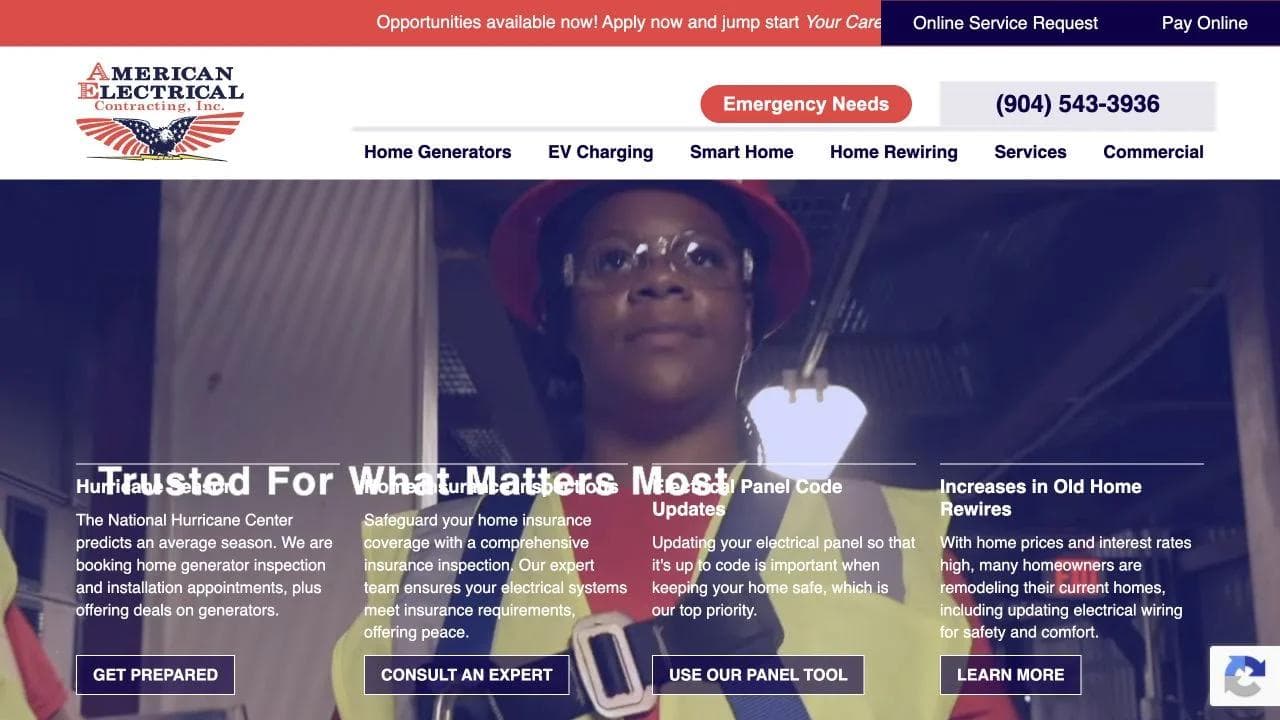
American Electrical Contracting does not treat Jacksonville as a keyword alone. The opening highlights hurricane preparation, insurance inspections, panel code updates, and old-home rewiring.
The middle combines manufacturer certifications, review evidence, residential and commercial services, and local concerns that change why a customer calls.
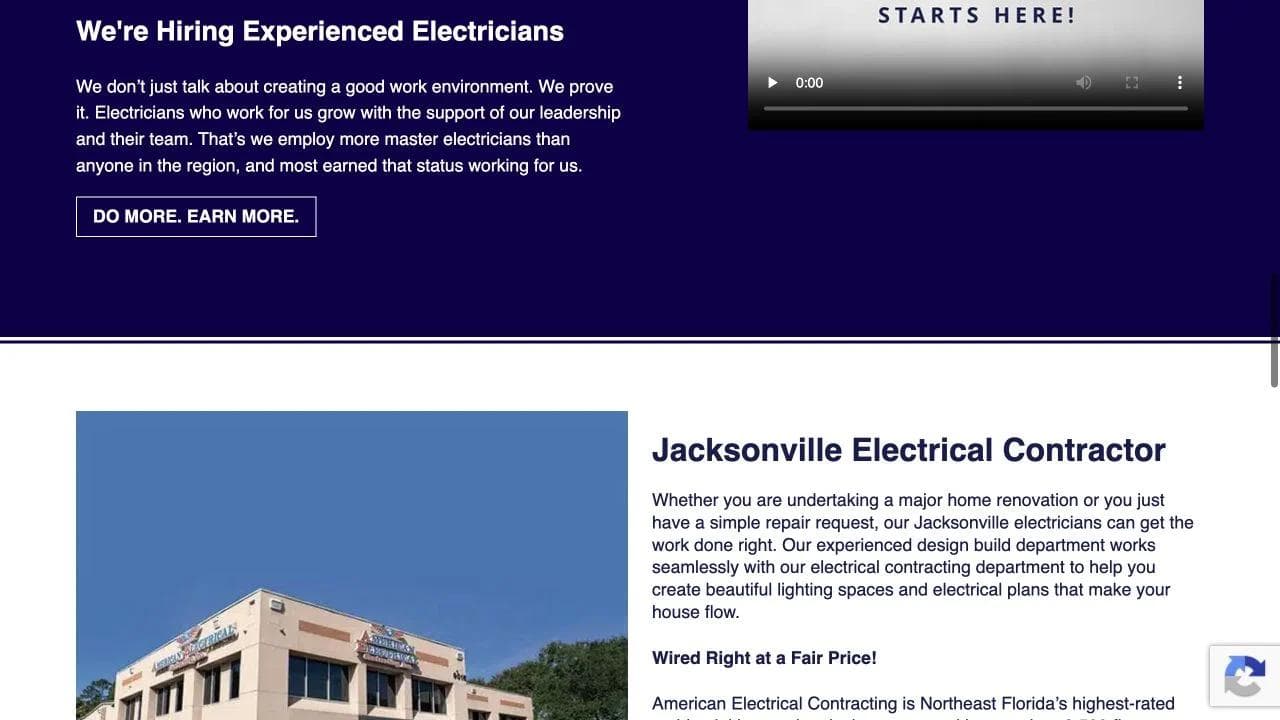
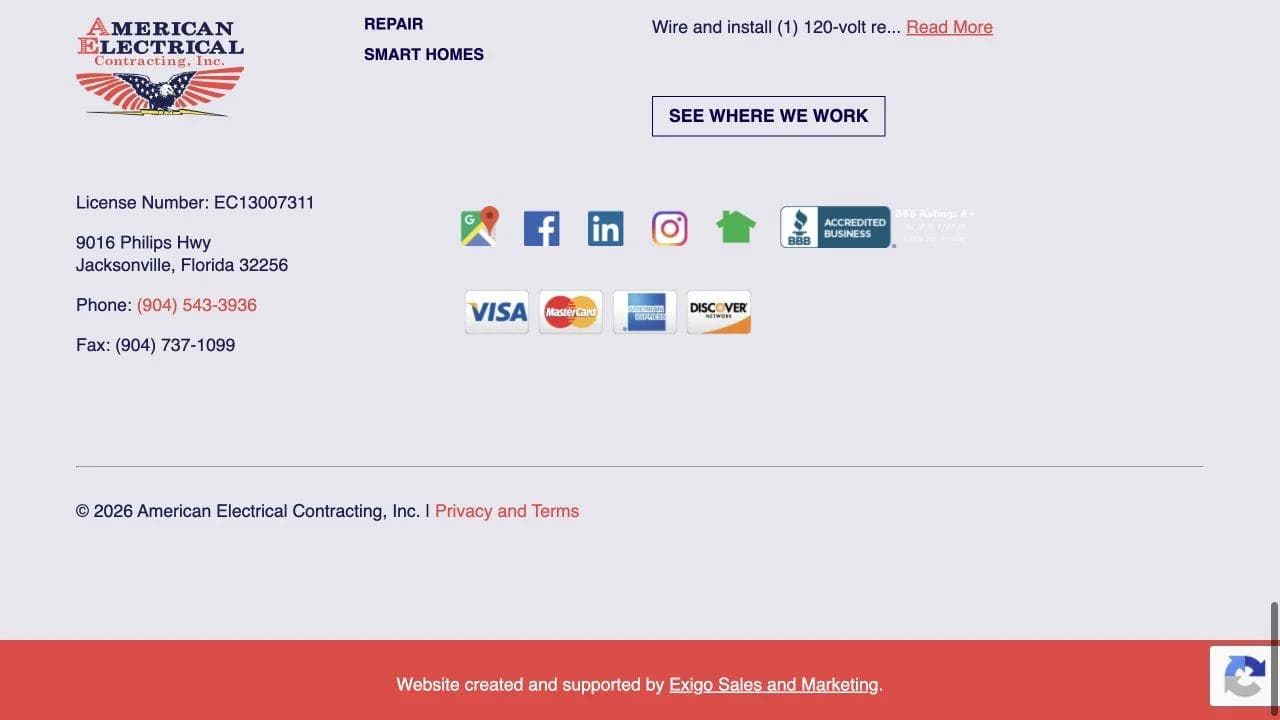
The closing includes service territory, team hiring, contact routes, and additional proof. Seasonal relevance gives the homepage a reason to change over time.
What to borrow
- Connect services to real local housing, weather, and insurance conditions.
- Update seasonal modules rather than leaving one timeless generic hero.
- Offer problem-specific tools or consultations when they genuinely clarify the next step.
What not to copy blindly
Local urgency must stay factual. Avoid implying that a contractor controls insurance approval, code enforcement, utility restoration, or storm outcomes.
What all six sites have in common
The strongest pages make licenses, geography, services, and contact visible. But their best choices come from specialization:
- Generator specialists explain ownership and maintenance.
- Emergency service companies emphasize dispatch and safety.
- Commercial design-build firms emphasize accountability, sectors, and project evidence.
- Local residential firms organize demand around housing stock, weather, panels, and financing.
The homepage should not make every visitor learn the whole company. It should identify the request, prove the relevant capability, and send the visitor into the right operating system.
A recommended electrician homepage sequence
- State sector, location, licensing, and the primary service or project action.
- Separate emergency response from planned estimates.
- Route by residential, commercial, industrial, or specialty work.
- Explain operating standards and response expectations.
- Show comparable projects or service evidence.
- Introduce licenses, insurance, people, reviews, and manufacturer credentials.
- Answer timing, pricing process, permits, warranty, and service-area questions.
- Use a short routing form with service type, location, urgency, and contact details.
Common electrician website mistakes
- Treating an emergency phone number and a quote form as equivalent.
- Hiding license numbers or using unlinked trust badges.
- Claiming every sector without comparable evidence.
- Publishing electrical advice that encourages unsafe diagnosis or repair.
- Using manufacturer logos without explaining certification or scope.
- Asking for long project details before confirming geography and fit.
Where Moda fits
Moda can create the public marketing site, service pages, project case studies, estimate explainers, recruiting materials, and branded social content for an electrical contractor. It does not replace dispatch, estimating, field-service management, payments, CRM, or a secure customer portal. Those systems should connect to the public site through clear, limited handoffs.
Frequently asked questions
What should an electrician website include?
Include sector, service area, licensing, insurance, emergency routing, planned-service and project paths, relevant specialties, project evidence, review sources, pricing process, and what happens after contact.
Should emergency electrical requests use the normal quote form?
No. Emergency requests need a prominent phone route, safety boundaries, location, and response expectations. Planned work can use a structured estimate or consultation form.
How should electricians show licenses and insurance?
State the license number and jurisdiction, name the insured business, and explain the coverage relevant to the work. Avoid trust icons that cannot be verified.
What belongs in a commercial electrical case study?
Include the building or customer type, scope, constraints, delivery model, coordination, service size when relevant, schedule, and the company role. Separate firm work from a principal's earlier experience.
Can Moda run electrician dispatch or estimating?
No. Moda can create the public site, service pages, case studies, PDFs, and branded content, while dispatch, estimating, field service, payments, and CRM remain in dedicated systems.

Real editable visuals. Real canvas. Full control.
Fly through design work