HVAC Website Design: 6 Full-Page Teardowns
See six HVAC websites analyzed section by section, with practical guidance for emergency calls, replacement, maintenance, heat pumps, commercial work, trust, and local SEO.
 Anvisha Pai, Co-founder & CEO, Moda
An HVAC website has to serve people in very different states of mind. One visitor has no cooling and wants a technician now. Another is comparing a heat pump or full system replacement. A third wants a maintenance plan. A commercial buyer may need documented capabilities, response standards, and a quote that fits a building rather than a house.
The strongest HVAC sites do not blur those journeys into one generic "contact us" funnel. They route by urgency, job type, customer type, and geography, then supply the proof each decision requires.
The HVAC website framework
Use five questions to audit the page:
- Can an urgent visitor act immediately? The phone route, hours, service area, and meaning of "emergency" should be explicit.
- Can a replacement shopper understand the process? Explain assessment, equipment options, rebates or financing, installation, warranties, and what affects scope.
- Does maintenance have its own path? Memberships and preventive service are a different purchase from a repair call.
- Is trust concrete? Licenses, certifications, review sources, guarantees, technicians, and years in market should be verifiable.
- Does the page qualify the customer? Residential and commercial work, supported systems, brands, and service boundaries should not remain mysteries until a callback.
1. Dash: turn operating choices into visible promises
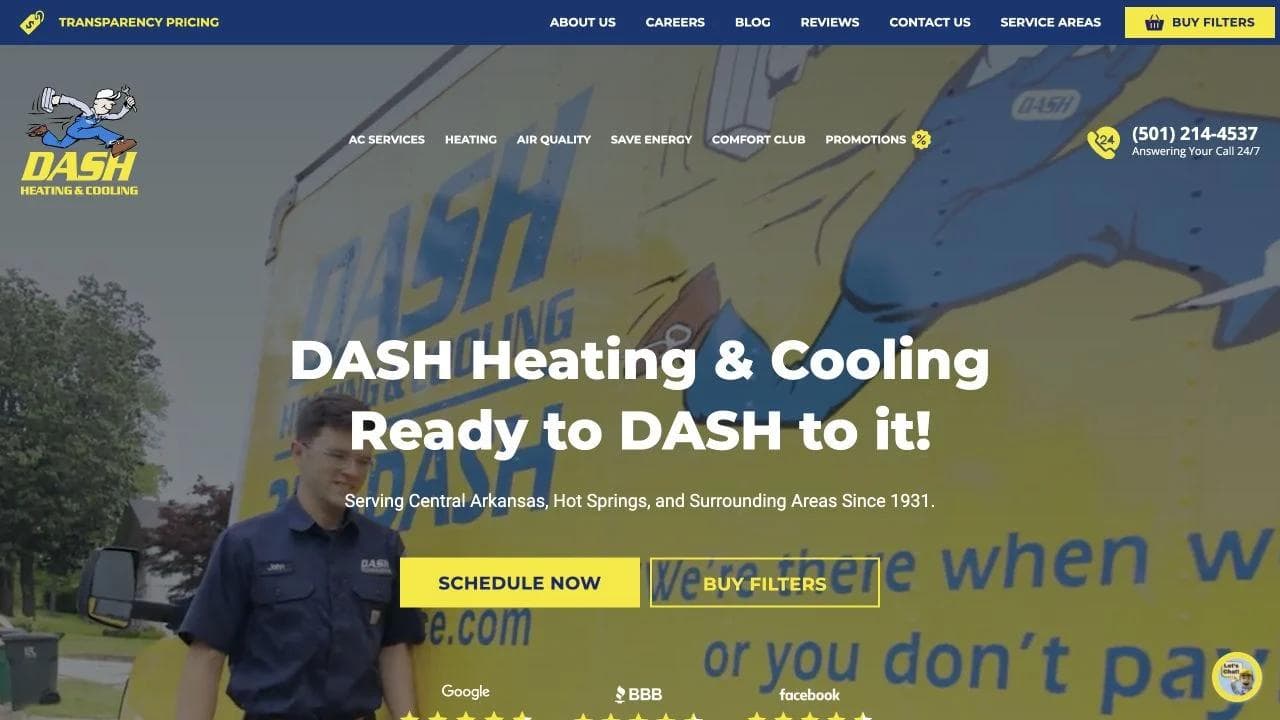
Dash Heating & Cooling opens with its Arkansas service area, a schedule action, a 24-hour phone route, review sources, and links for filters, pricing, maintenance, and promotions. The page immediately exposes several reasons someone might arrive instead of pretending every visitor is ready for the same form.
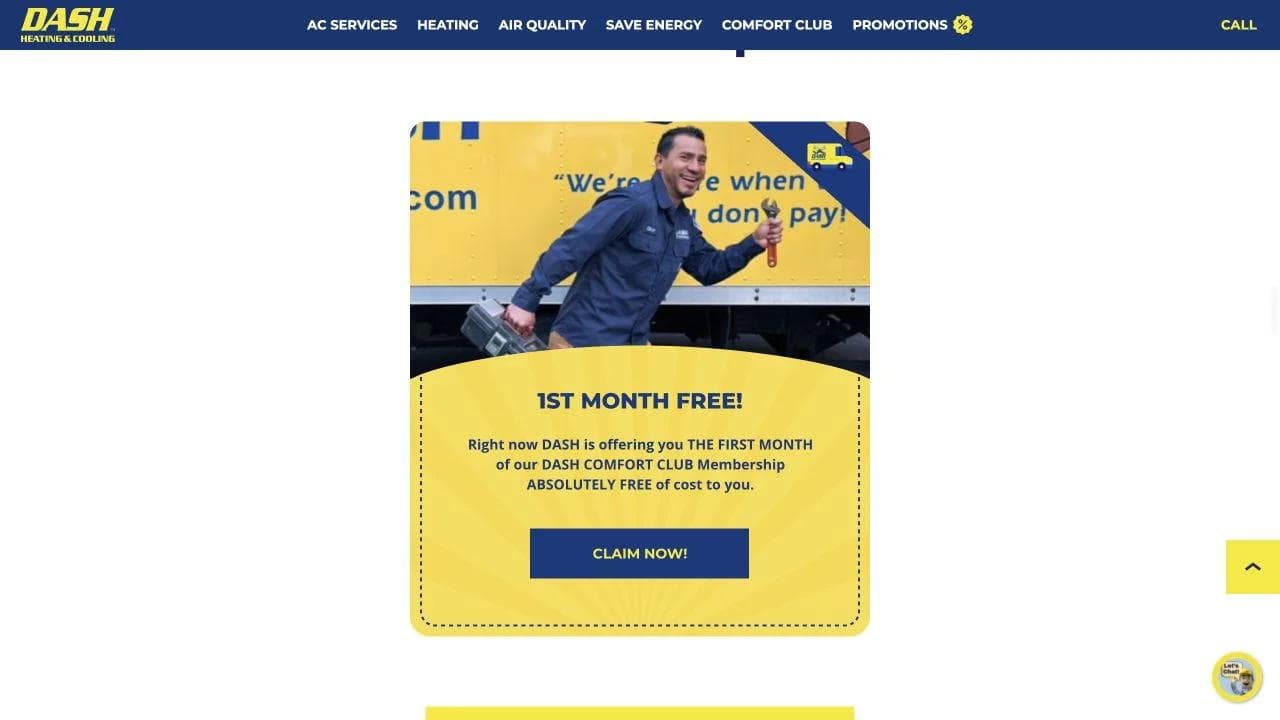
The middle of the page shifts from urgency to evaluation. Service categories, technician visibility, guarantees, and maintenance messaging explain what the company can do and how it expects the relationship to work. This is where an HVAC homepage should help a visitor distinguish a quick repair from an ongoing comfort plan.
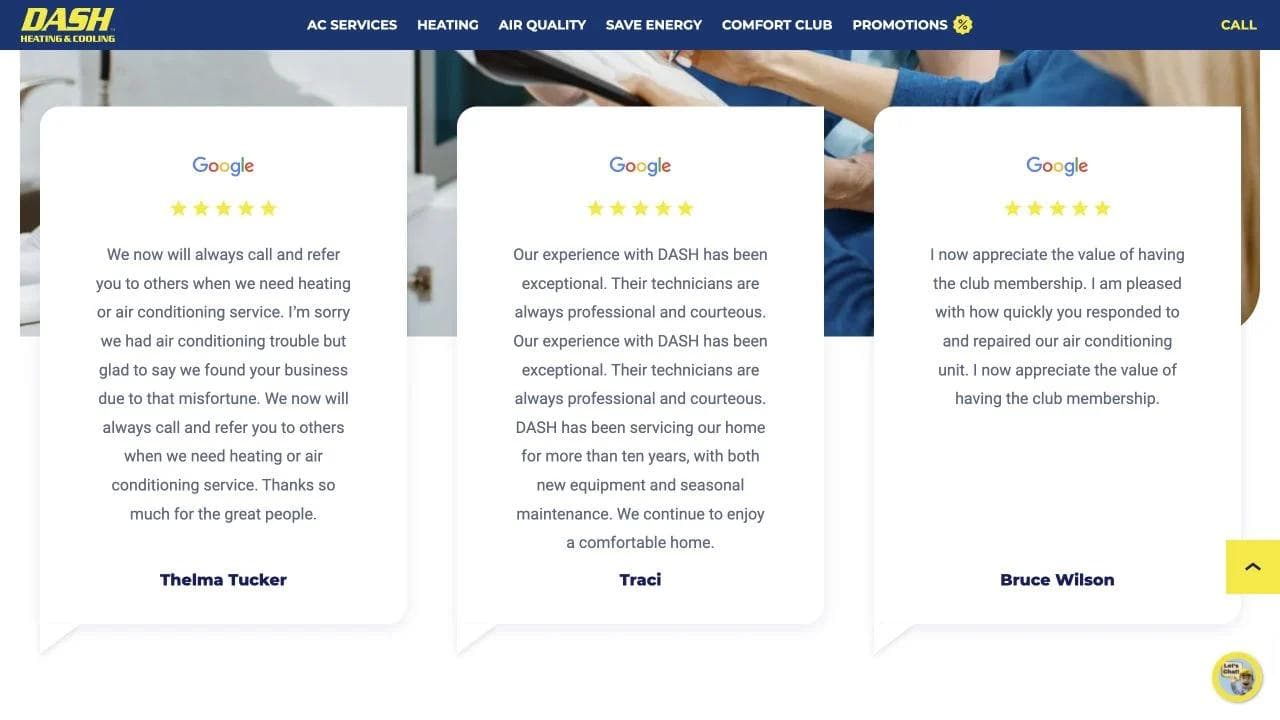
Lower sections make service coverage and price framing visible before reviews and another contact opportunity. That ordering matters. Social proof is more useful after visitors know the company serves their location and kind of system.
What to borrow
- Put emergency calling, planned scheduling, maintenance, and filter or accessory needs into distinct routes.
- State the service area early and repeat it near the final action.
- Treat pricing policy, guarantees, and maintenance as operating information, not decorative badges.
What to improve
The page repeats several sections and promotions. A tighter version could preserve the same decision paths while reducing the distance to reviews and the final scheduling choice.
2. Modern Heating and Air: make replacement and maintenance feel planned
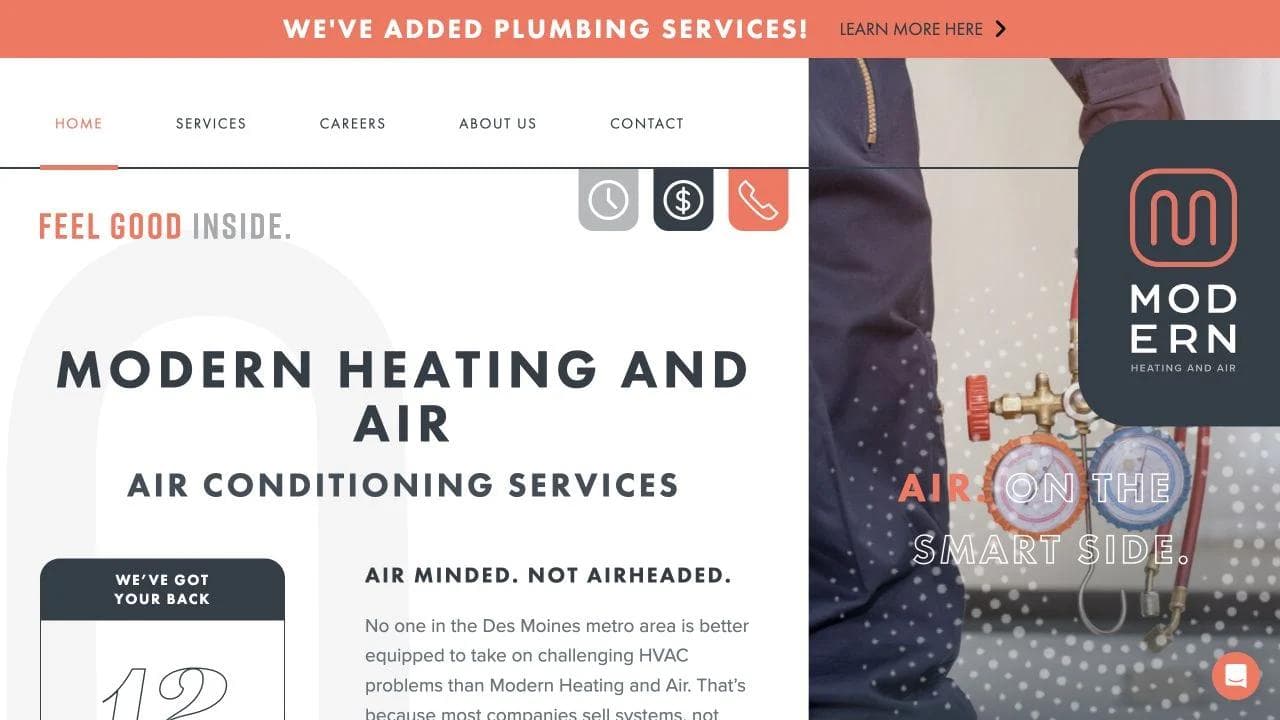
Modern Heating and Air presents a polished local-service site with prominent scheduling, service categories, and proof. The opening is designed for both a homeowner with a problem and one who is researching a larger upgrade.
The center of the page layers services, company differentiation, promotions, and maintenance. This supports a useful lifecycle: fix the immediate issue, understand the provider, then consider how to prevent the next breakdown.
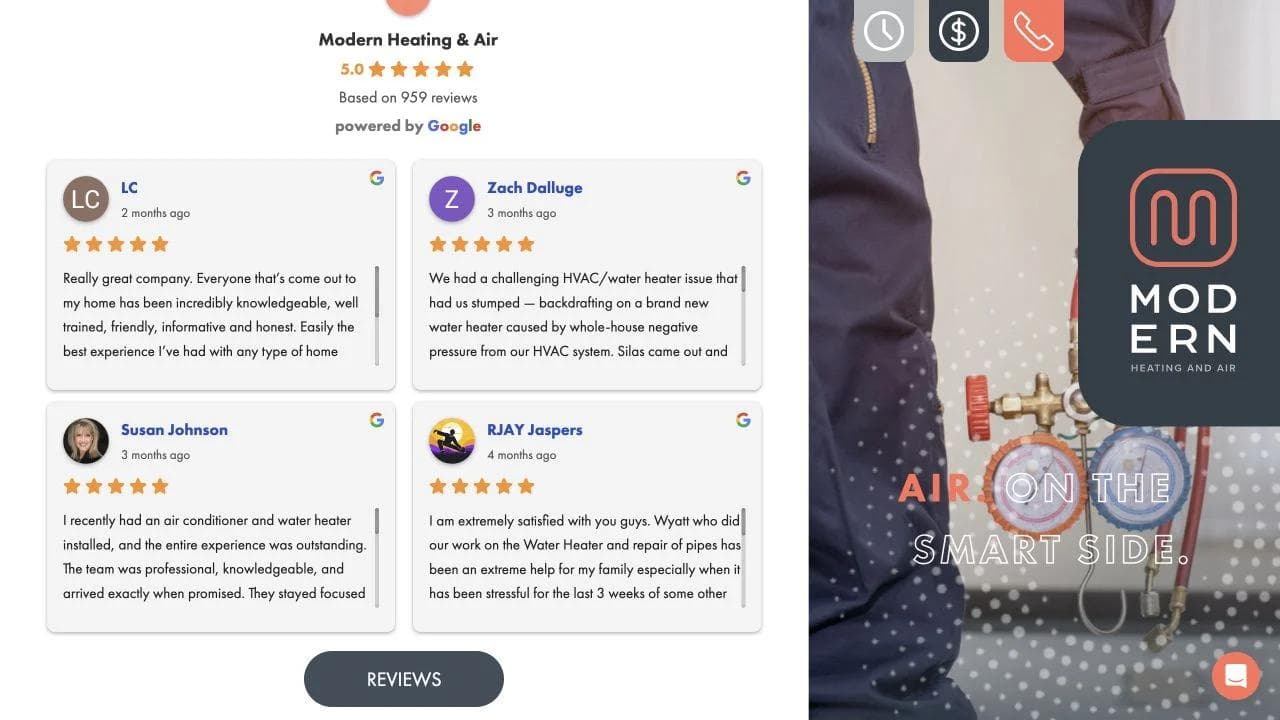
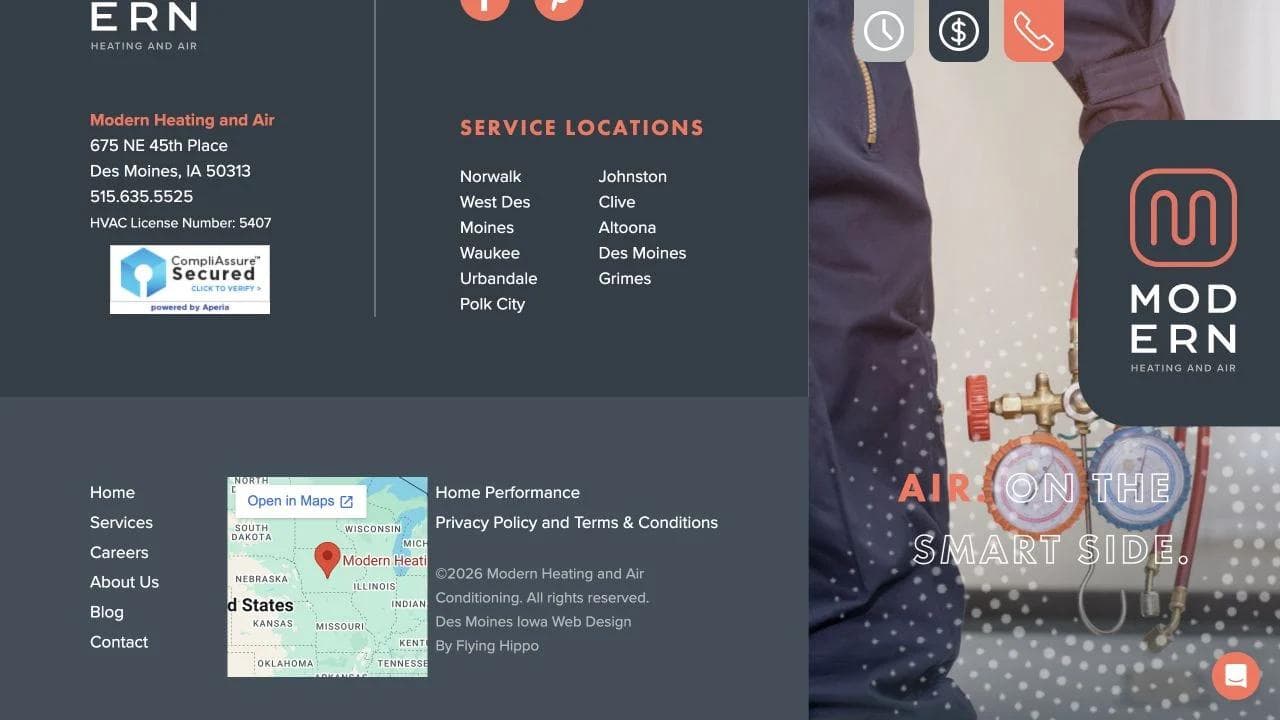
The closing returns to customer proof and contact rather than ending with a generic footer. That creates a complete argument: capability, reason to trust, evidence, then action.
What to borrow
- Give repair, replacement, indoor-air-quality, and maintenance visitors recognizable entry points.
- Explain the service relationship before presenting a membership.
- Use customer proof near the final decision, not only as a logo strip under the hero.
What to improve
Replacement shoppers would benefit from a clearer overview of assessment, sizing, equipment choices, incentives, installation, and warranty handoff. Those details often decide whether a visitor requests a quote or keeps researching elsewhere.
3. Smock: turn service behavior into a recognizable system
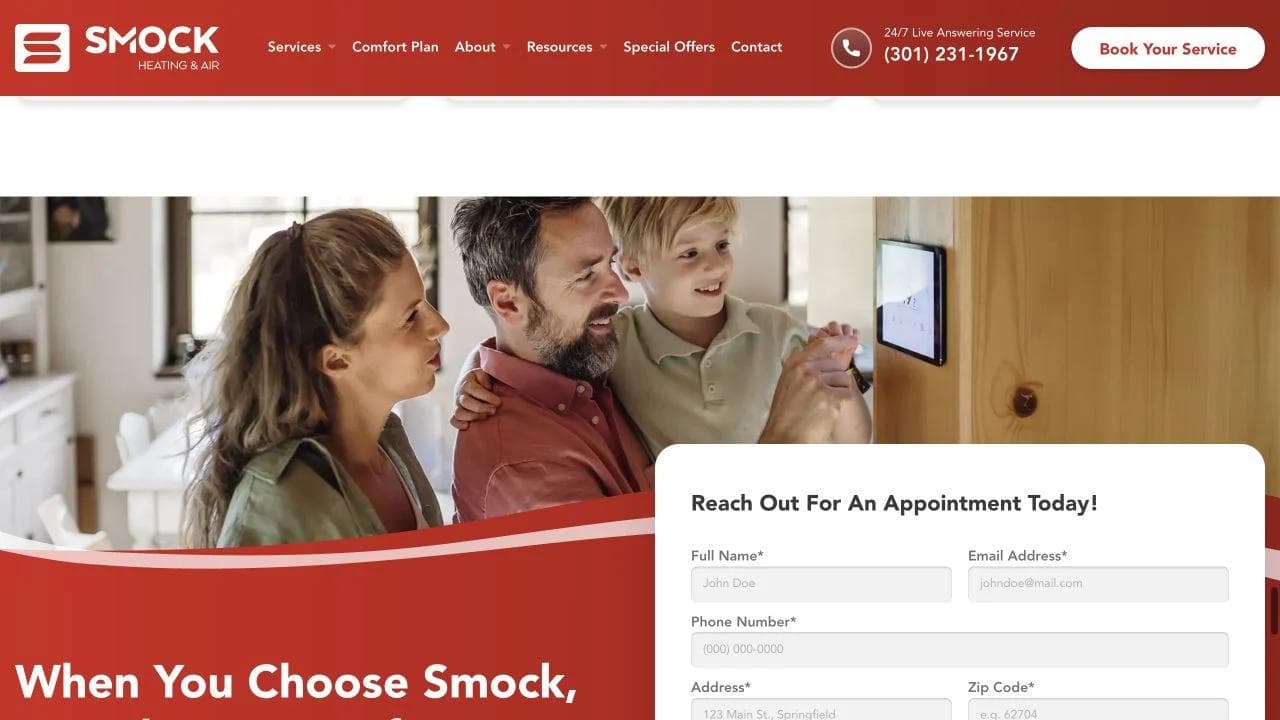
Smock Heating & Air opens with local coverage, scheduling, phone access, and a family-oriented residential position. It does not rely on equipment alone to differentiate the company. The page makes the service relationship part of the product.
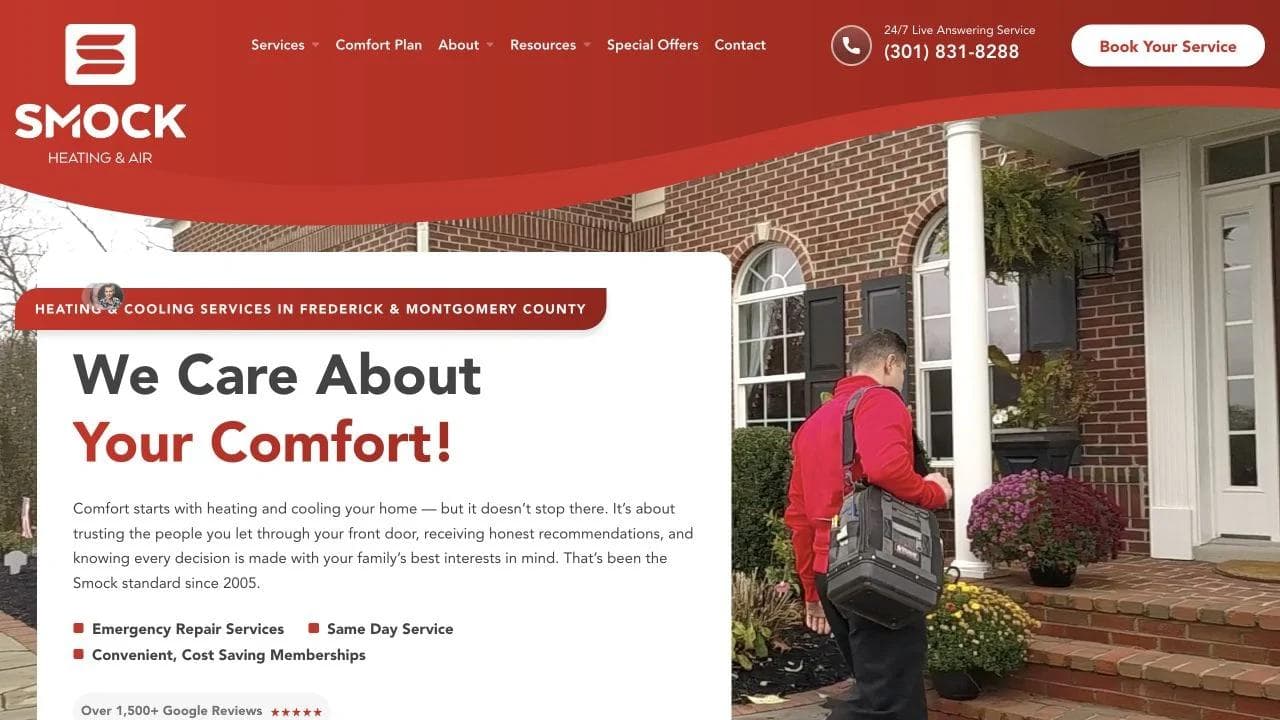
The middle introduces the Smock C.A.R.E. process and three operating values. Branded frameworks can be empty marketing, but this one is useful when each label describes behavior a customer can notice during the visit.
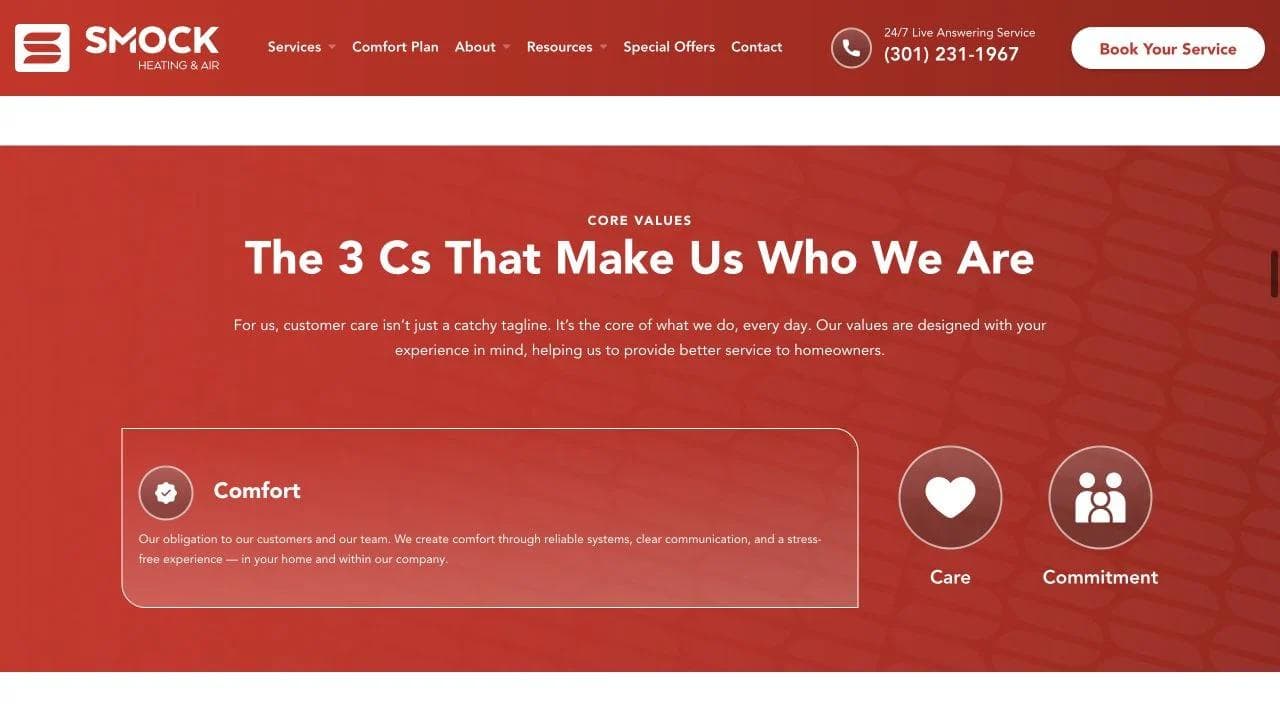
The lower page connects specials, maintenance savings, reviews, and another booking route. This lets planned-maintenance visitors reach a concrete offer without burying repair customers in membership copy at the top.
What to borrow
- Explain the behaviors behind a service promise, such as communication, arrival, diagnosis, approval, and cleanup.
- Keep promotions and maintenance visible but secondary to urgent service routing.
- Make the maintenance plan answer what is included and why it changes the customer experience.
What to improve
A named process earns its space only when the details are measurable. Replace broad values with response, communication, approval, and follow-up standards wherever the company can support them.
4. Elephant Energy: design for a researched replacement purchase
Elephant Energy is not an emergency-repair homepage. It is designed for homeowners considering heat pumps, water heaters, electrification, incentives, and a coordinated installation. The opening leads with comfort and a consultative project rather than a technician dispatch.
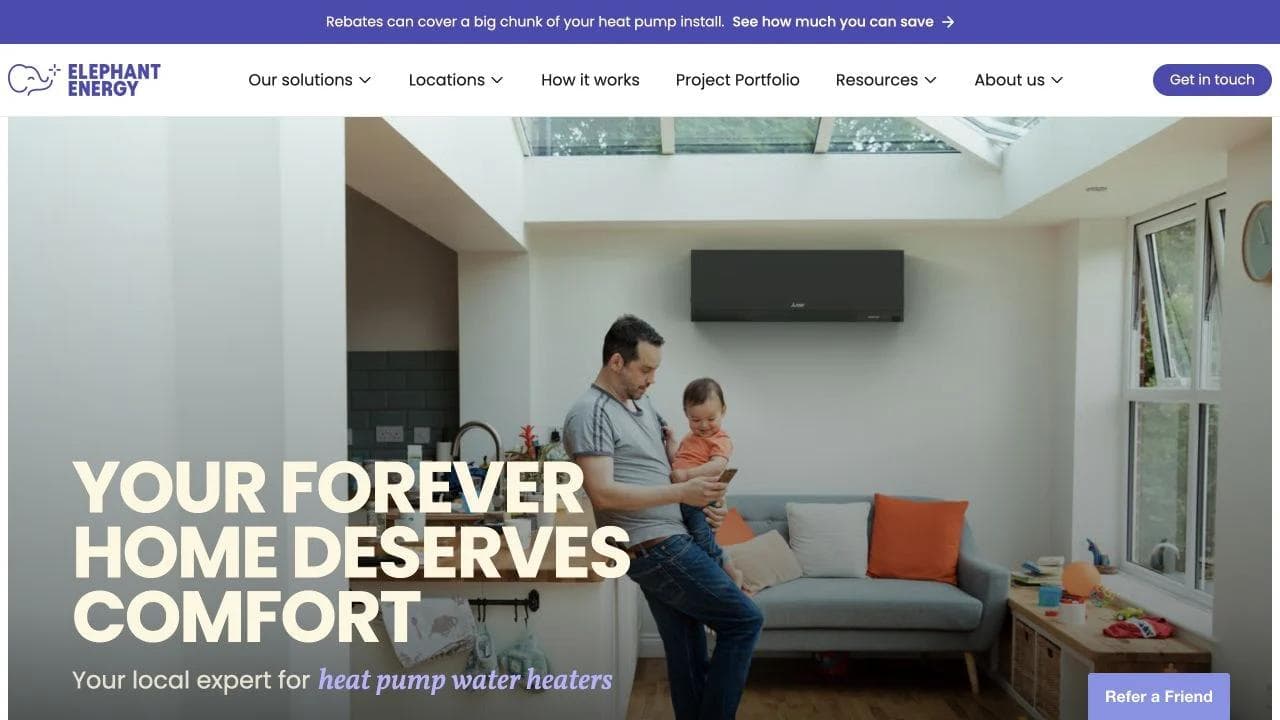
The center explains equipment benefits, price ranges, incentive handling, approved programs, and the installation process. Replacement shoppers need this information because the purchase spans comfort, electrical work, equipment sizing, financing, contractors, permits, and rebates.
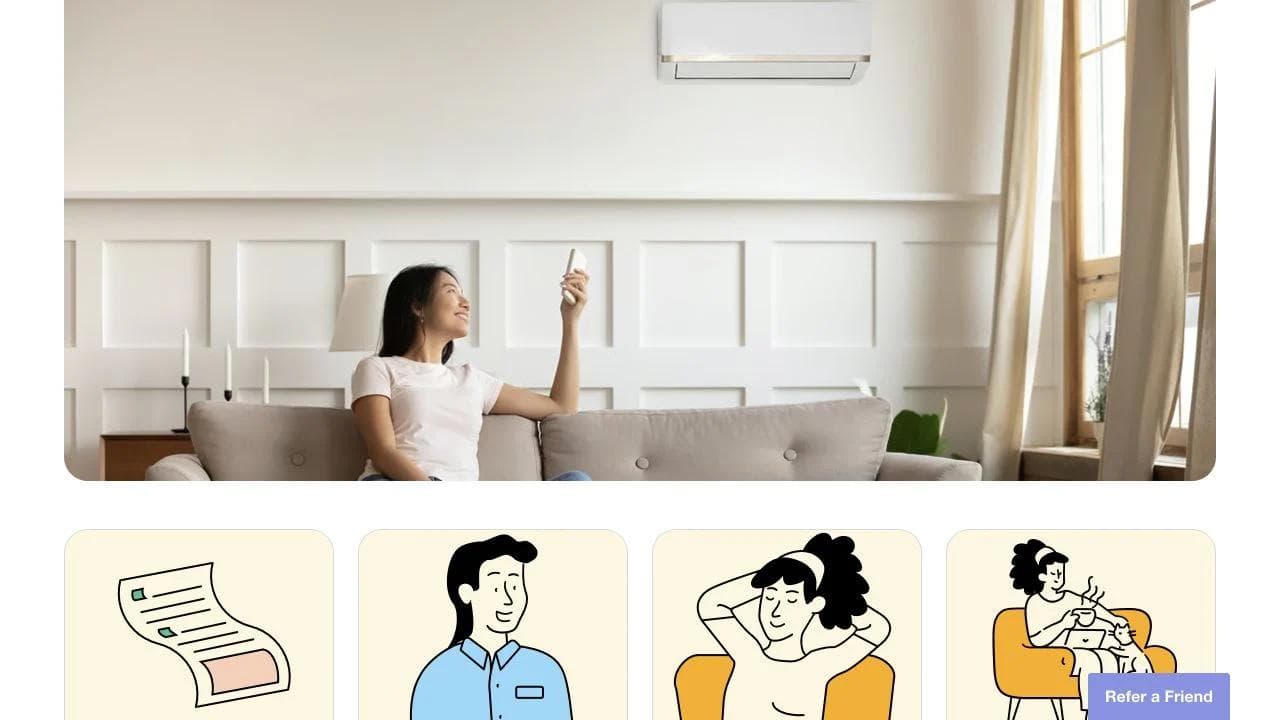
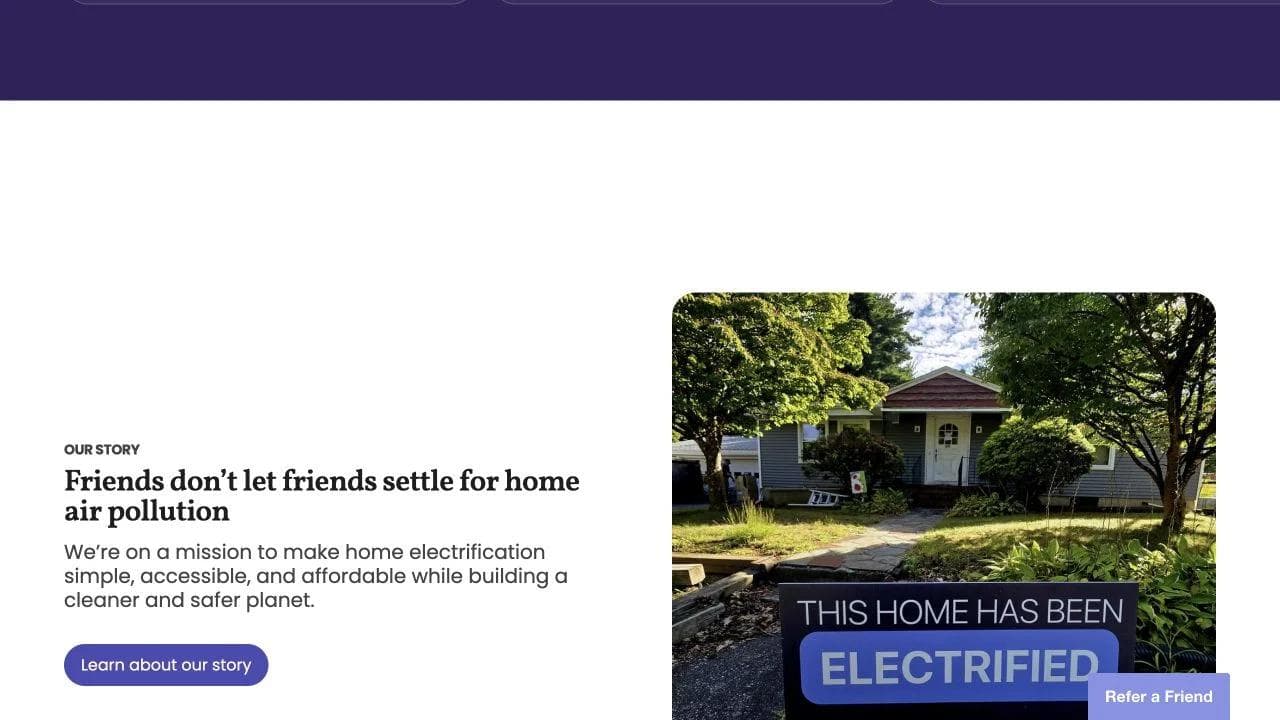
The later journey adds process detail, customer stories, service regions, and another estimate route. The company is selling project management as much as hardware.
What to borrow
- Treat a heat-pump replacement as a multi-step project, not a product card.
- Explain who coordinates equipment, electrical work, permits, inspections, and incentives.
- Date incentive language and connect it to official programs rather than presenting a permanent discount.
What to improve
Price ranges are useful, but the page should keep explaining the variables: load, distribution, electrical capacity, zones, backup heat, water heating, local labor, and available incentives. A broad range without those drivers can feel less transparent than intended.
5. Samco: design commercial service around operational continuity
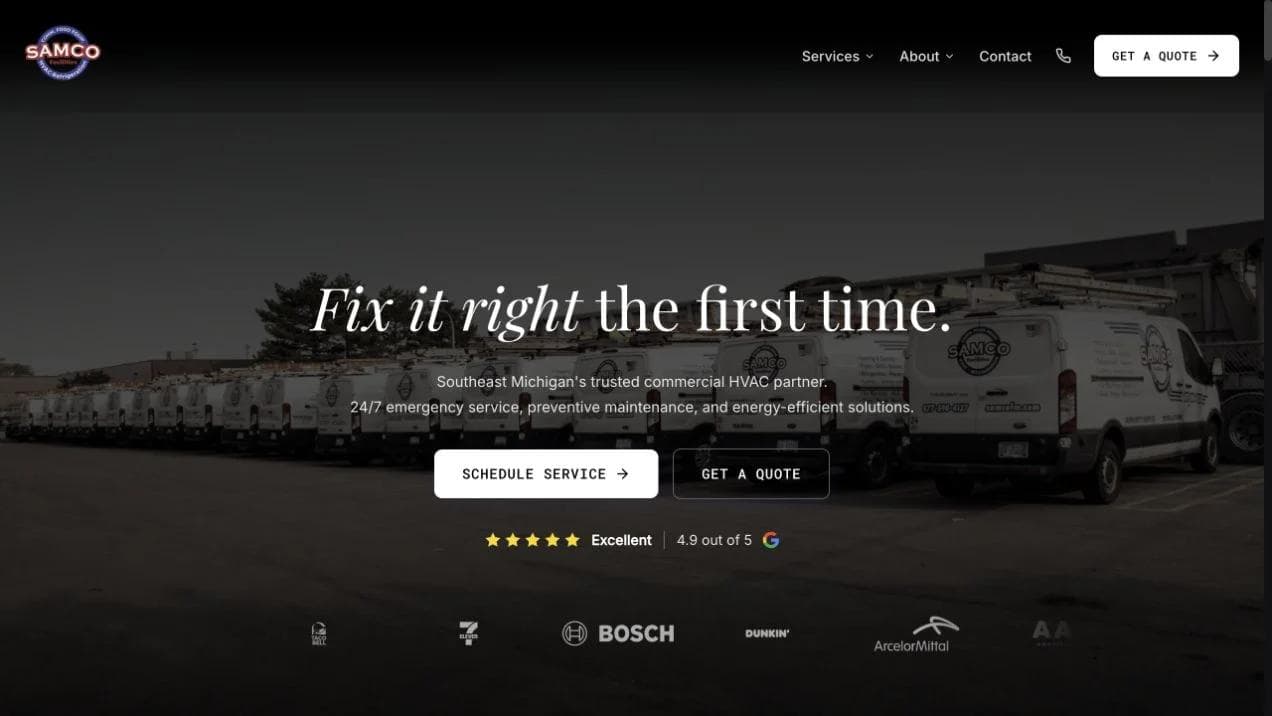
Samco Facilities Maintenance leads with commercial HVAC, refrigeration, food equipment, and 24-hour response in Southeast Michigan. Logos and facility-focused language immediately establish that the buyer is managing business operations, not household comfort.
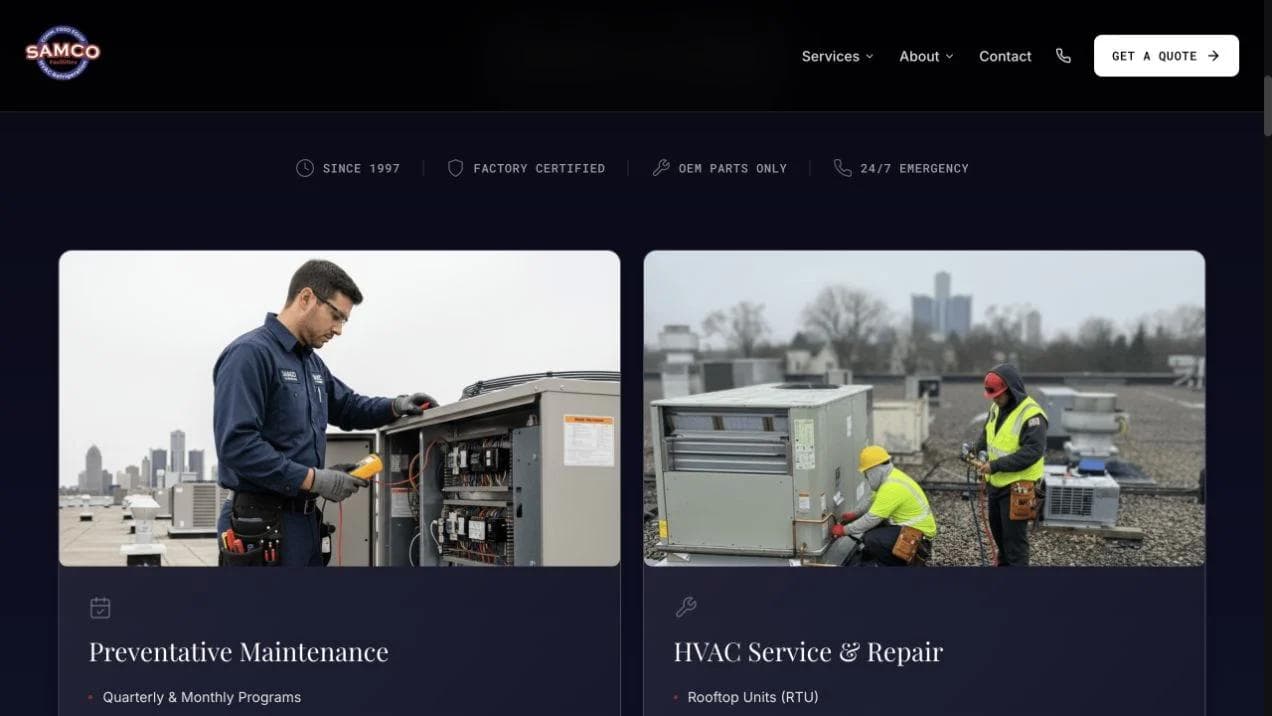
The service section separates preventive maintenance, repair, refrigeration, and equipment support. This is the correct commercial information model: buyers identify the asset and operating risk before they request a quote.
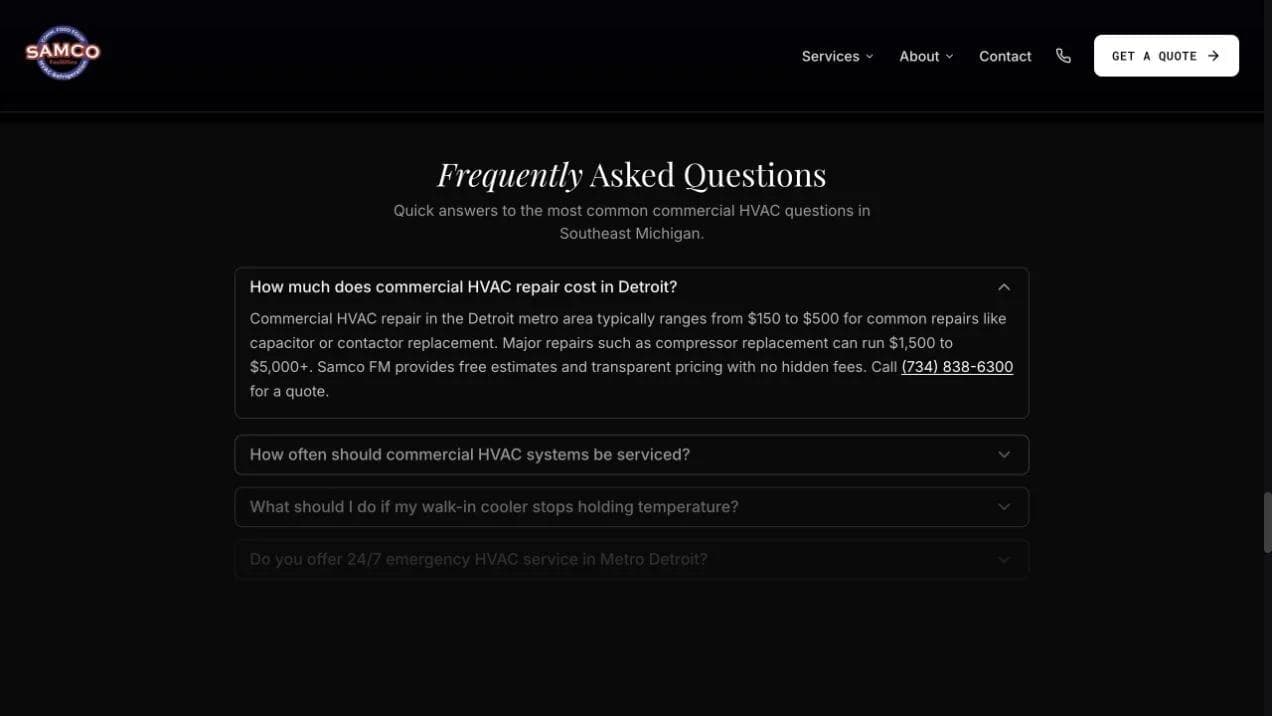
Lower sections add qualifications, customer evidence, educational content, FAQs, and a scoped estimate route. Commercial articles and FAQs can carry real value when they address maintenance schedules, system types, downtime, and procurement questions.
What to borrow
- Lead with facility type, equipment, coverage area, and emergency availability.
- Separate preventive programs from one-time service and capital work.
- Ask about asset type, location, urgency, access, and contract status before the sales callback.
What to improve
Customer logos show market experience, but a facility manager still needs case evidence: equipment, challenge, response, work performed, reporting, and the operating result.
6. Vinco Mechanical: split today's outage from tomorrow's capital project
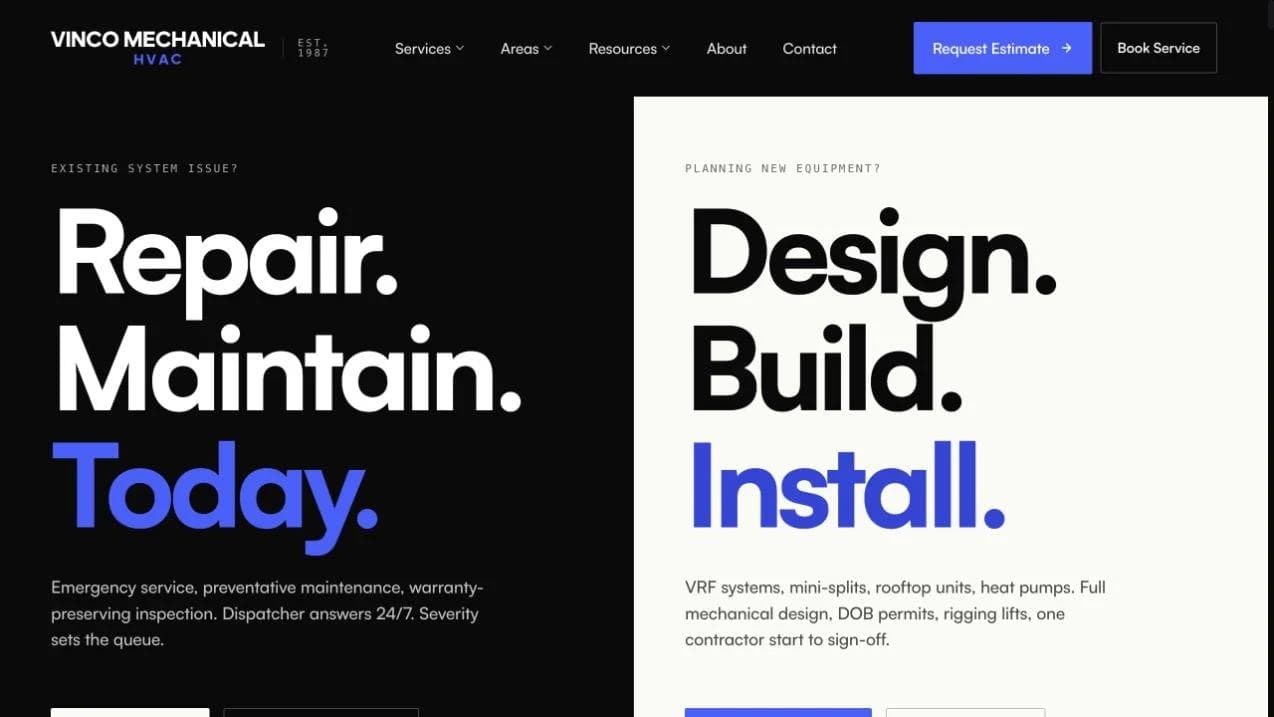
Vinco Mechanical makes the strongest structural distinction in this set. "Repair. Maintain. Today." and "Design. Build. Install." are separate paths with different actions, credentials, and expectations.
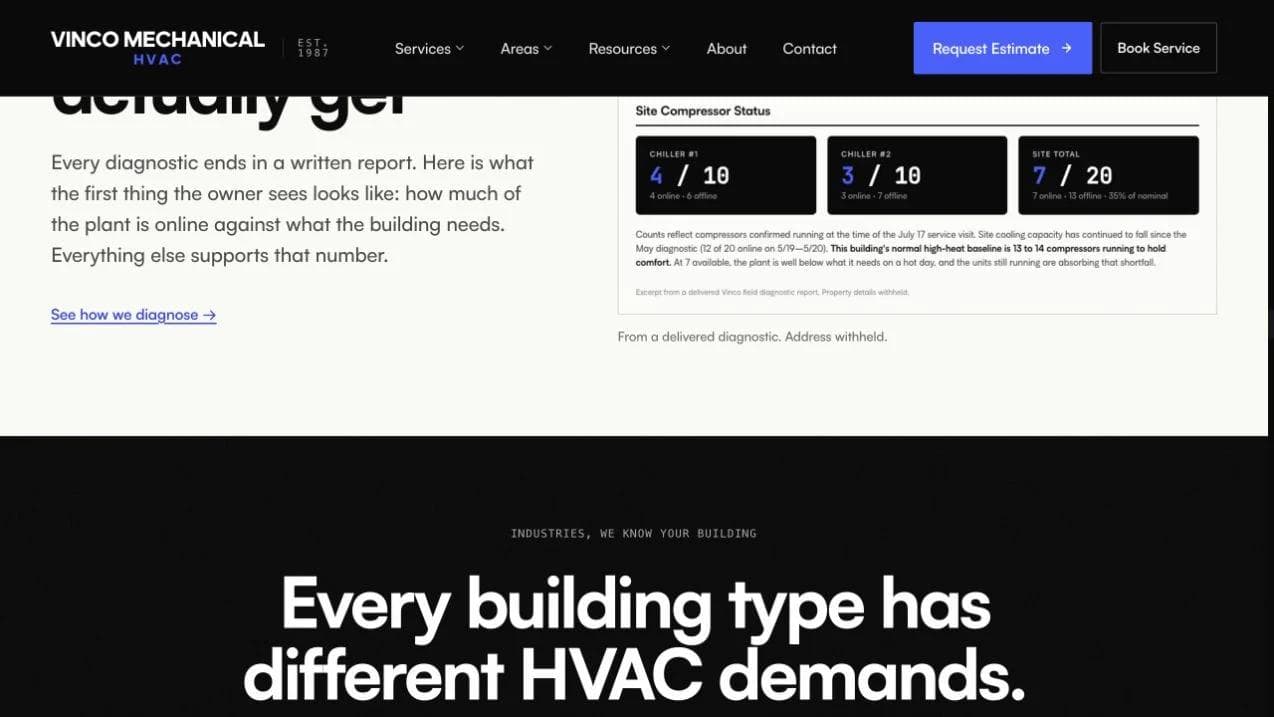
The middle explains diagnosis, pricing, execution, reports, building types, and supported systems. This helps facilities teams understand not only what the company repairs, but how information will move after the site visit.
The closing returns to service territory, qualification, and contact. A commercial site should close with enough context for dispatch or estimating to route the request without starting discovery from zero.
What to borrow
- Split emergency service, preventive maintenance, and design-build into distinct journeys.
- Show the diagnostic or inspection deliverable a buyer will actually receive.
- Name supported building and system types instead of relying on "full service."
What to improve
The bold split is clear, but repeat customers and maintenance-contract customers may need a faster dedicated route that bypasses the general marketing funnel.
Six HVAC examples at a glance
- Dash: strongest lesson in exposing multiple consumer actions without hiding the phone route.
- Modern Heating and Air: strongest lesson in carrying a polished residential story from service to proof to contact.
- Smock: strongest lesson in turning service behavior into a memorable process.
- Elephant Energy: strongest lesson in educating a researched replacement and electrification buyer.
- Samco: strongest lesson in organizing commercial maintenance around assets and operational risk.
- Vinco Mechanical: strongest lesson in separating immediate service from design-build work.
None is a universal template. An emergency-heavy residential contractor should not copy Elephant's consultation-led opening. A commercial design-build firm should not copy residential coupons. Start with the jobs, clocks, and buyers the company actually serves.
What all strong HVAC websites need
Two clocks, not one CTA
HVAC demand runs on two clocks. Repair visitors are measuring discomfort and possible damage in hours. Replacement visitors are comparing a major purchase over days or weeks. Give each a clear action and set an honest response expectation.
A repair versus replacement explanation
Do not force the visitor to diagnose the system. Explain the factors a technician evaluates, such as age, safety, repair history, comfort, efficiency, refrigerant or parts availability, and total ownership cost. Avoid promising that a specific option is right before inspection.
Maintenance as a real product
A membership page should explain visit frequency, included work, priority rules, discounts, exclusions, renewal, cancellation, and whether benefits apply immediately. A vague "join our club" card creates questions rather than confidence.
Heat pumps and incentives without hype
Heat-pump shoppers often need education about climate, electrical capacity, backup heat, comfort, installation quality, and available incentives. Link to current official programs and date any rebate or tax-credit language because eligibility changes.
Commercial qualification
Commercial pages should name facility types, equipment, coverage hours, preventive-maintenance deliverables, project capacity, safety or licensing credentials, and who answers emergencies. A restaurant walk-in failure and a planned rooftop-unit replacement should not enter the same unlabeled form.
Recommended HVAC homepage anatomy
- Opening: market, residential or commercial focus, primary phone route, planned scheduling, hours, and one concise proof statement.
- Choose your need: repair, replace, maintain, improve air quality, or commercial service.
- Service-area confirmation: cities or counties, with a clear boundary rather than dozens of thin location claims.
- How service works: request, confirmation, arrival, diagnosis, approval, work, and follow-up.
- Replacement guidance: assessment, options, financing or incentives, installation, and warranty.
- Maintenance: concrete plan terms and priority rules.
- Trust: technicians, licenses, certifications, review source, guarantees, and company history.
- Proof: reviews, projects, or case stories matched to the claimed service.
- Final routing: emergency phone, planned booking, and commercial quote paths.
Where Moda fits
Moda can help an HVAC company build a branded static marketing site, service pages, maintenance-plan explainers, financing graphics, social posts, direct-mail PDFs, and campaign creative from the same visual system. It is not field-service dispatch, inventory, CRM, financing, or emergency-call software. Connect the published site to the operational tools that actually manage appointments and customers.
Frequently asked questions
What should an HVAC website include?
Include the service area, emergency phone route, planned scheduling, repair and replacement paths, maintenance information, supported customer types, licenses and certifications, review source, financing or incentive context, and what happens after contact.
Should HVAC repair and replacement use the same form?
Usually not. A no-cooling or no-heat request needs urgency, location, system, and response routing. A replacement inquiry benefits from home or building context, current equipment, comfort concerns, timing, and financing interest.
How should an HVAC site explain maintenance plans?
State visit frequency, included work, priority rules, discounts, exclusions, renewal, cancellation, and whether benefits start immediately. Avoid presenting a membership price without the operating terms.
How can an HVAC company improve local SEO?
Build useful service and location pages with accurate boundaries, hours, contact information, local conditions, and relevant services. Maintain the Google Business Profile and avoid near-identical city pages that only exchange place names.
Can Moda run HVAC scheduling or dispatch?
No. Moda can create the public marketing site and branded content, but scheduling, dispatch, CRM, financing, and field-service operations should remain in dedicated systems connected to the site.

Real editable visuals. Real canvas. Full control.
Fly through design work