Landscaping Website Design: 6 Full-Page Teardowns
See six landscaping websites analyzed section by section, with practical lessons for maintenance, design-build, drainage, portfolios, process, local trust, and qualified leads.
 Anvisha Pai, Co-founder & CEO, Moda
The best landscaping websites do more than show beautiful yards. They help a visitor answer four practical questions: Do you work in my area? Do you handle my kind of project? Can I trust your crew on my property? What happens after I ask for a quote?
Most landscaping website roundups stop at visual inspiration. This guide studies the full page sequence of six real companies, from the opening promise through services, process, proof, and the final call to action. The examples range from a family-run local operator to design-build firms, maintenance businesses, and a sustainability-led company.
A useful framework for landscaping websites
A strong landscaping homepage has five jobs:
- Define the operating lane. Lawn care, landscape design, construction, drainage, and property care are different purchases. Name the work you actually want.
- Make geography concrete. A city name is useful, but service areas, climate knowledge, and local project evidence make the claim credible.
- Translate a portfolio into decisions. Attractive photography should identify the scope, site constraint, material, or outcome, not function as anonymous decoration.
- Reduce project uncertainty. Explain how consultation, design, proposal, construction, and ongoing care work.
- Route the lead. A maintenance request, drainage problem, and major outdoor renovation should not feel like the same generic inquiry.
The central fork is between recurring service and project work. Maintenance buyers care about reliability, frequency, coverage, and communication. Design-build buyers care about vision, process, budget fit, craftsmanship, and comparable projects. A company that sells both should keep one brand while giving each path its own evidence and intake questions.
Six landscaping website examples at a glance
- Altizer Lawn & Landscape: local trust and a practical service menu.
- Creekscape Design: design-build breadth organized by the physical systems in a landscape.
- Summit Lawn and Landscape: recurring care and project services under one company.
- Outside Landscape Group: premium residential work led by portfolio quality and process.
- Native Edge Landscapes: design, construction, and property care presented as one lifecycle.
- Excel Landscape: a full-service local company built around longevity and practical education.
1. Altizer: make local trust specific
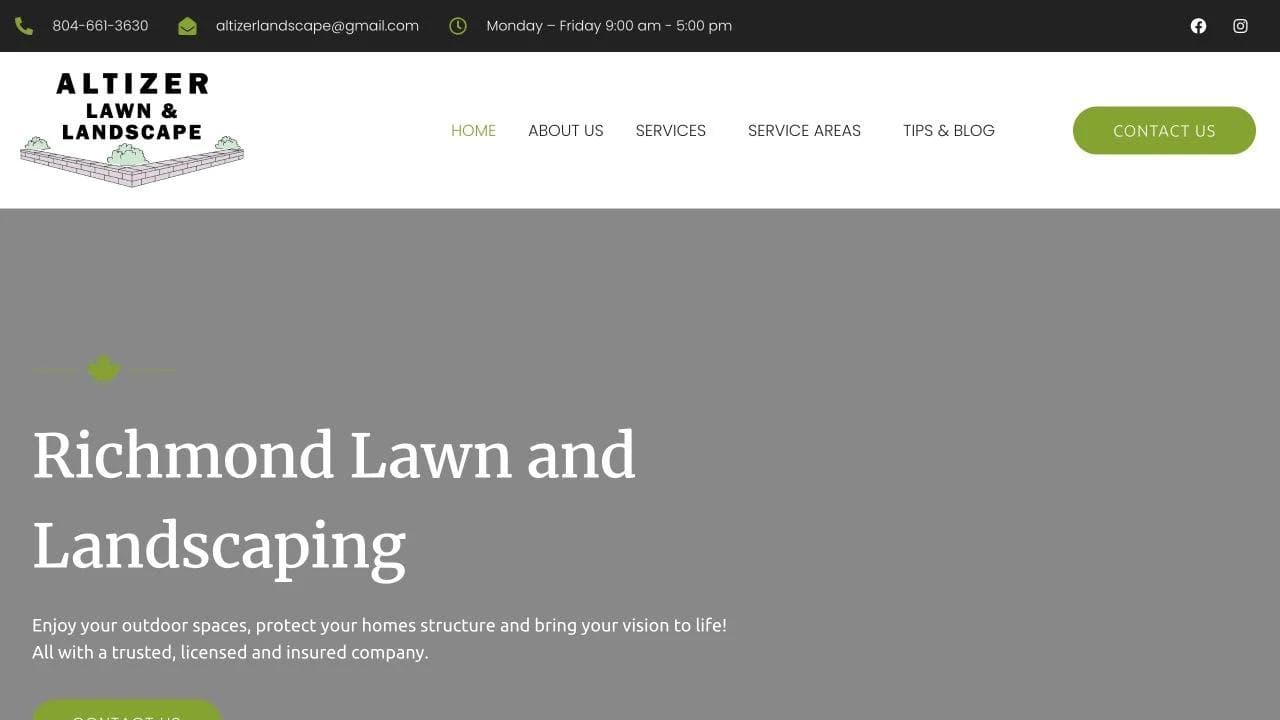
Altizer Lawn & Landscape opens with Richmond, the outcome of enjoying and protecting the property, and a direct contact route. Immediately below, it names review volume, licensing, insurance, family ownership, and team skill.
The next section turns a broad landscaping label into recognizable problems: hardscaping, drainage and erosion, landscaping, and related services. This is stronger than a generic "outdoor solutions" message because visitors can self-identify before they read deeply.
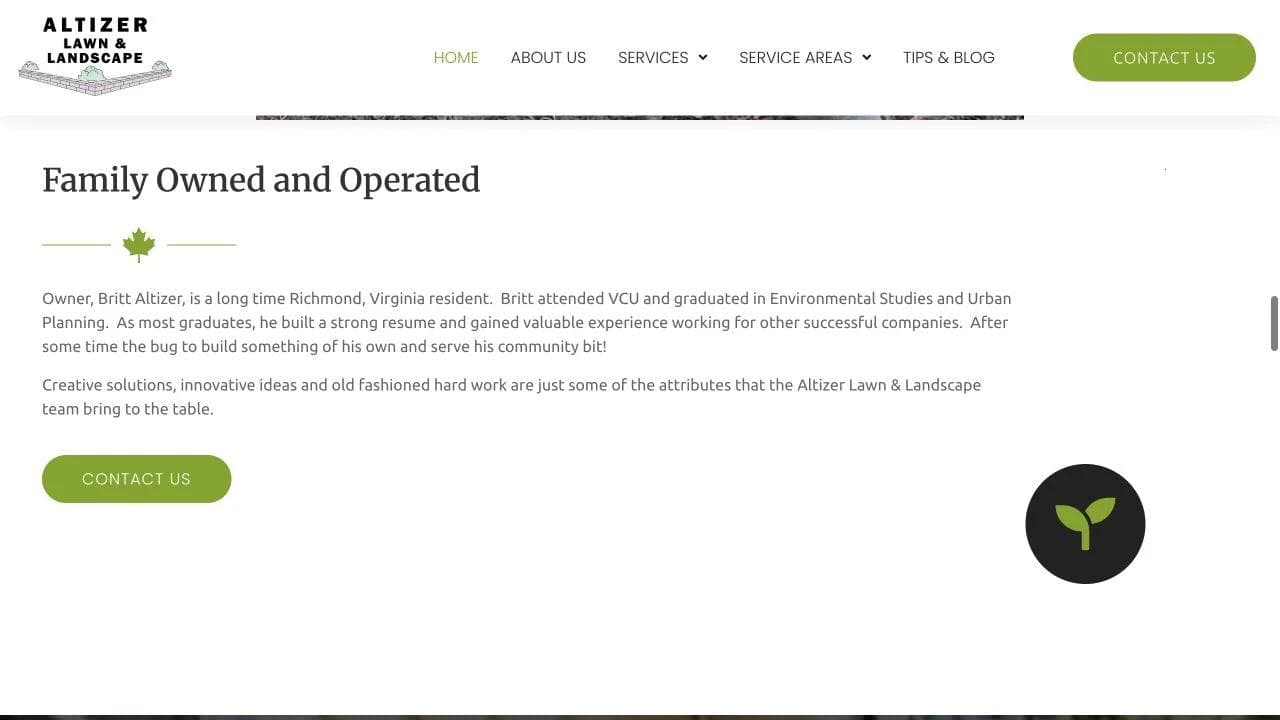
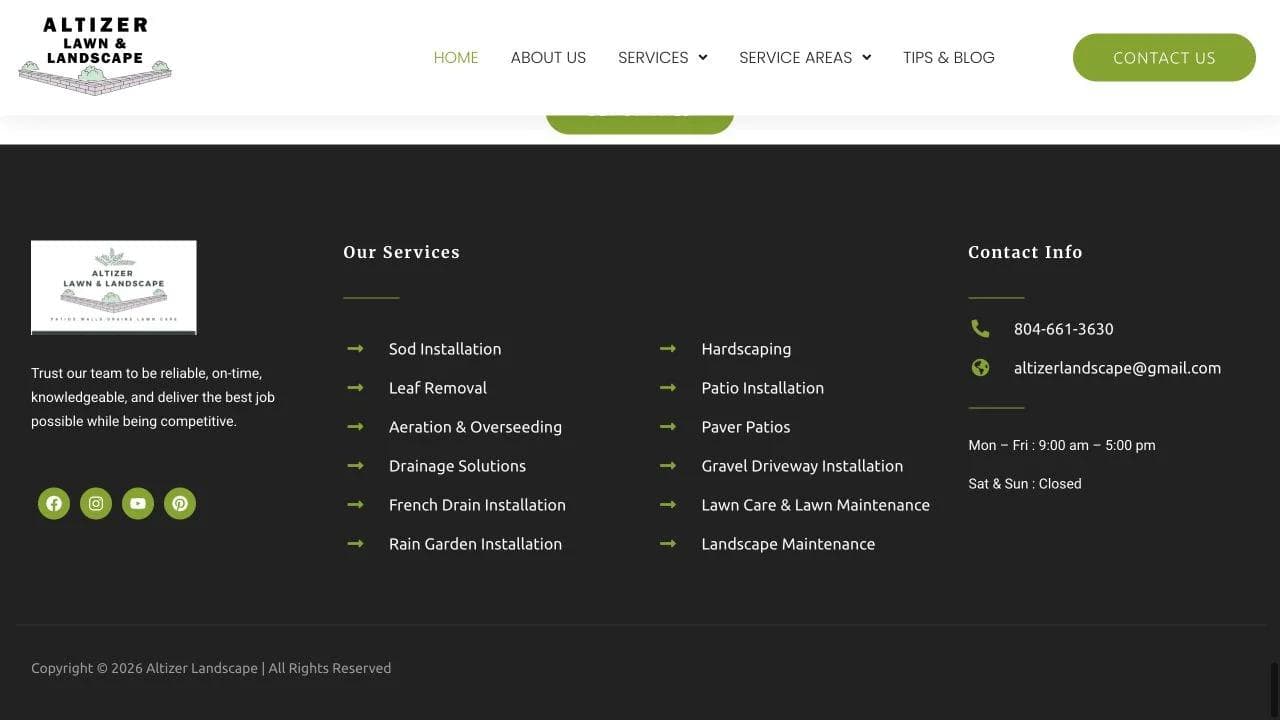
The lower page adds explanation, testimonials, and another consultation path. The page repeatedly pairs a claim with the reason it matters, such as licensing with professional accountability and drainage with protecting the home.
What to borrow
- Put location, licensing, insurance, and a review source near the first decision.
- Describe services using the property problem as well as the trade term.
- Let family ownership support a concrete service promise, such as communication or accountability.
What not to copy blindly
A dense service menu can flatten very different purchases. A drainage repair and a full outdoor renovation deserve different project questions, proof, and next steps even when both live on one homepage.
2. Creekscape: organize breadth around landscape systems
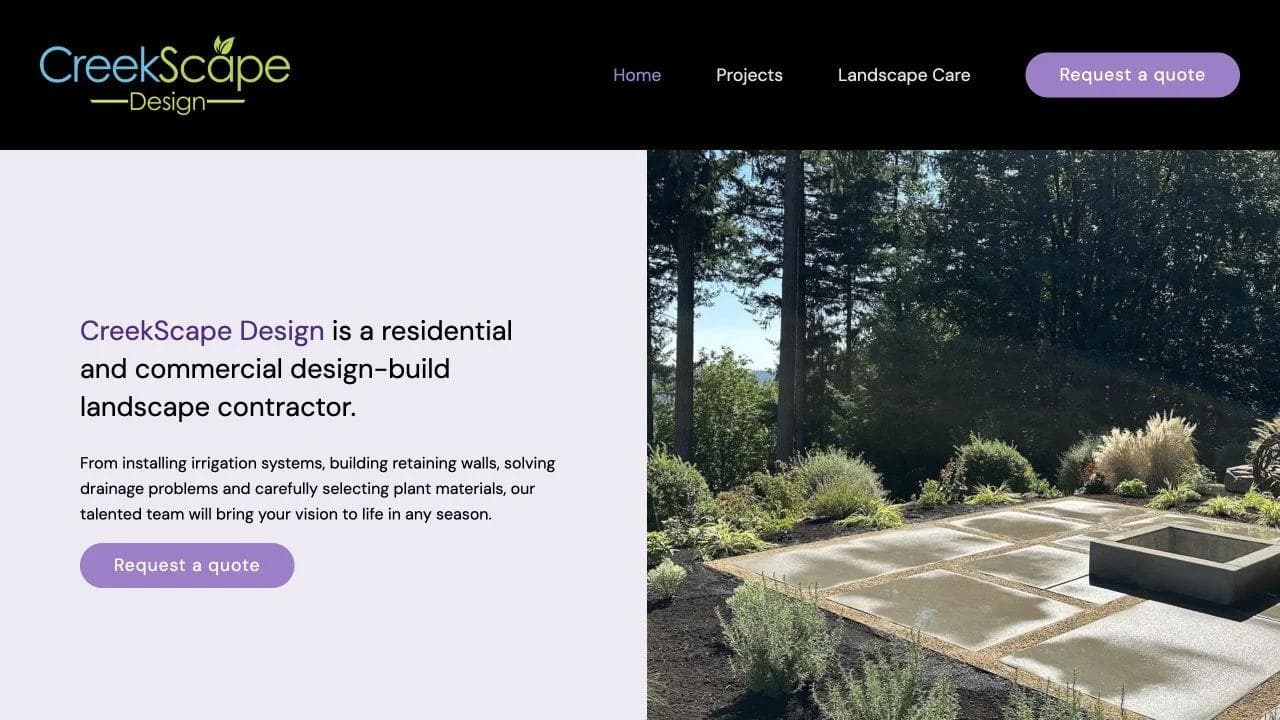
Creekscape Design states that it is a residential and commercial design-build contractor, then names irrigation, retaining walls, drainage, and planting. The opening establishes that the company handles both appearance and site performance.
The service section groups work into understandable systems: designs and planting, hardscapes, and irrigation, drainage, and lighting. That structure helps a homeowner connect visible goals with less visible infrastructure.
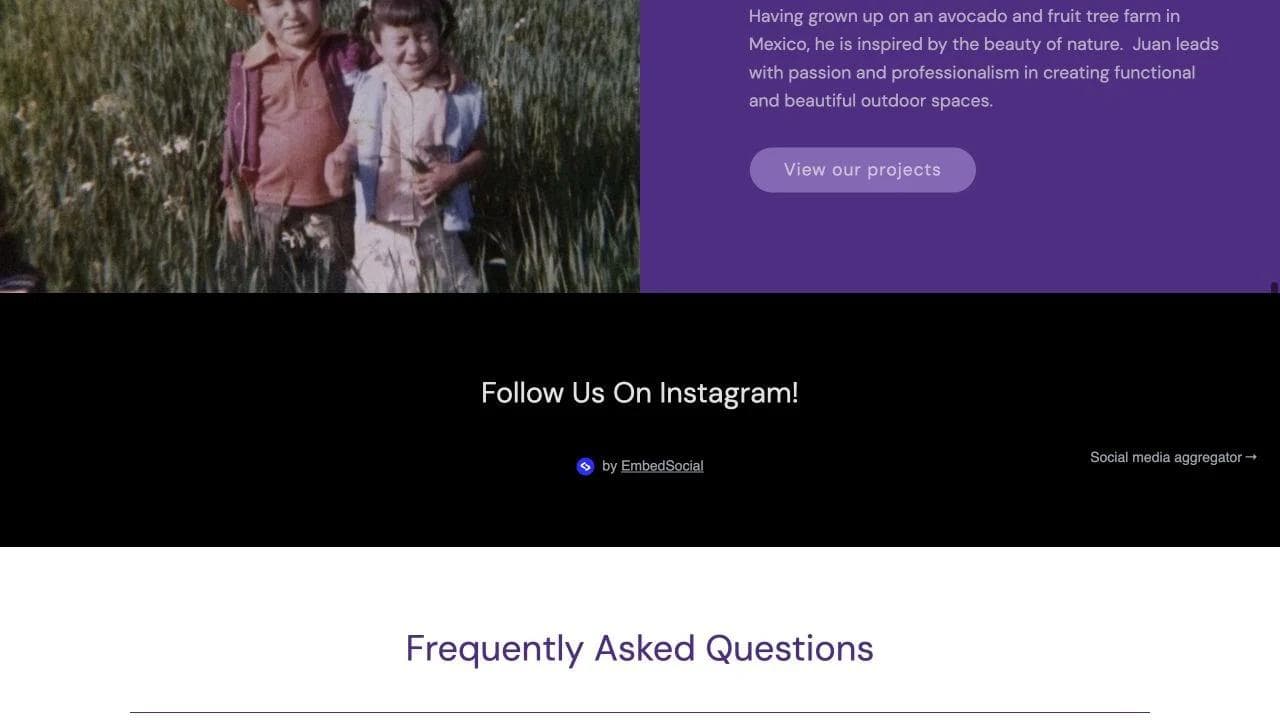
The lower page introduces the founder, local inspiration, project work, social proof, and a quote route. The founder story is short and relevant to the work rather than an unrelated biography.
What to borrow
- Group services by how customers plan a project, not by an internal crew chart.
- Show that drainage, grading, irrigation, and lighting are part of design quality.
- Use the founder story to explain the firm's point of view.
What not to copy blindly
A compact homepage places more responsibility on project pages. If the gallery lacks location, scope, constraints, and materials, visitors still cannot tell whether a beautiful image represents work comparable to theirs.
3. Summit: separate ongoing care from transformation
Summit Lawn and Landscape uses its opening to establish a local, full-service company and route visitors toward the main service families.
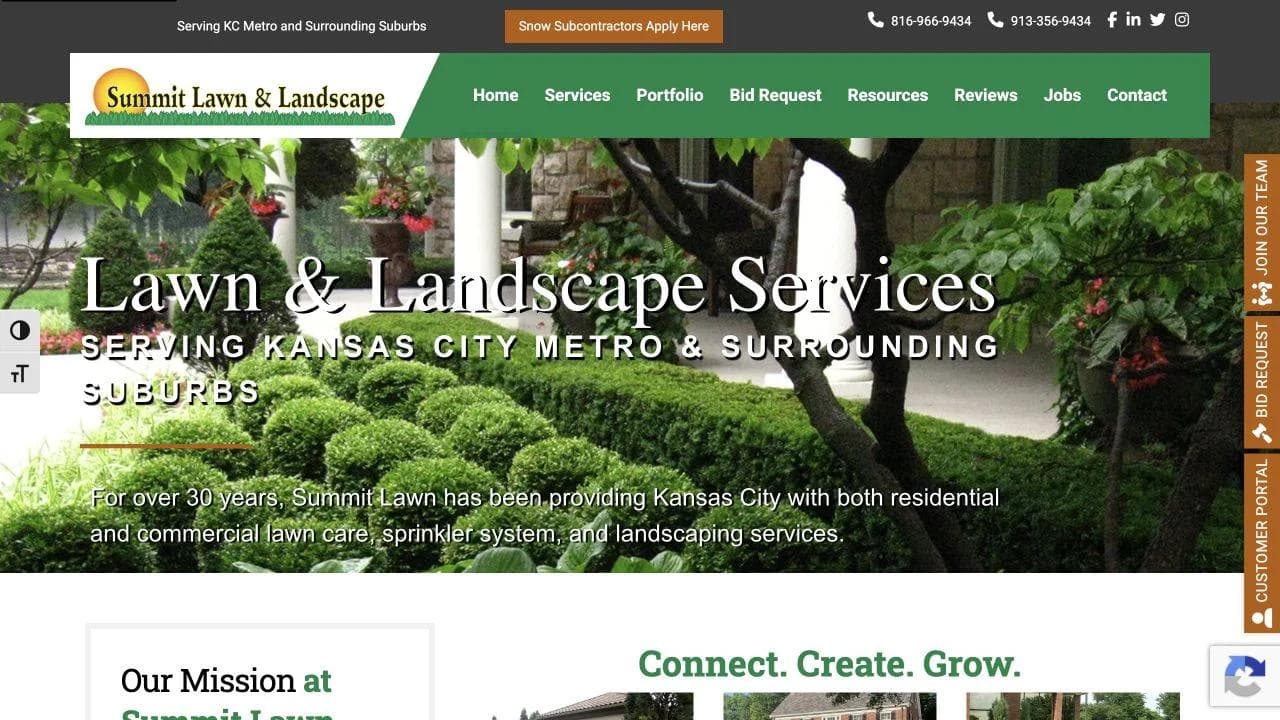
The middle of the page balances recurring lawn and landscape care with installation and improvement work. This is an important commercial distinction: one path is an operating relationship, while the other is a scoped project.
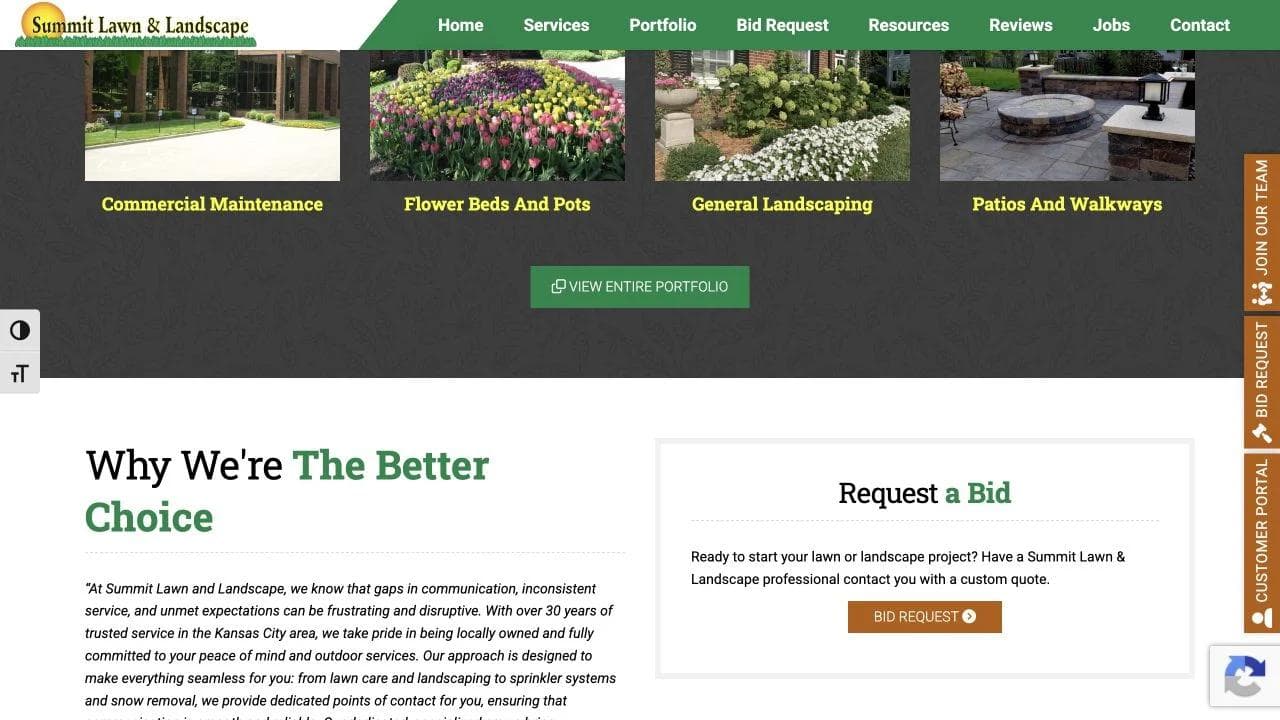
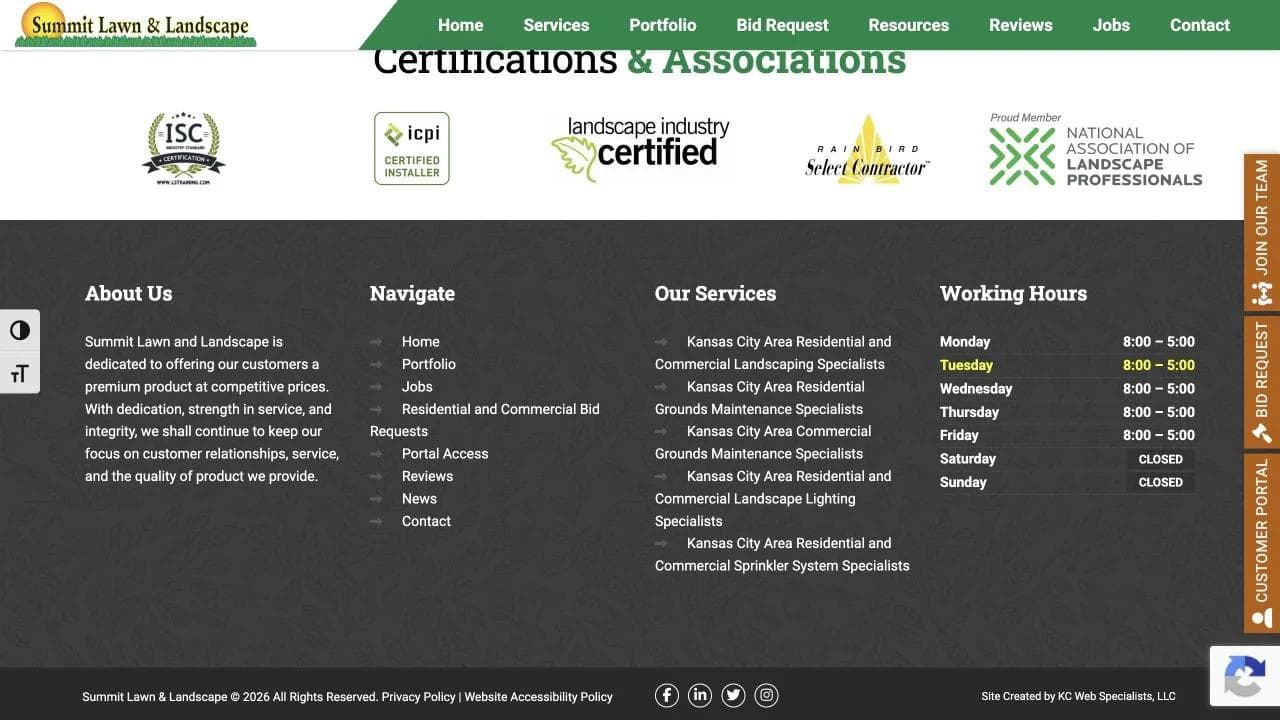
The closing sections reinforce local coverage, proof, and contact. Repeated calls to action work because they follow different layers of information rather than interrupting every paragraph.
What to borrow
- Give maintenance and project work distinct cards, pages, and inquiry choices.
- Explain service coverage before asking a visitor to invest in a long form.
- Use recurring care as a relationship, not merely a list of mowing tasks.
What not to copy blindly
Do not let "full service" become a substitute for prioritization. The homepage should still reveal the most profitable or strategically important work and make that path easiest to understand.
4. Outside Landscape Group: sell judgment before features
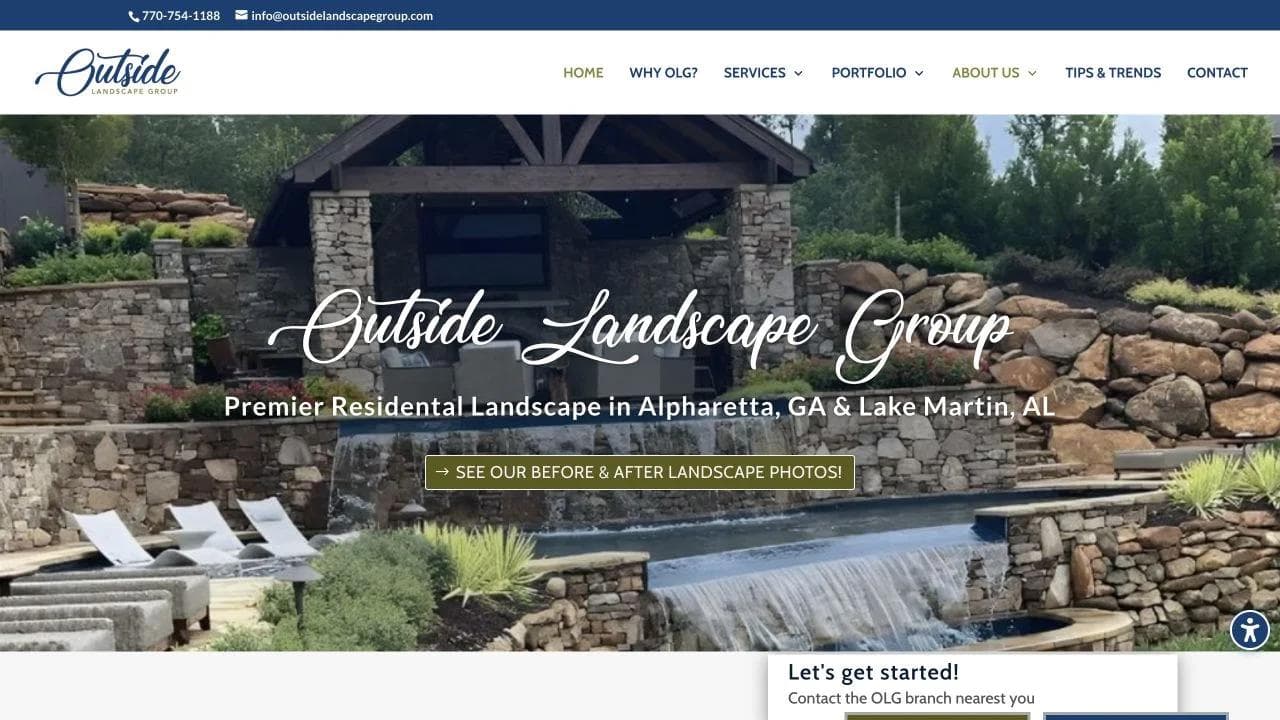
Outside Landscape Group positions itself around premium residential landscapes in specific markets. The opening relies on strong project imagery, restrained copy, and a clear geographic and category signal.
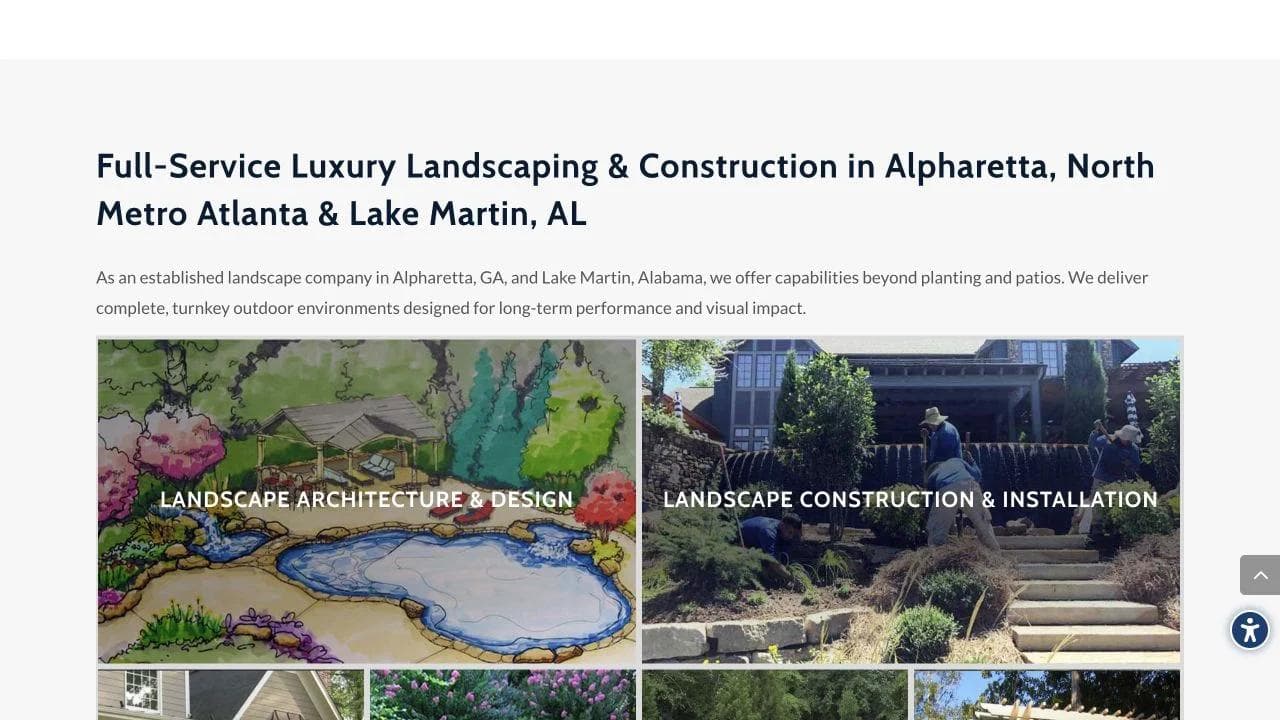
The middle page gives the portfolio room to work while introducing the design-build process and the kinds of environments the firm creates. The visual restraint matches a buyer who is selecting a long-term creative and construction partner.
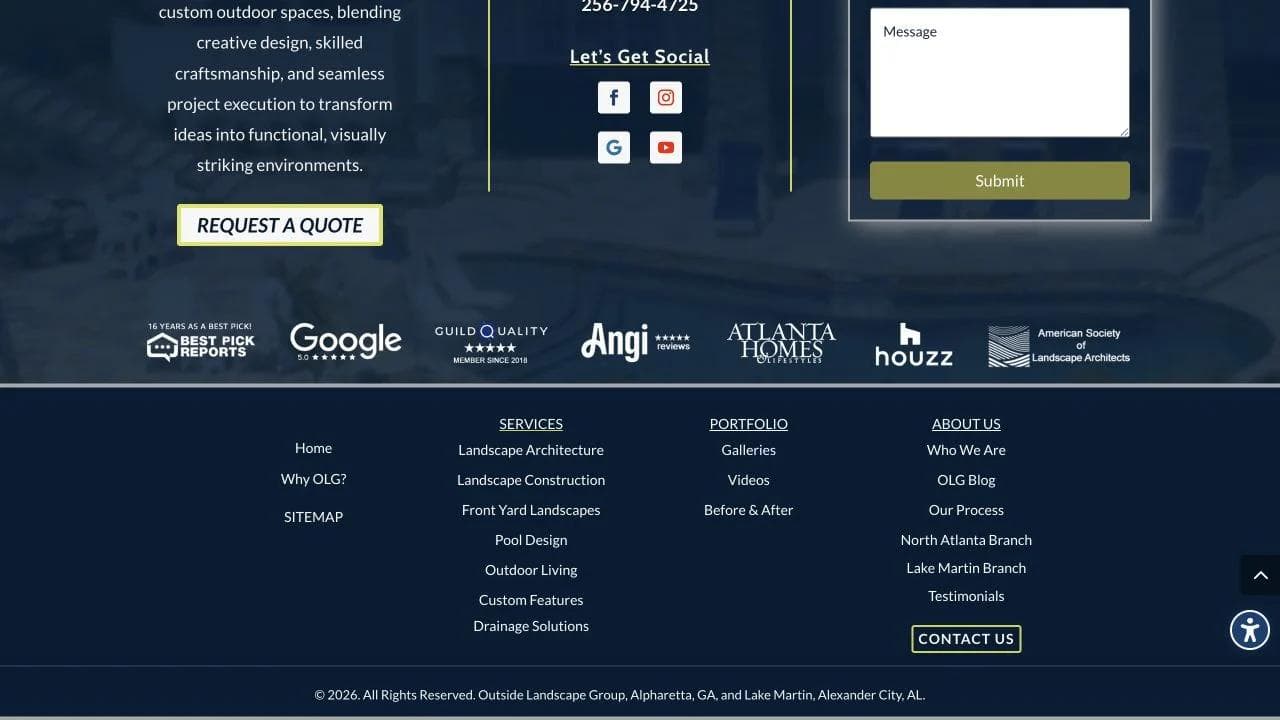
Lower sections add firm credibility, project context, and a route into conversation. The page asks the visitor to value taste and process, not compare a commodity price list.
What to borrow
- For high-consideration projects, lead with a recognizable point of view and comparable work.
- Pair photography with geography and project type.
- Explain the design relationship before pushing a quote request.
What not to copy blindly
Minimal copy works only when photography and reputation carry enough information. A newer firm may need clearer budget fit, process, credentials, and project captions to prevent "beautiful but vague" positioning.
5. Native Edge: turn three services into one lifecycle
Native Edge Landscapes opens with "Imagine, Craft, Sustain," then maps those ideas to landscape design, construction, and property care. This gives three departments a single customer story.
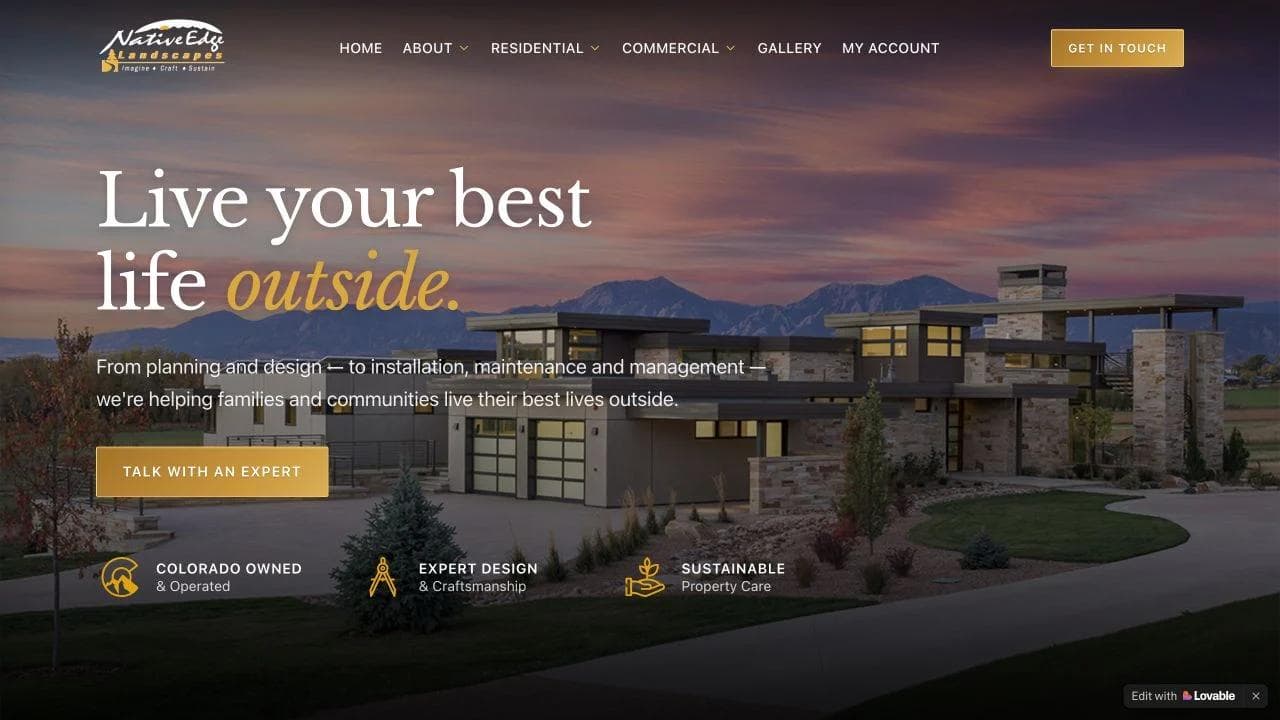
The middle explains each phase, introduces the company, and shows how the work moves from conversation to site visit, proposal, and execution. The process is valuable because landscaping combines subjective taste with permits, budgets, site conditions, and long timelines.
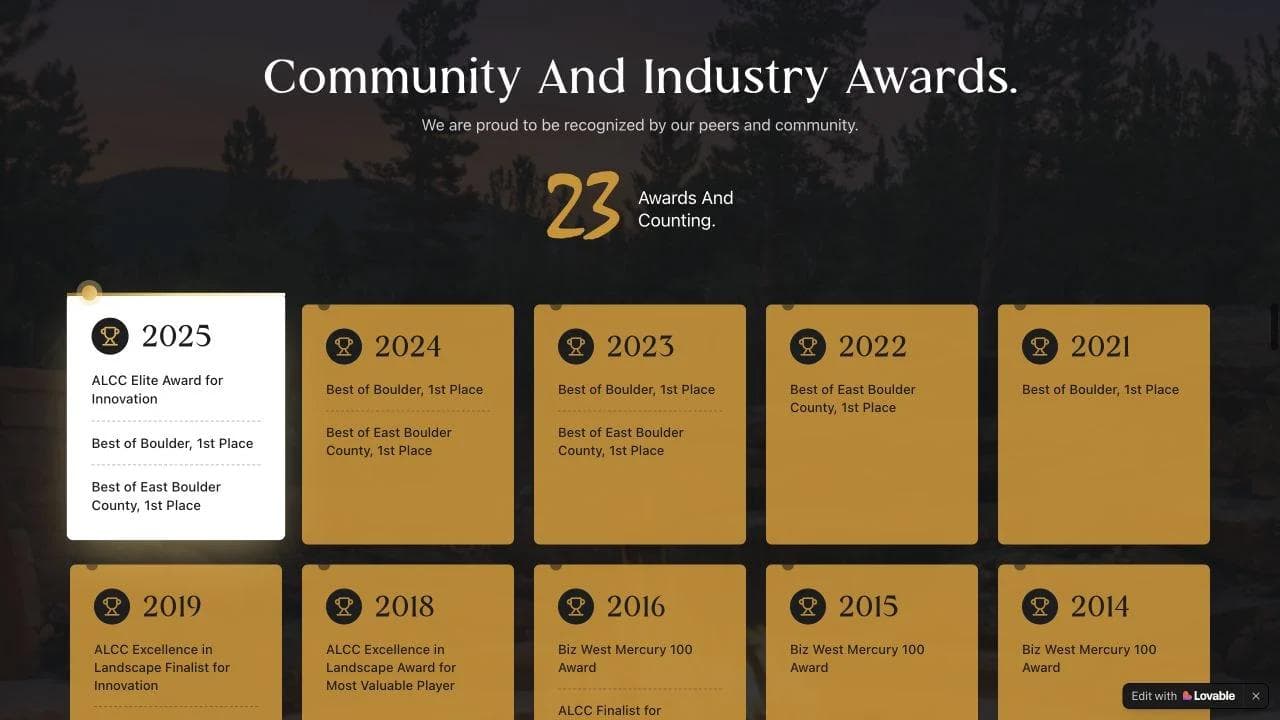
The closing adds awards, project work, service area, and a direct expert conversation. Proof is distributed across the journey instead of held until a logo wall at the bottom.
What to borrow
- Unify design, build, and care around the life of the property.
- Show the handoffs between phases so the company feels coordinated.
- Make sustainability operational through care practices and local expertise.
What not to copy blindly
An elegant three-word framework can hide important boundaries. Be explicit about whether design is available separately, which projects qualify, who handles permitting, and where ongoing care begins.
6. Excel Landscape: use education to reduce quote friction
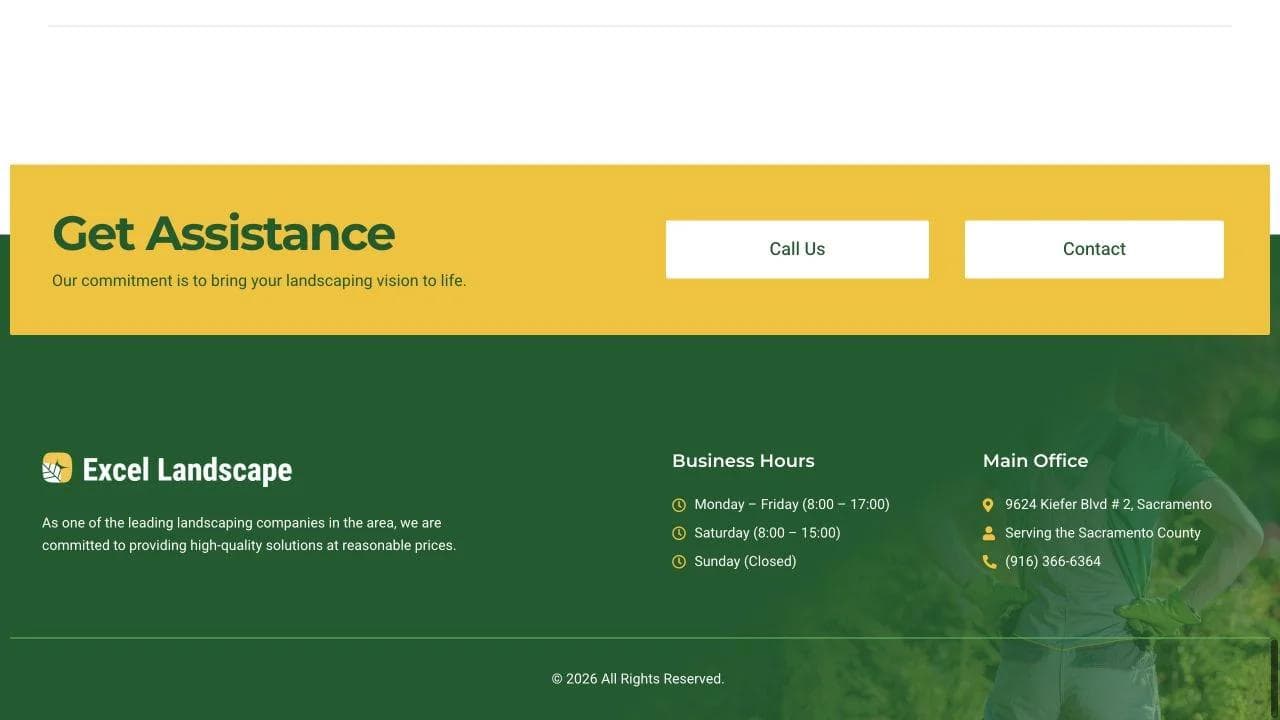
Excel Landscape leads with more than 35 years in Sacramento and the three major categories of design, installation, and maintenance. It establishes local longevity before asking for an appointment.
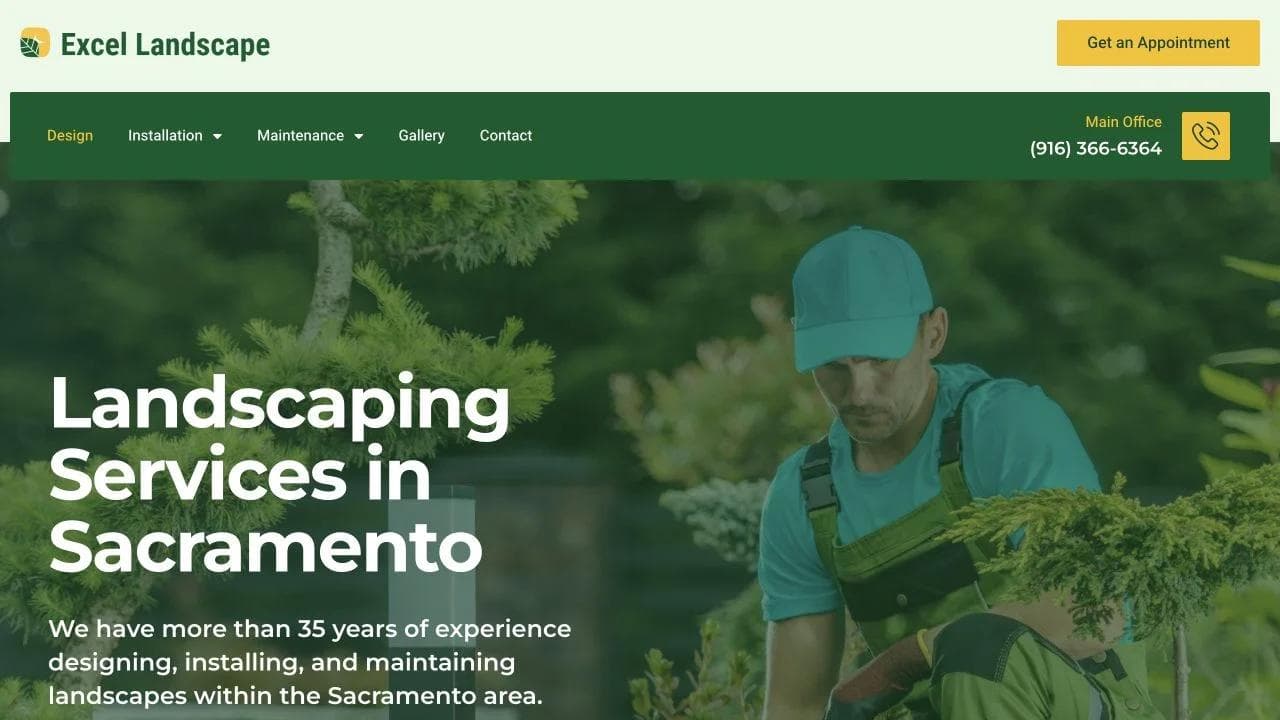
The middle combines company story, workmanship, and service explanation. The copy ties local climate and community knowledge to the actual work rather than using "local" as an unsupported badge.
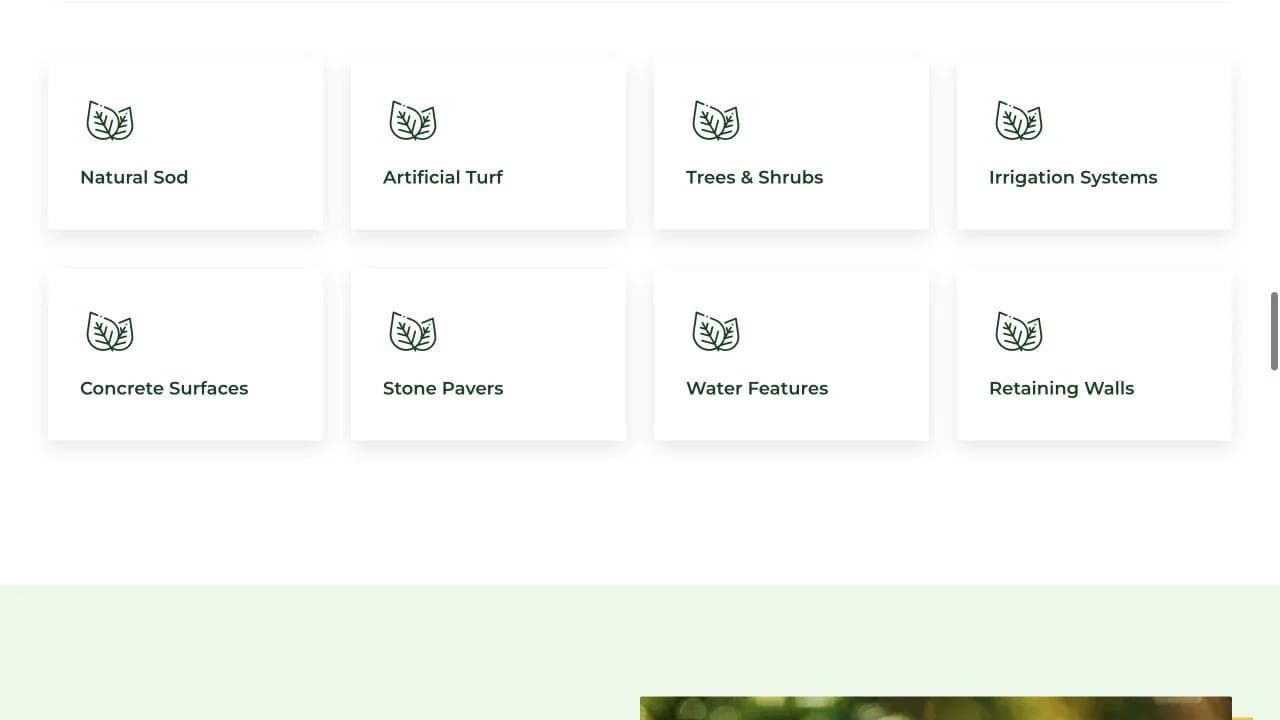
The lower page answers practical questions about softscape versus hardscape, licensing, bonding, cost, property value, and maintenance. This FAQ addresses the uncertainty that often prevents a prospect from contacting a contractor.
What to borrow
- Answer the questions prospects ask before they believe they are ready for a quote.
- Explain credentials in plain language.
- Use longevity to show accumulated local knowledge, not only a founding year.
What not to copy blindly
Educational copy should lead to a next decision. Long answers without links to a relevant service, project, or consultation can become an SEO appendix disconnected from the buying path.
What all six sites have in common
Across very different brands, the strongest pages share a practical core:
- a clear market and service area
- recognizable service categories
- real project imagery
- a visible contact or quote route
- trust evidence such as credentials, reviews, experience, or awards
- repeated calls to action after meaningful information
The meaningful forks are more instructive than the similarities. Maintenance-led companies need coverage, cadence, reliability, and account expectations. Design-build firms need portfolio context, process, budget fit, and creative trust. Luxury firms can use more visual restraint. Problem-led businesses, especially drainage and repair, should make urgency and diagnosis easy to find.
A recommended landscaping homepage sequence
- State the service lane, location, and primary action.
- Show two to four proof points that can be verified.
- Route visitors by project type or relationship type.
- Show selected projects with scope and location context.
- Explain the process from first conversation through completion.
- Introduce the people, credentials, and operating standards.
- Answer cost, timing, service area, and care questions.
- End with a qualified inquiry that asks about location, service, timing, and project goals.
Common landscaping website mistakes
- Showing anonymous portfolio images with no scope or context.
- Using one generic form for emergency drainage, weekly care, and major construction.
- Claiming to serve an entire region without clear boundaries.
- Listing every capability equally, which makes the company look unfocused.
- Hiding licenses, insurance, or review sources behind vague trust icons.
- Making sustainability a mood rather than explaining materials, water use, planting, or care.
Where Moda fits
Moda can help a landscaping company create and publish a polished marketing site, then reuse the same brand system for project case studies, proposals, social posts, seasonal promotions, and client-facing PDFs. It is a good fit for public pages and lead forms. Scheduling, estimating, route management, CRM, payments, and client portals should remain in dedicated systems connected to the site.
Frequently asked questions
What should a landscaping website include?
Include the service area, the work you prioritize, credentials, comparable projects with context, the process, recurring-care expectations, cost and timing guidance, and a qualified quote route.
Should maintenance and design-build use the same inquiry form?
Usually not. Maintenance needs property, coverage, frequency, and start timing. Design-build needs location, goals, scope, timing, and an initial budget-fit conversation.
What makes a landscaping portfolio useful?
Caption projects with location or climate, scope, site constraint, materials, services, and outcome. Anonymous beauty shots provide inspiration but little help with fit.
How can a landscaping company improve local SEO?
Publish accurate service and location pages, maintain a complete Google Business Profile, show real local projects, explain climate-specific work, and avoid near-identical pages that only swap place names.
Can Moda replace landscaping estimating or CRM software?
No. Moda can create the public marketing site and branded content, while estimating, scheduling, route management, payments, CRM, and client portals stay in dedicated systems.

Real editable visuals. Real canvas. Full control.
Fly through design work