Med Spa Website Design: 6 Full-Page Teardowns
See six med spa websites analyzed section by section, with practical guidance for treatment discovery, provider trust, results, pricing, standardization, locations, booking, and privacy.
 Anvisha Pai, Co-founder & CEO, Moda
A med spa website sits at an unusual intersection. It must feel approachable enough for a consumer to explore an aesthetic goal, specific enough to explain treatments honestly, and credible enough to support a health-related decision. It also needs to route booking without asking for sensitive clinical detail in an ordinary marketing form.
The best pages do more than look luxurious. They help visitors answer six questions: Is this treatment relevant to my concern? Who will provide it? What can I reasonably expect? What does it cost? Where can I receive it? What happens after I book?
The med spa website framework
- Discovery: Organize by concern as well as treatment name so newcomers are not expected to self-diagnose.
- Clinical trust: Show providers, credentials, oversight, locations, and the limits of what the page can promise.
- Expectation setting: Explain candidacy, process, downtime, risks, maintenance, and when a consultation is necessary.
- Evidence: Use consented before-and-after material, reviews, and provider explanation with clear context.
- Economics: Make consultation fees, starting prices, memberships, packages, and financing terms understandable.
- Booking and privacy: Collect only what the scheduling step needs and move health information into an appropriate system.
1. Mirabile MD: combine medical breadth with provider authority
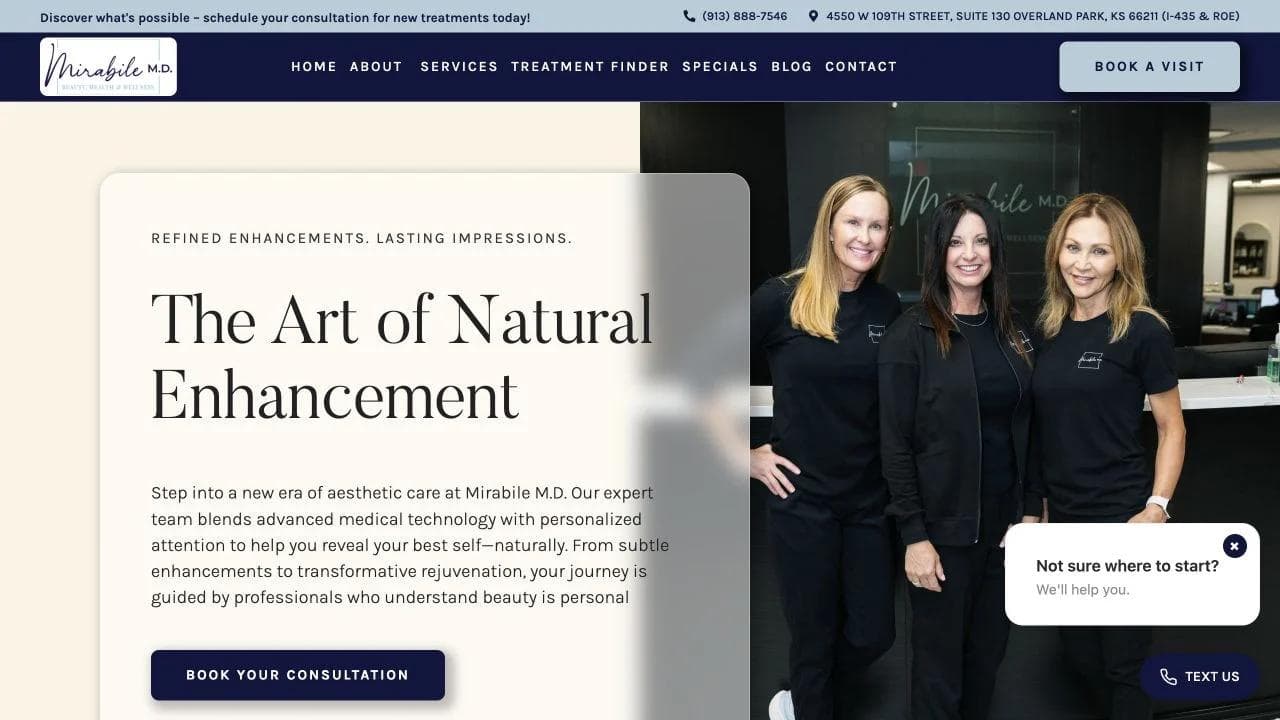
Mirabile MD presents aesthetic services within a physician-led practice. The opening establishes location, provider identity, and broad service lines, which is more reassuring than a generic beauty promise for visitors evaluating medical oversight.
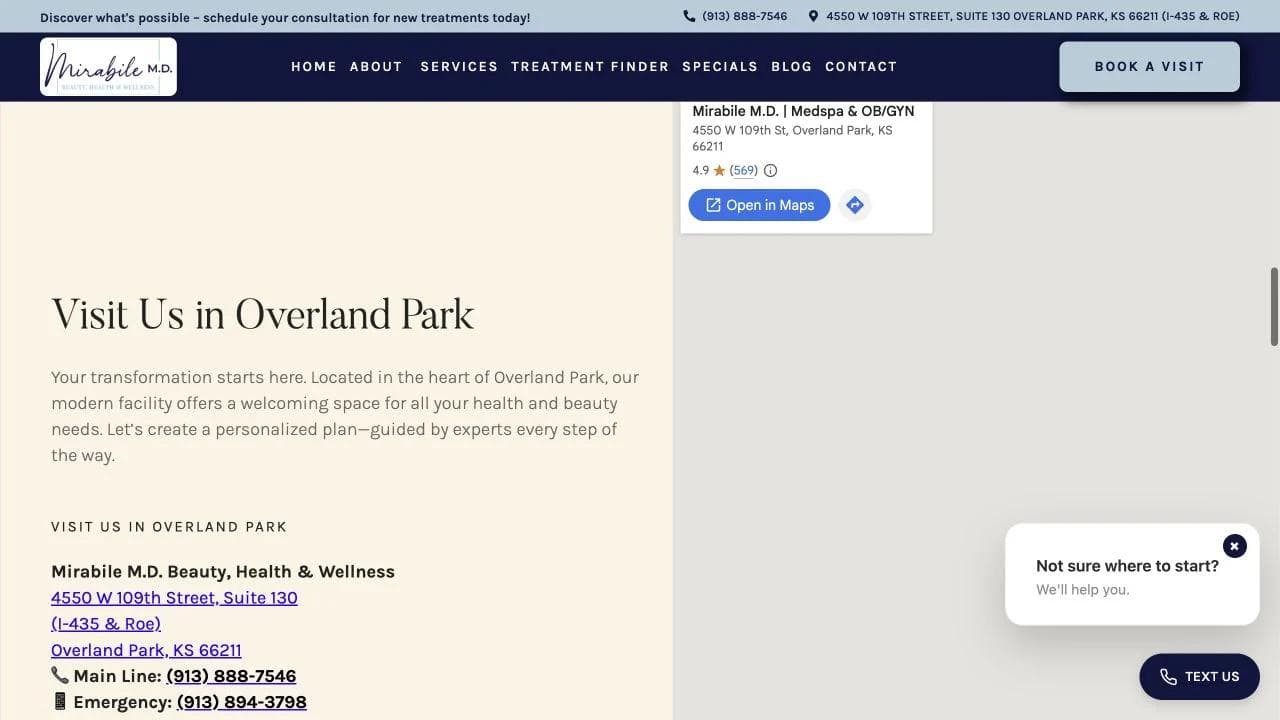
The middle of the page routes into treatments, concerns, and provider context. A broad practice needs this structure because a flat grid of injectables, lasers, wellness, and body services quickly becomes difficult to navigate.
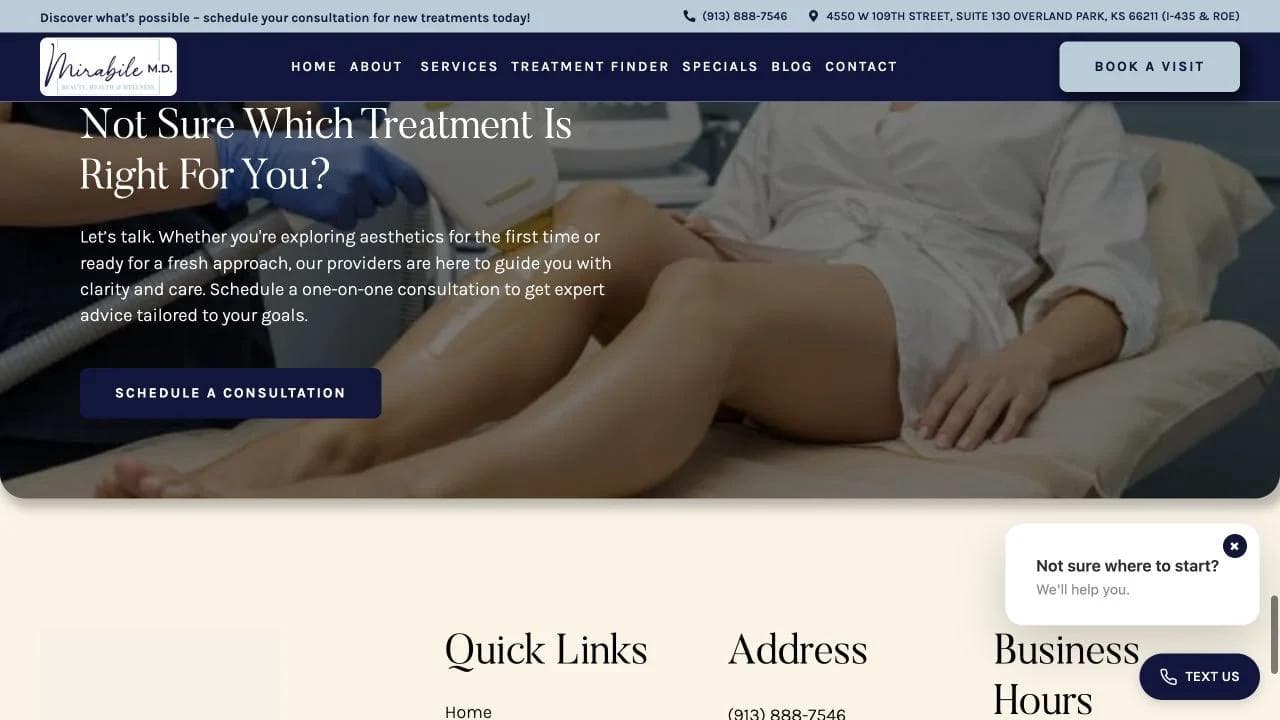
The closing returns to education, proof, and contact. That supports a consultation decision instead of treating online booking as the only meaningful conversion.
What to borrow
- Make the relationship between the medical practice, providers, and aesthetic services explicit.
- Give concern-led and treatment-led visitors separate ways to explore.
- Use education to prepare the consultation rather than overpromising outcomes.
What to improve
Breadth needs prioritization. The highest-intent treatments and most common concerns should not compete equally with every service the practice happens to offer.
2. Upkeep: turn price transparency into a product position
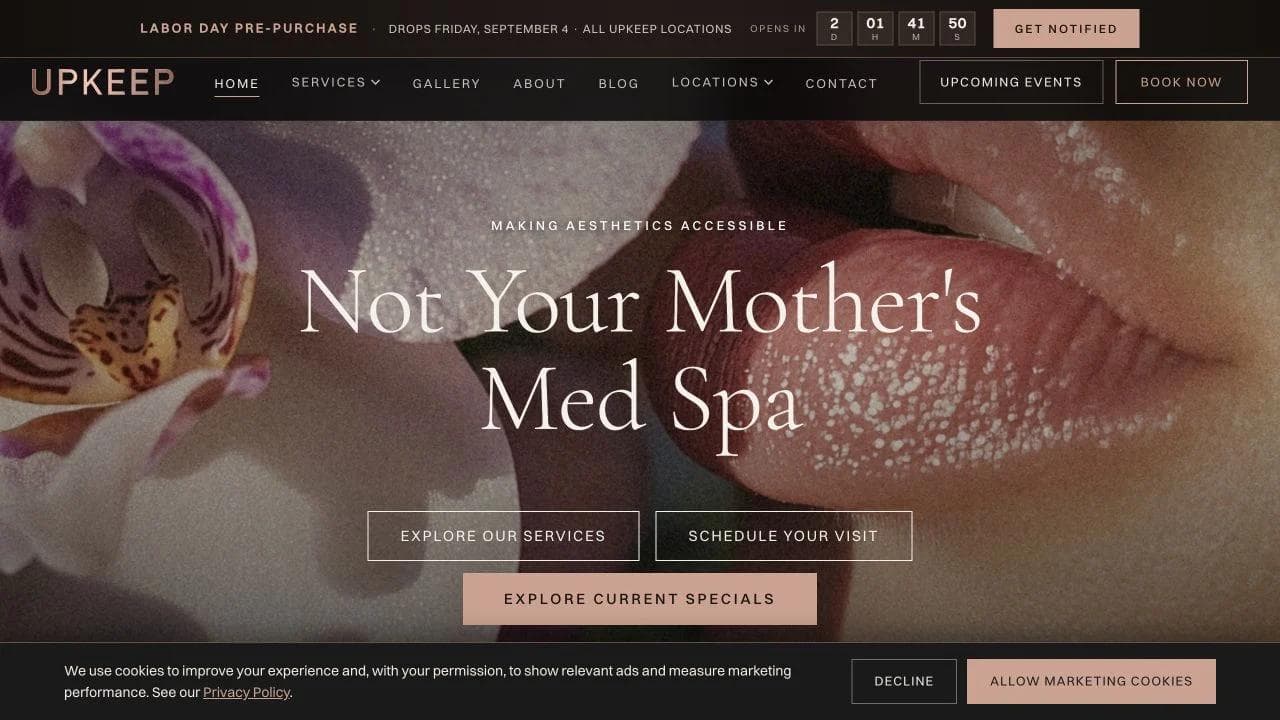
Upkeep uses a consumer-friendly brand, clear booking, locations, and treatment categories. The opening makes the experience feel more legible than the traditional consultation-first med spa model.
The center of the page packages offerings and explains the brand experience. Visible pricing or starting-price language can reduce uncertainty, but it works only when the page explains units, variability, eligibility, and what the consultation may change.
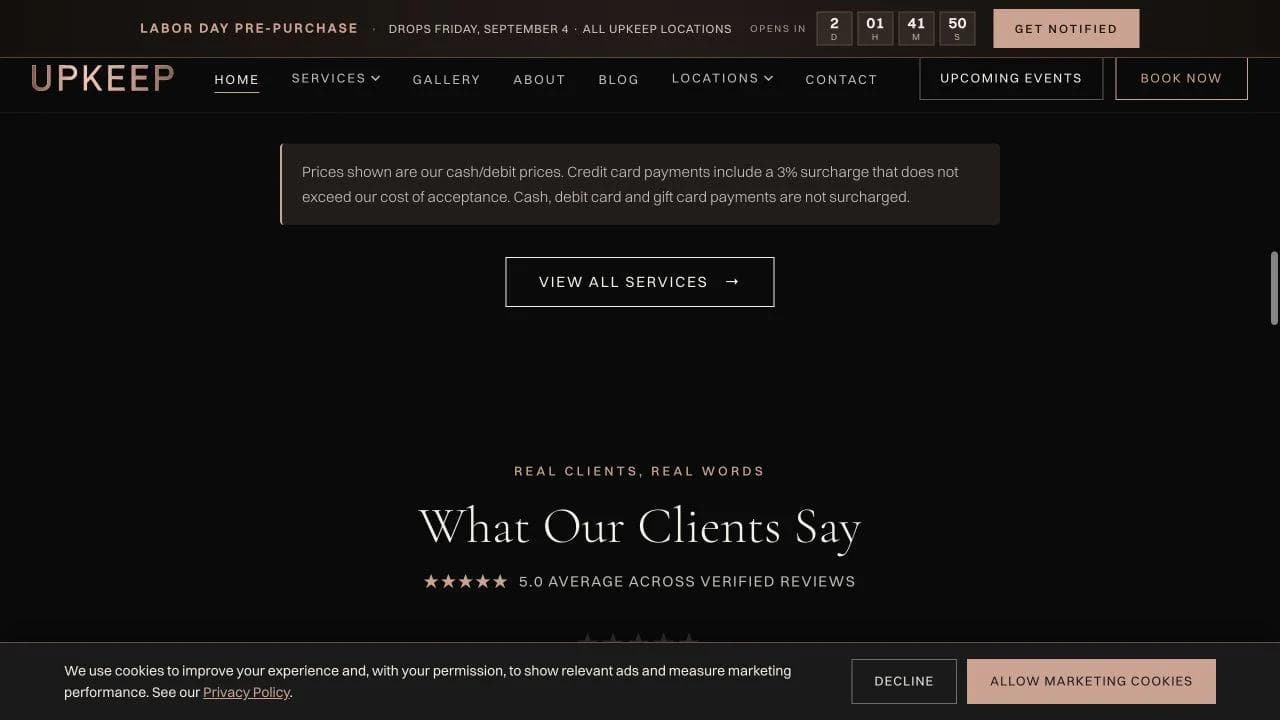
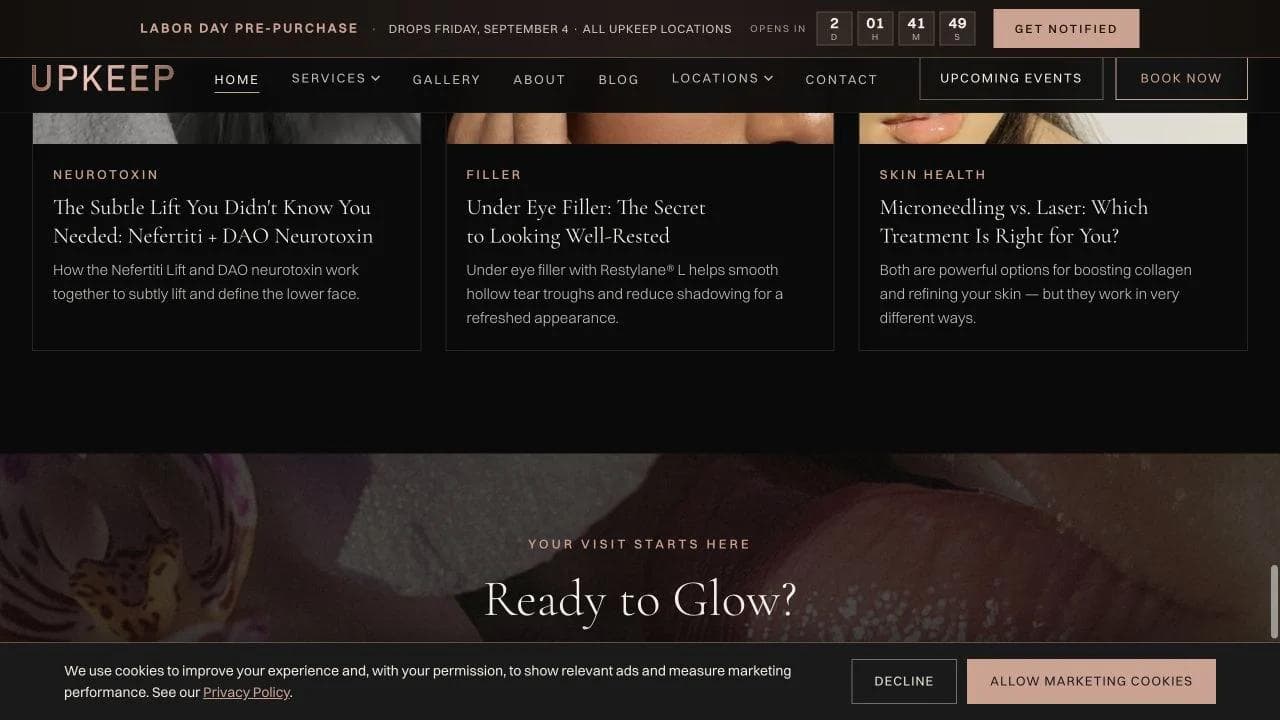
The closing uses proof, location access, and another booking route. For multi-location brands, location choice is part of the product and should appear before the visitor commits to a time.
What to borrow
- Treat booking, price framing, and location choice as one connected flow.
- Translate treatment names into understandable goals and expectations.
- Keep the tone accessible without minimizing medical screening or provider judgment.
What to improve
Packages and memberships should state what is included, what is excluded, expiration, cancellation, and whether unused services transfer. A simple monthly number is not the complete buying decision.
3. SkinSpirit: use scale as reassurance without losing the provider
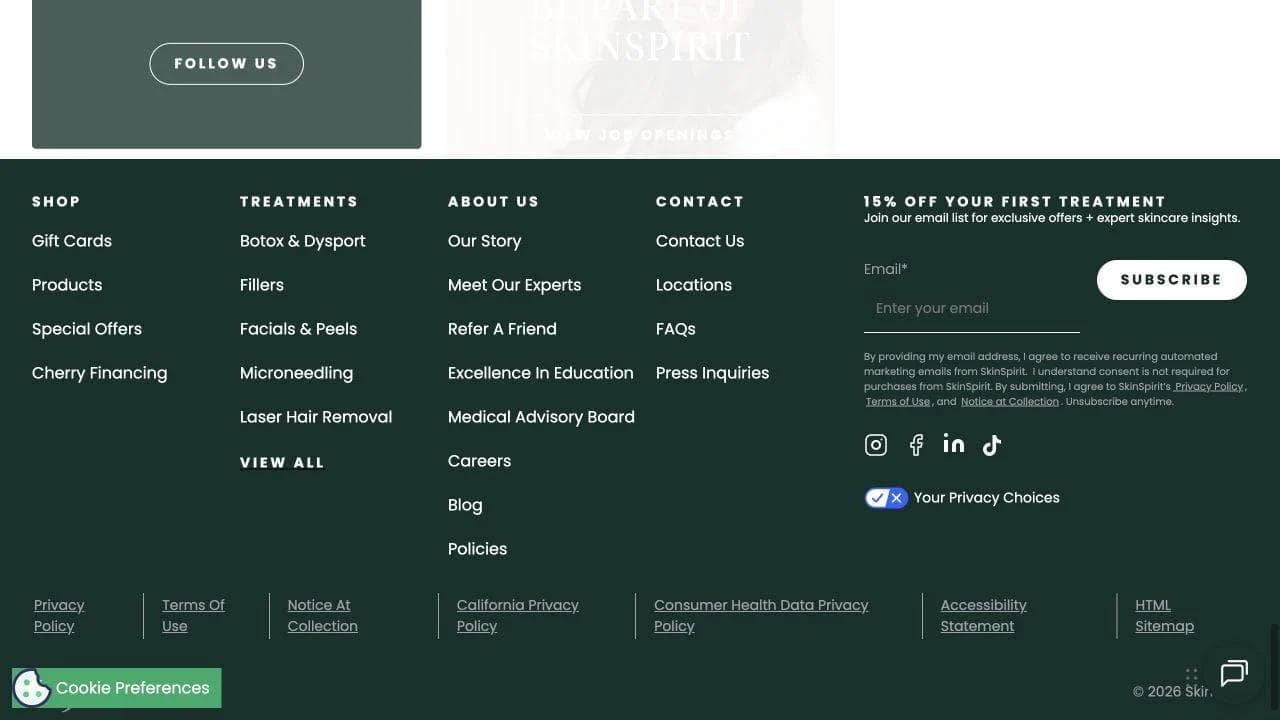
SkinSpirit is a multi-location practice with a broad service catalog. Its opening emphasizes brand consistency, treatment discovery, and the ability to find a clinic.
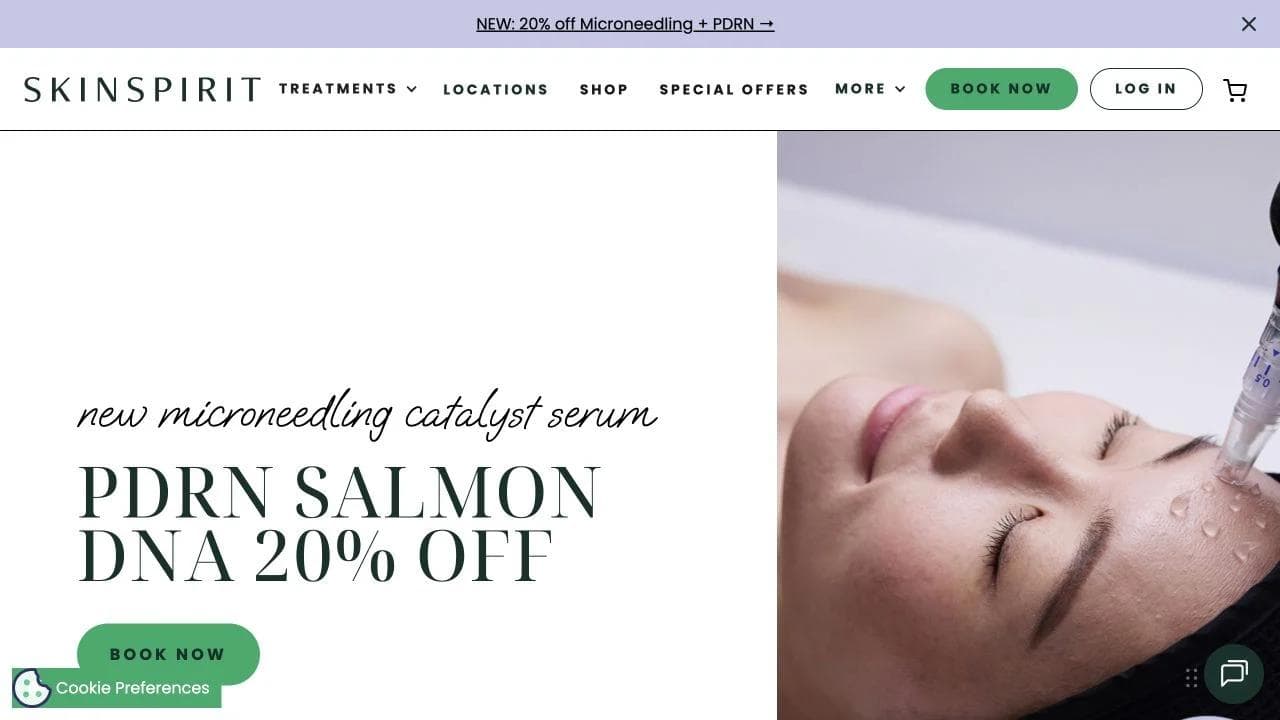
The middle of the page uses education and categories to make a large catalog manageable. At this scale, the content system matters as much as the homepage: treatment pages, concern pages, provider profiles, and location pages must agree about what is offered where.
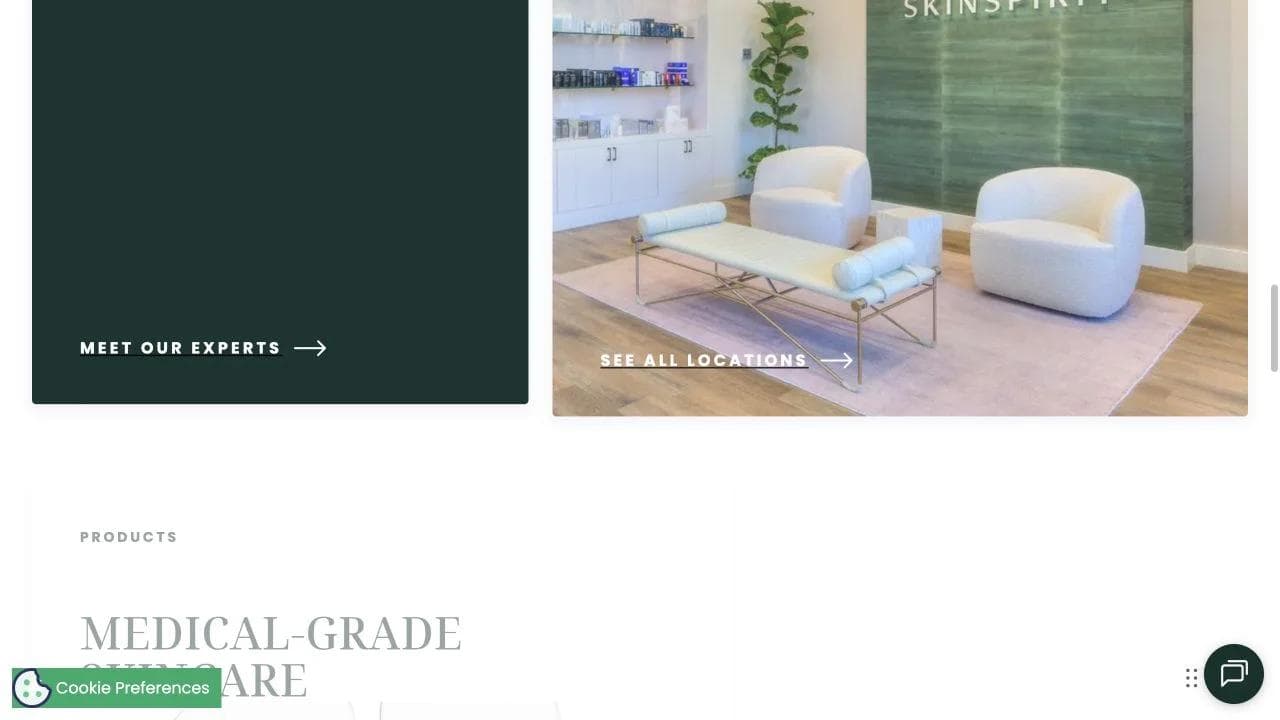
The closing reinforces location access and trust. A scalable page should still make the actual provider and appointment location visible before booking is complete.
What to borrow
- Build a consistent relationship among treatment, concern, provider, and location pages.
- Use scale to show access and operational maturity, not as a substitute for clinical detail.
- Let visitors confirm that a treatment is available at the chosen location.
What to improve
Large catalogs can make every service sound equally routine. Treatment pages should preserve important differences in candidacy, downtime, maintenance, and provider assessment.
4. Peachy: prove the power and limit of specialization
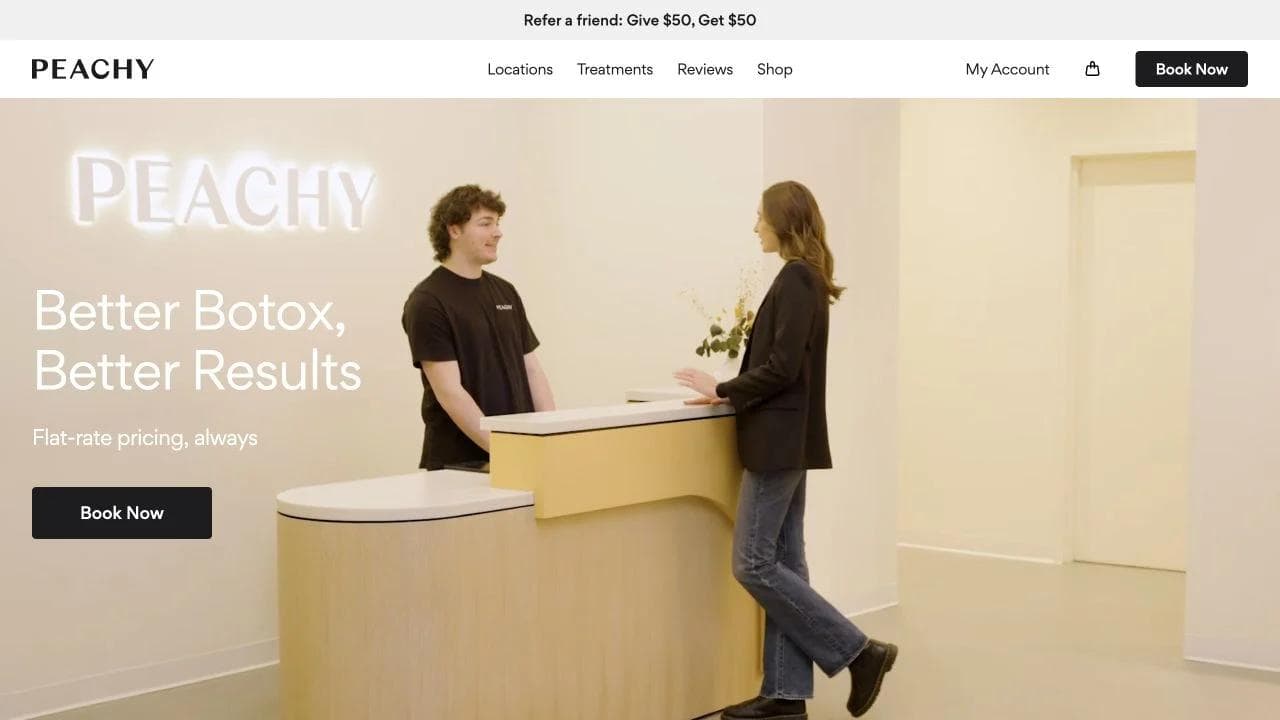
Peachy focuses tightly on wrinkle-prevention treatments. The opening is direct, distinctive, and easier to understand than an all-services med spa homepage.
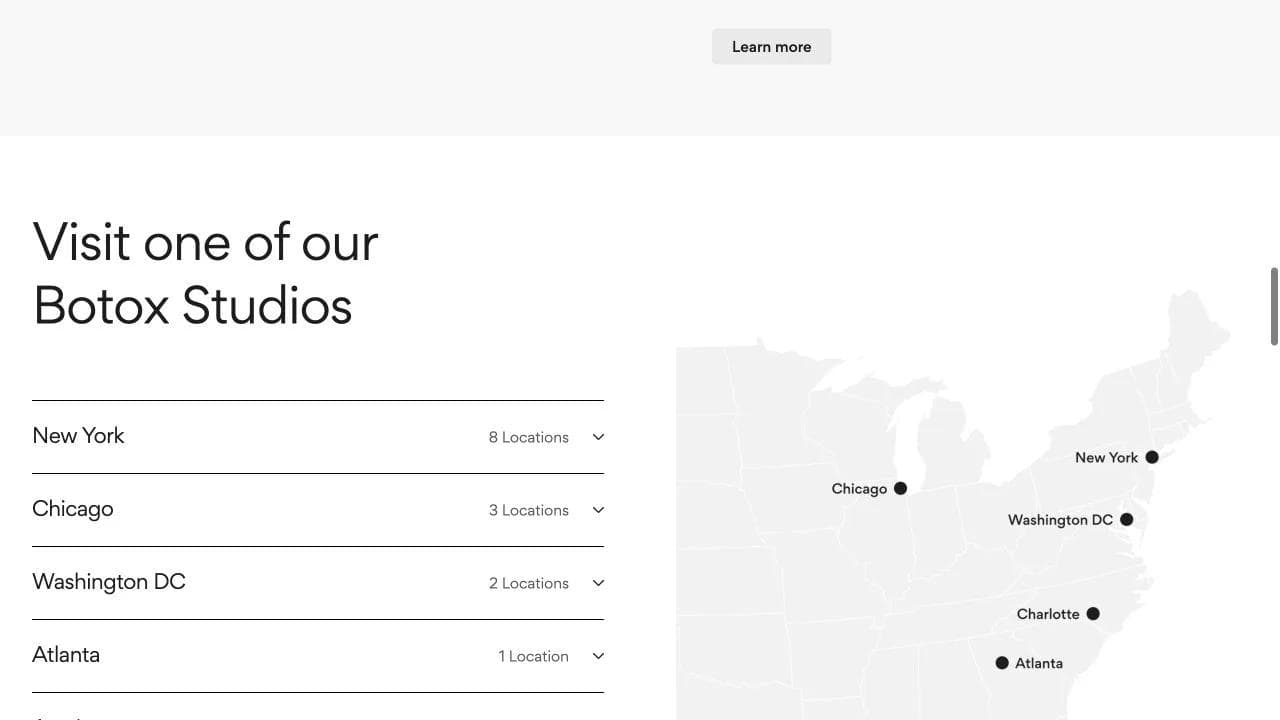
The middle of the page reinforces specialization through the experience, offering, and location model. This makes the page feel like a clear product rather than a clinical menu.
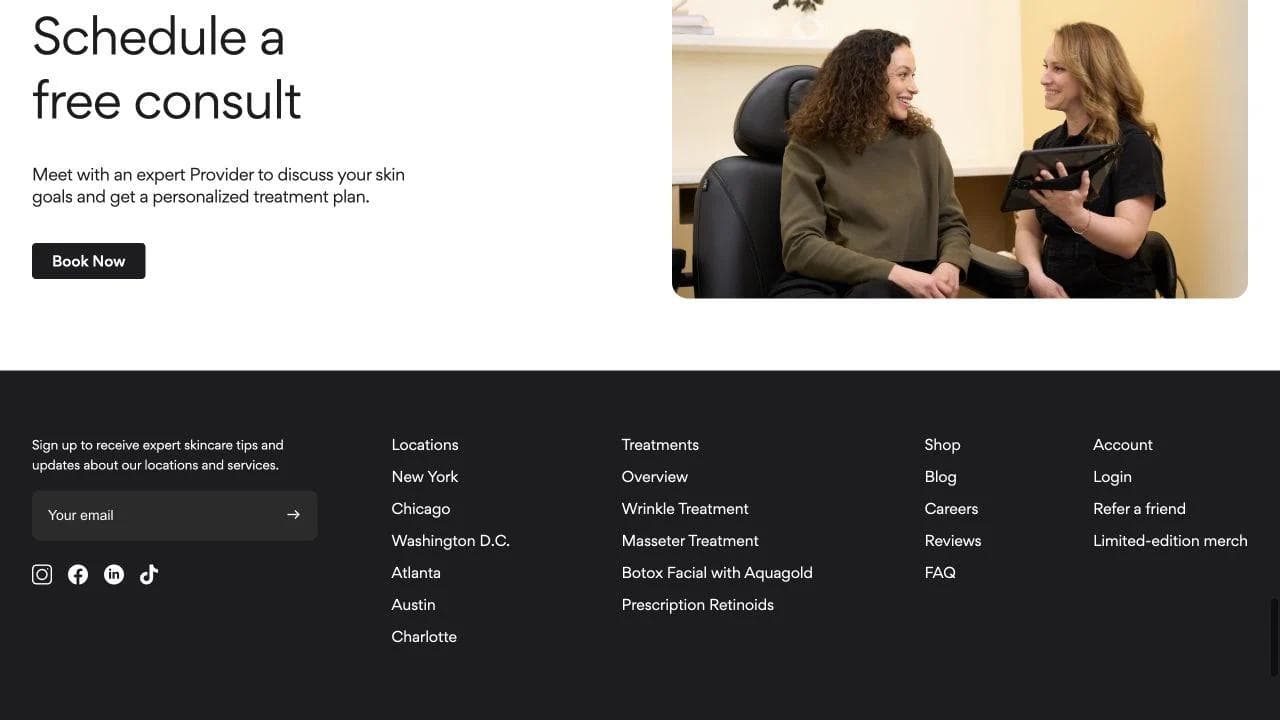
The closing directs visitors to studio availability and booking. Geography is not an afterthought because it determines whether the product is accessible.
What to borrow
- A narrow practice can explain one decision exceptionally well.
- Repeat the relationship among treatment, expected experience, price model, and location.
- Use a recognizable point of view rather than generic luxury language.
What to improve
Specialization should not become oversimplification. Eligibility, provider assessment, alternatives, possible side effects, and maintenance expectations still need a visible place in the journey.
5. JECT: make provider-led expertise part of the brand
JECT combines a modern consumer brand with treatment education, providers, locations, and membership. The opening uses a clear aesthetic point of view while keeping booking accessible.
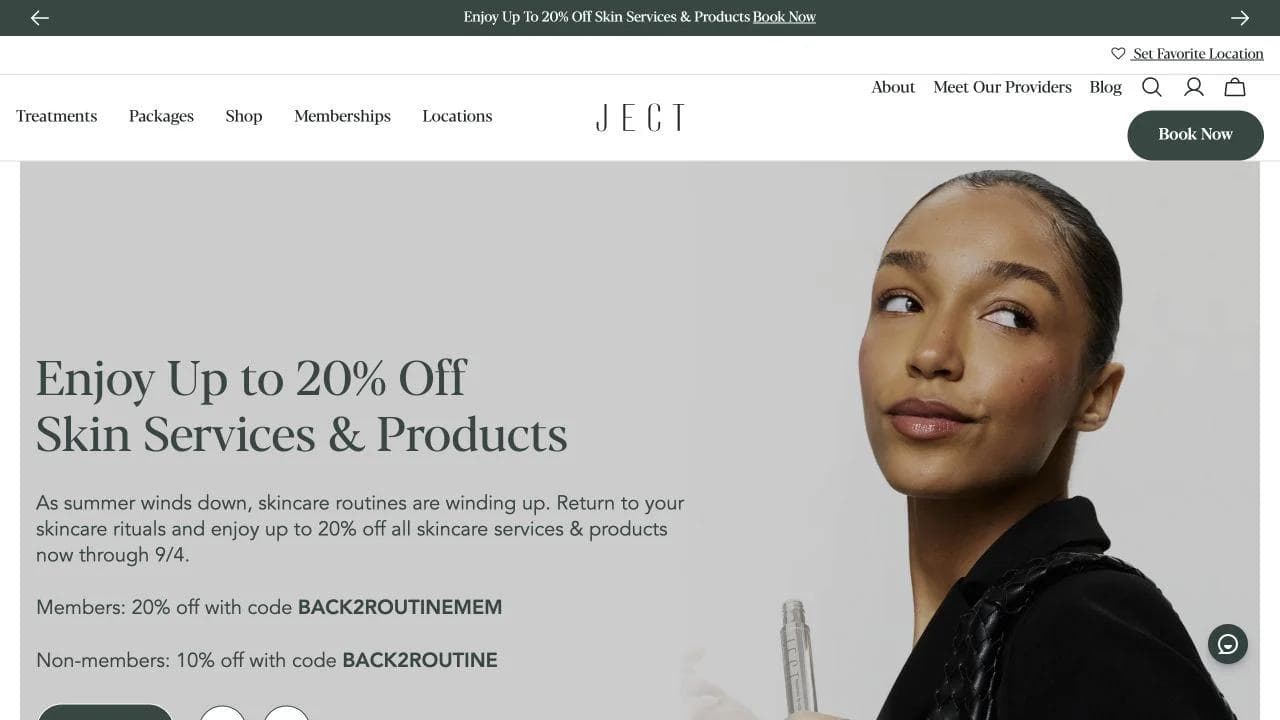
The middle of the page gives visitors more reasons to believe the practice understands the desired result. Treatment information and provider visibility help move the page beyond visual aspiration.
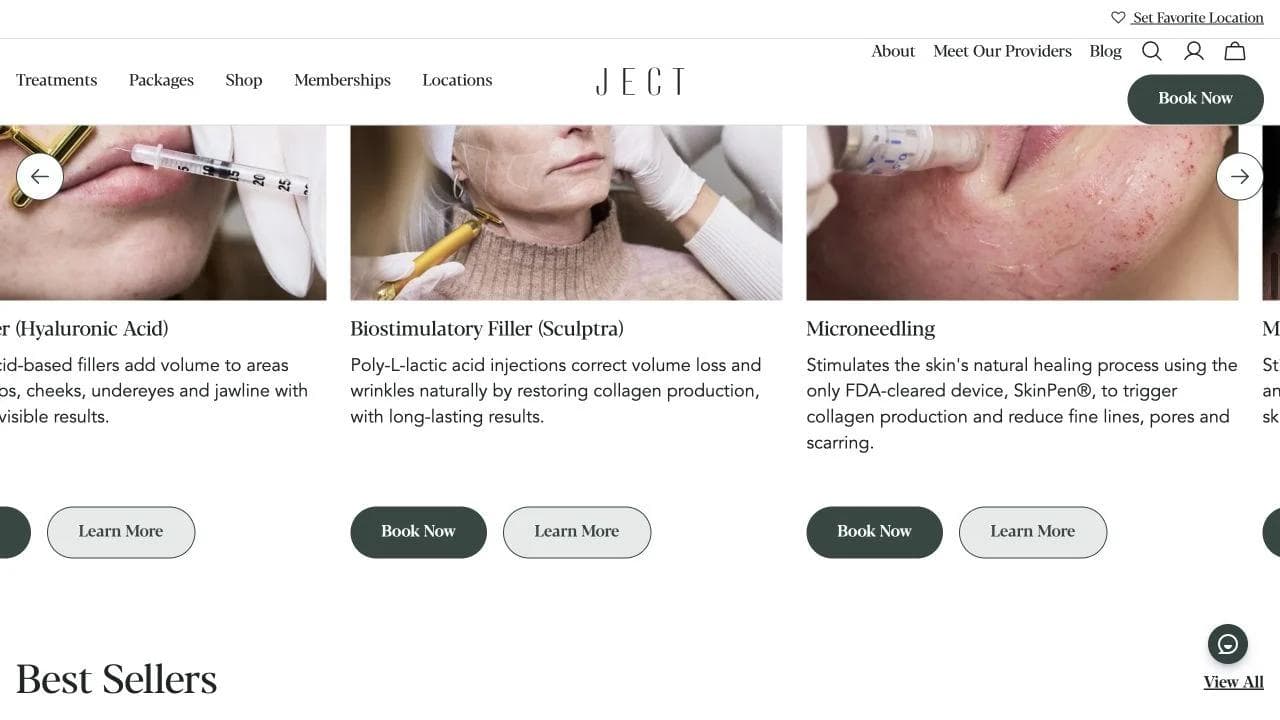
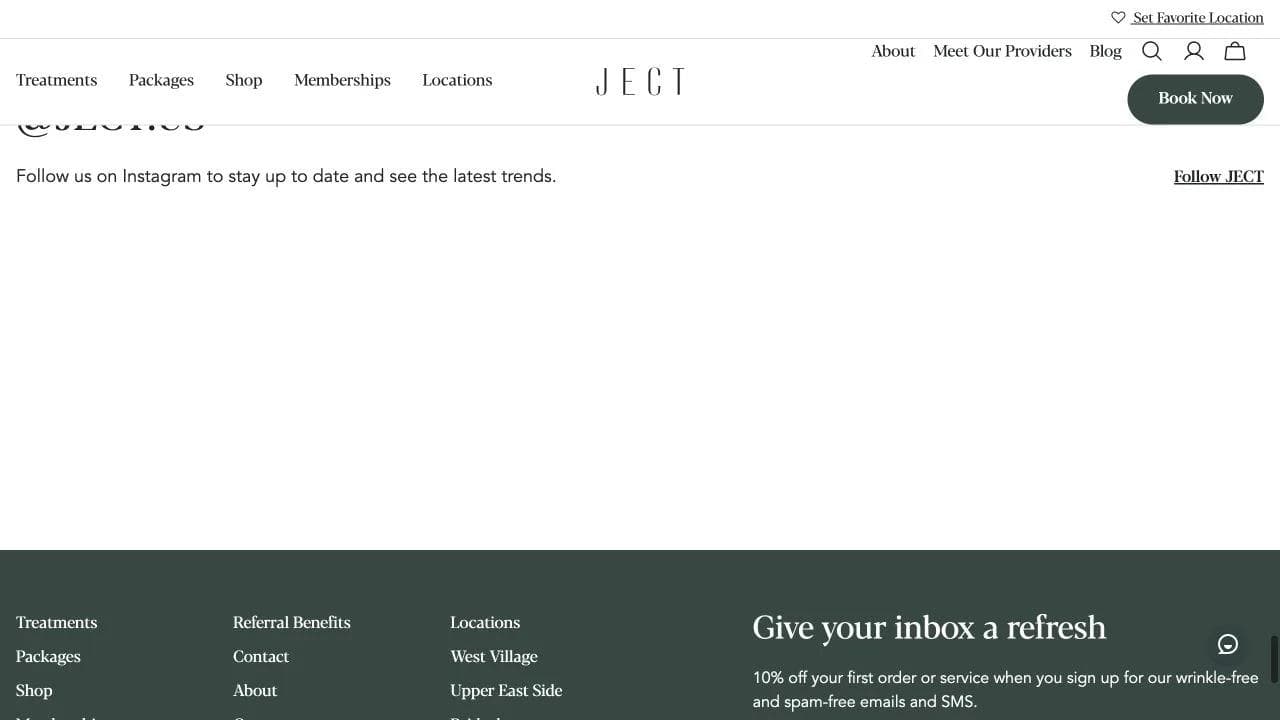
The closing returns to locations, membership, and booking. These are different decisions and should remain distinguishable: where to go, whether to form an ongoing relationship, and whether to request an appointment now.
What to borrow
- Let provider expertise carry visible brand weight.
- Keep locations, treatments, and membership connected but separate.
- Use educational content to clarify the desired result and realistic maintenance.
What to improve
Membership offers need operational detail. Visitors should understand service eligibility, exclusions, expiration, cancellation, and how a provider's recommendation affects use of the benefits.
6. NakedMD: show the strengths and limits of standardization
NakedMD operates across more than 40 locations and presents a standardized catalog of injectables and related treatments. The opening emphasizes access, booking, provider training, and consistent delivery across markets.
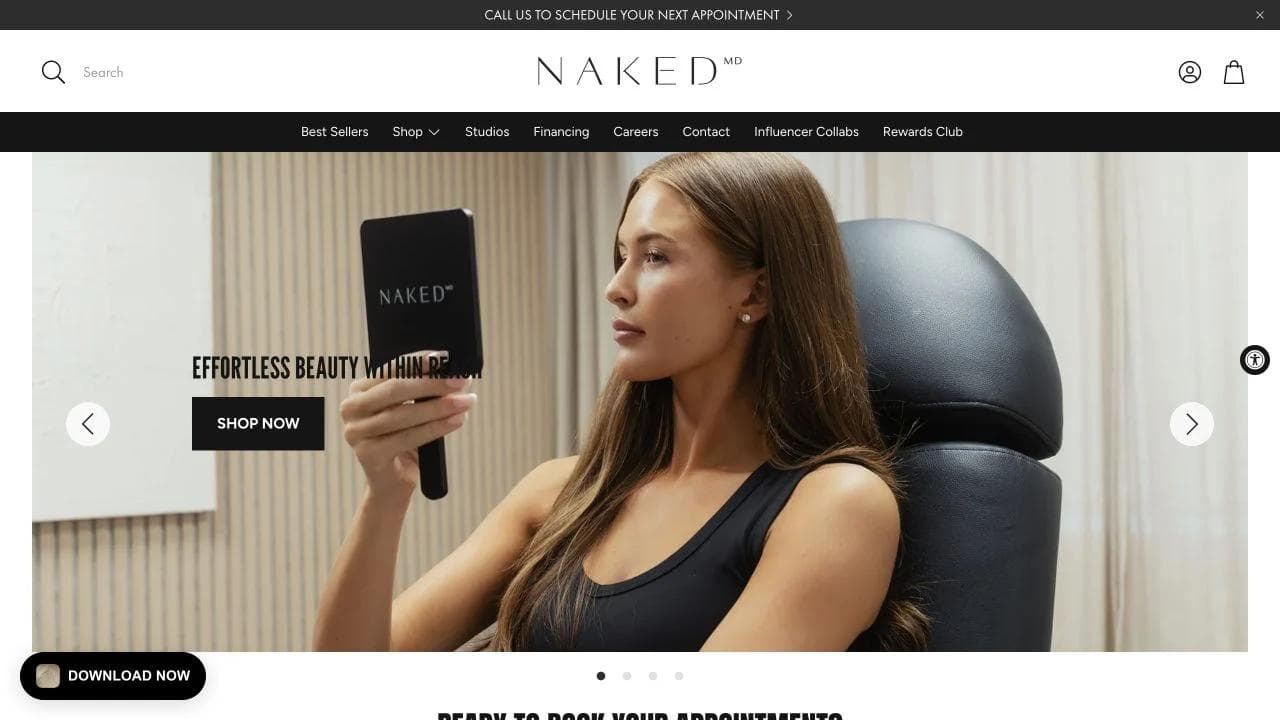
The center turns common treatment areas into recognizable products. This lowers the learning burden for visitors who already know the desired service, but it also creates a responsibility to explain that dose, candidacy, provider judgment, and results remain individual.
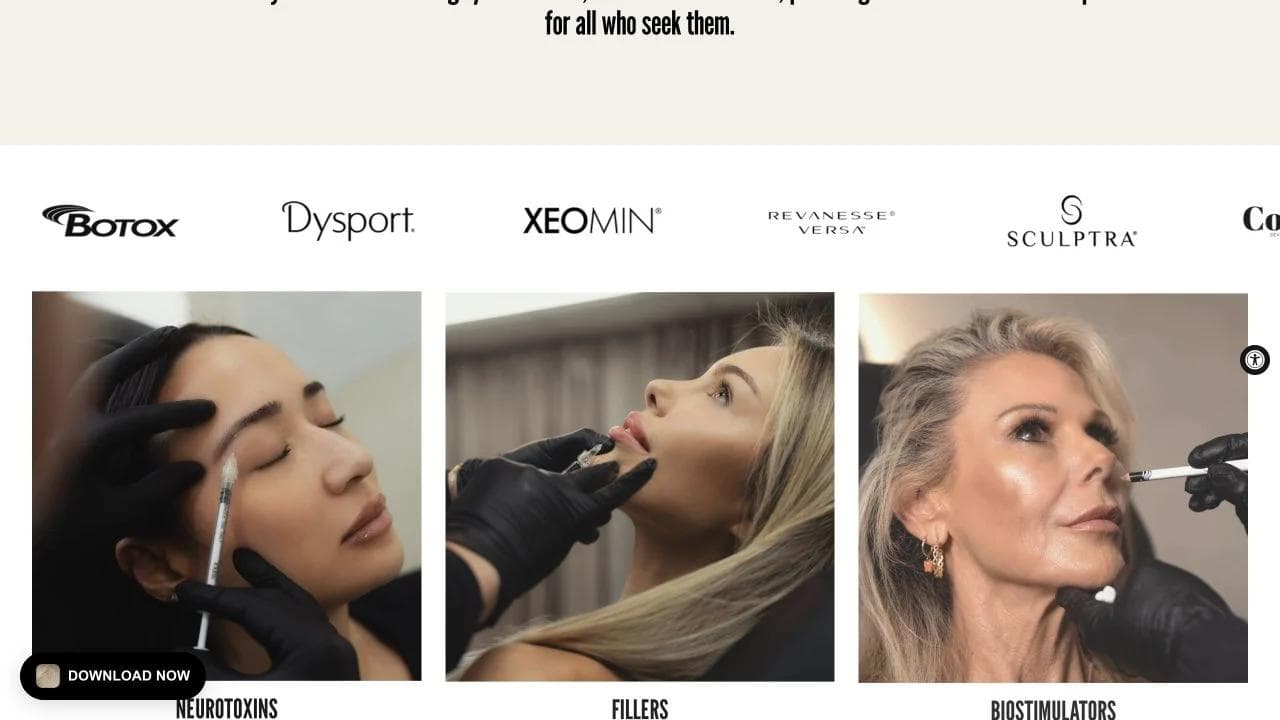
The lower page layers providers, locations, reviews, education, and another booking route. A scaled med spa needs to prove that the local appointment retains clear clinical ownership inside the national brand.
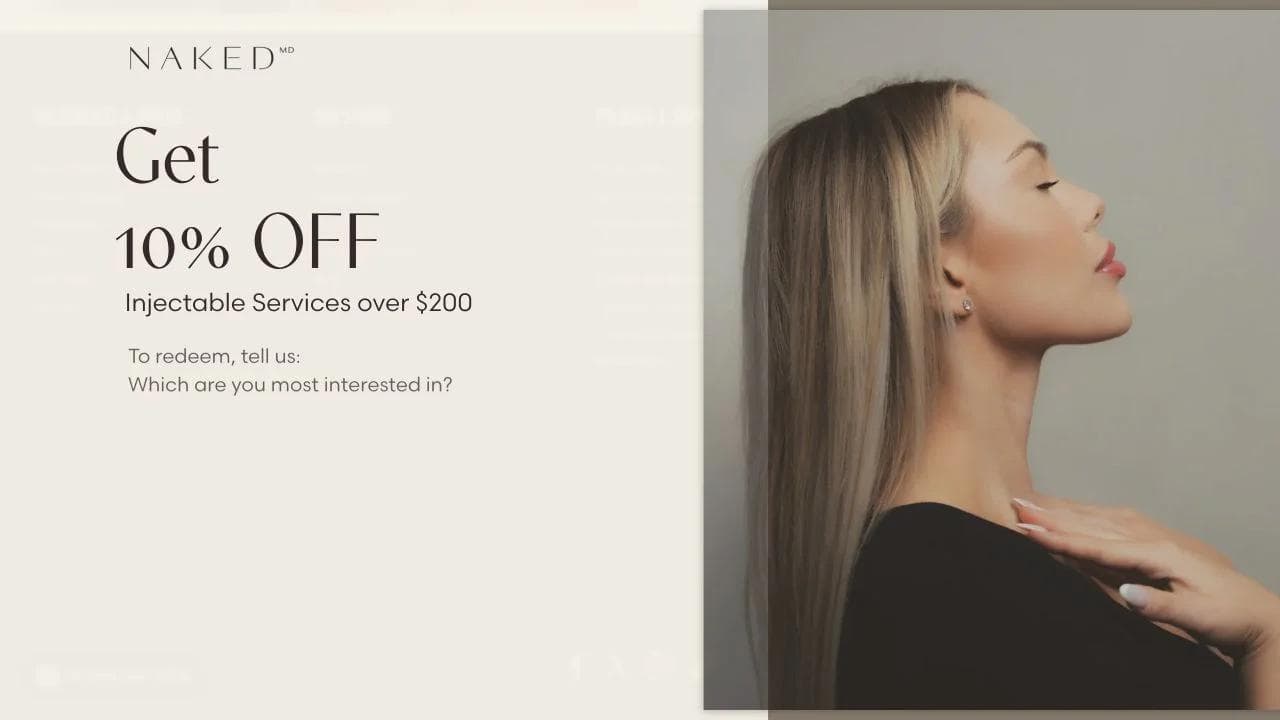
What to borrow
- Standardize treatment names and basic expectations across locations.
- Let visitors confirm local availability, provider, and price framing before choosing a time.
- Explain what provider training and oversight mean in practice rather than relying on a badge.
What to improve
Consumer-friendly treatment products can imply more uniformity than clinical decisions allow. Keep consultation, individual dosing, contraindications, alternatives, and outcome variability visible throughout the booking journey.
Six med spa examples at a glance
- Mirabile MD: strongest lesson in connecting aesthetic breadth to physician-led authority.
- Upkeep: strongest lesson in making price and retail accessibility part of the product.
- SkinSpirit: strongest lesson in organizing treatments, providers, and locations at scale.
- Peachy: strongest lesson in the clarity created by narrow specialization.
- JECT: strongest lesson in making provider expertise part of a modern consumer brand.
- NakedMD: strongest lesson in standardizing discovery and booking across a national footprint.
The right model depends on the practice. A physician-led boutique should not imitate a national treatment catalog without the operating systems behind it. A narrow injectable studio should not adopt a sprawling wellness menu simply to appear comprehensive.
The real forking paths in med spa design
Concern first versus treatment first
Experienced visitors may search for a named injectable, laser, peel, or device. New visitors may only know the concern. Support both routes, then explain that an online page cannot determine candidacy.
Boutique authority versus multi-location consistency
A boutique practice can lead with a recognizable founder or physician. A scaled brand must prove that standards, provider profiles, treatment availability, and follow-up remain clear across locations.
Price transparency versus consultative scoping
Publish a fixed price when the service is actually fixed. Otherwise use starting prices, ranges, or consultation terms with an explanation of the variables. Never make a package look universal if dose, area, device settings, or candidacy changes the plan.
Outcome imagery versus responsible context
Before-and-after galleries are useful when images are consented, comparable, labeled, and tied to relevant treatment context. They should not imply that every visitor will get the same result.
Recommended med spa homepage anatomy
- Opening: practice focus, market, provider or oversight context, consultation or booking action, and one factual proof point.
- Explore by concern: common goals written in customer language.
- Explore by treatment: categories with plain-language descriptions.
- Provider trust: profiles, credentials, philosophy, and who performs what.
- What to expect: consultation, screening, treatment, downtime, maintenance, and follow-up.
- Pricing model: consultation fee, starting prices, packages, memberships, financing, and limitations.
- Evidence: contextual results, reviews, and education.
- Locations: treatment availability, hours, access, and provider selection.
- Privacy-conscious booking: minimal marketing intake followed by the appropriate clinical workflow.
Where Moda fits
Moda can help a med spa create a branded static marketing site, treatment explainers, provider graphics, social posts, campaign landing pages, before-and-after layouts with appropriate consent, and printable PDFs. It is not an EHR, patient portal, clinical intake system, compliant records store, or medical scheduling platform. Keep protected or sensitive health information in systems designed for that purpose.
Frequently asked questions
What should a med spa website include?
Include concern-led and treatment-led discovery, provider profiles and credentials, locations, consultation and booking, candidacy and expectation guidance, price framing, contextual results, reviews, membership terms, and privacy-conscious intake.
Should a med spa publish prices?
Publish fixed prices when the service is actually standardized. Otherwise use starting prices, ranges, or consultation terms and explain the factors that change dose, area, device settings, package, or plan.
How should before-and-after images be presented?
Use appropriately consented images with comparable framing, clear labels, treatment context, timing, and a reminder that outcomes vary. Do not let the gallery imply a guaranteed result.
What information should a booking form collect?
Collect only what is necessary to request the appointment, such as contact, location, service interest, and timing. Move sensitive health information into an appropriate clinical intake system when required.
Can Moda replace an EHR or patient portal?
No. Moda can create the public marketing site and branded content, but records, clinical intake, authenticated patient actions, and sensitive health information belong in systems designed for those purposes.

Real editable visuals. Real canvas. Full control.
Fly through design work