Roofing Website Design: 6 Full-Page Teardowns
See six roofing websites analyzed section by section, with practical lessons for repair, replacement, education, materials, commercial portfolios, warranties, financing, and local leads.
 Anvisha Pai, Co-founder & CEO, Moda
A roofing website is not one sales page. It has to help a homeowner with an active leak, a storm-damage visitor unsure what to do next, a planned replacement shopper comparing materials and warranties, and sometimes a commercial or HOA buyer with a longer approval process.
The design job is to separate those paths without turning the homepage into a directory. Strong pages explain what happens next, show work that matches the claim, and handle insurance language carefully.
The roofing website framework
Evaluate the site across six decisions:
- Urgency: Can a leak or storm visitor find immediate help and response expectations?
- Scope: Does the page distinguish repair, replacement, restoration, maintenance, and commercial work?
- Inspection: Is a "free inspection" explained clearly enough to understand what the visitor receives?
- Proof: Are licenses, manufacturer credentials, reviews, local projects, and warranties specific and verifiable?
- Purchase: Can a planned buyer understand materials, process, financing, and warranty tradeoffs?
- Geography: Is the actual service area clear without thin city-page spam?
1. Quality Exteriors: build the case around local breadth
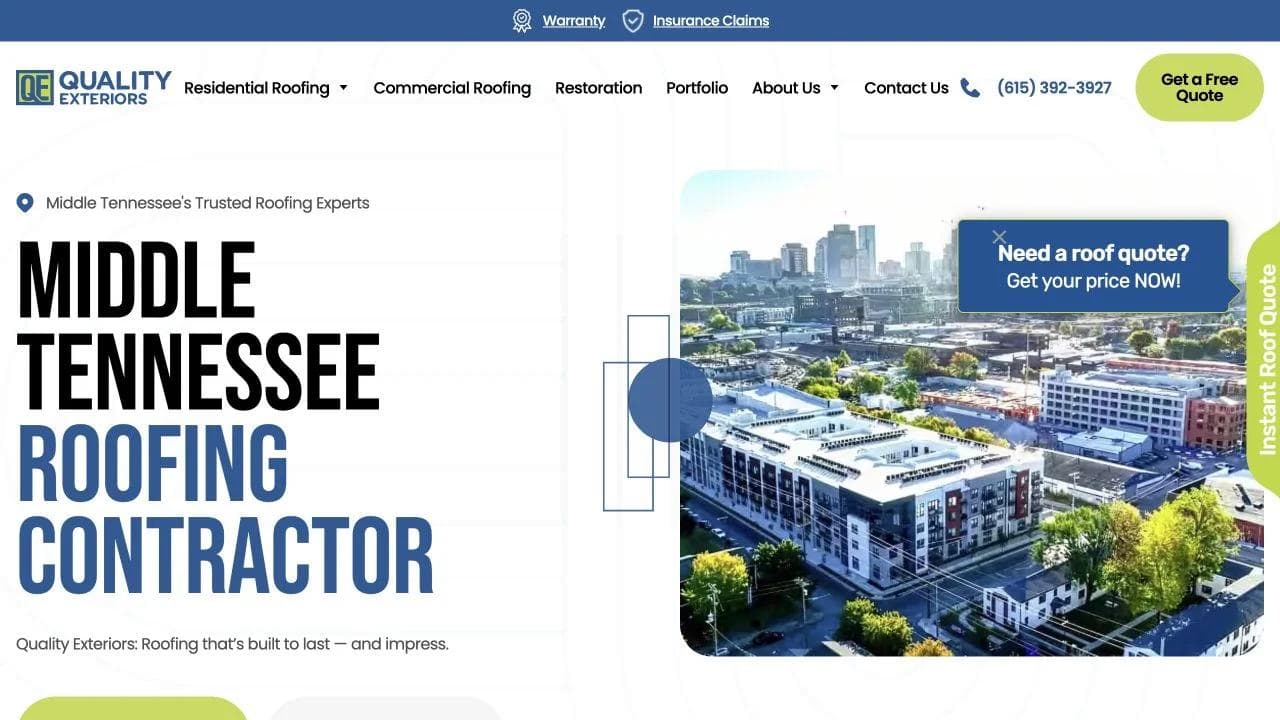
Quality Exteriors opens with a clear market position, service navigation, estimate action, and visual proof of residential exterior work. The company offers more than roofing, so the first design challenge is making the roofing path recognizable without hiding adjacent services.
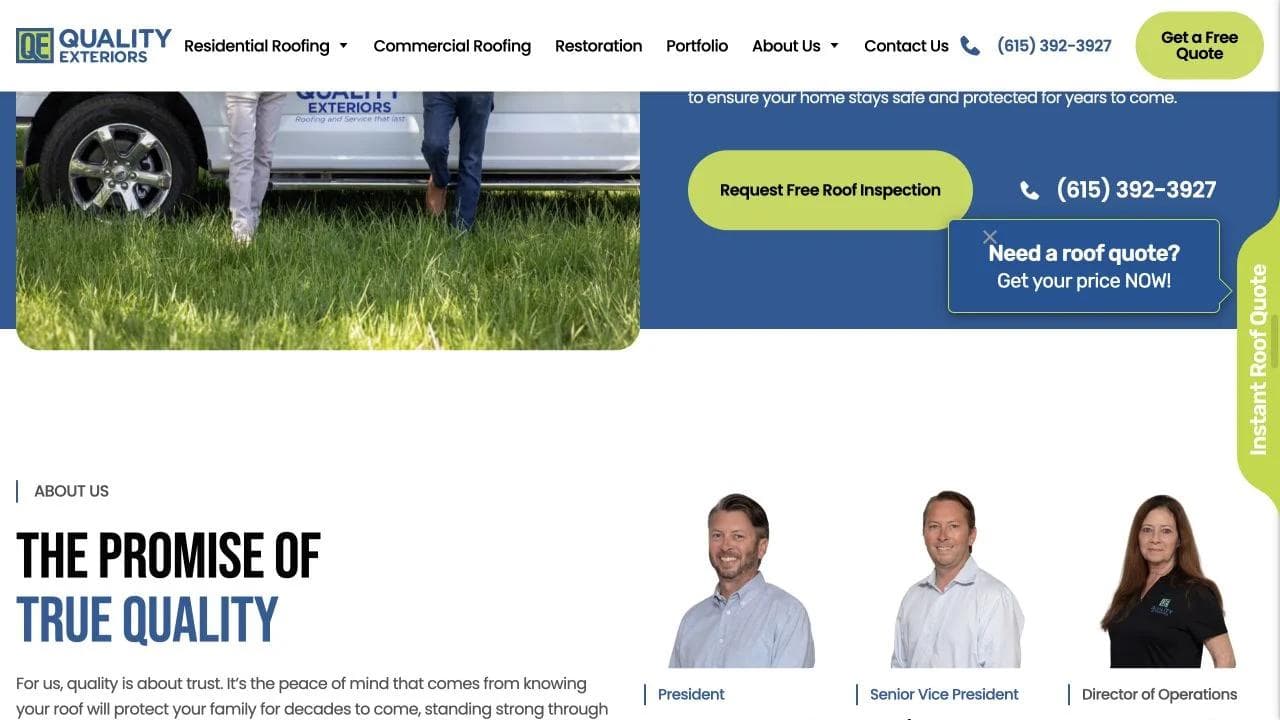
The middle of the page combines service categories, company context, project imagery, and reasons to trust the contractor. A visitor can move from "do they handle this?" to "have they done work like mine?"
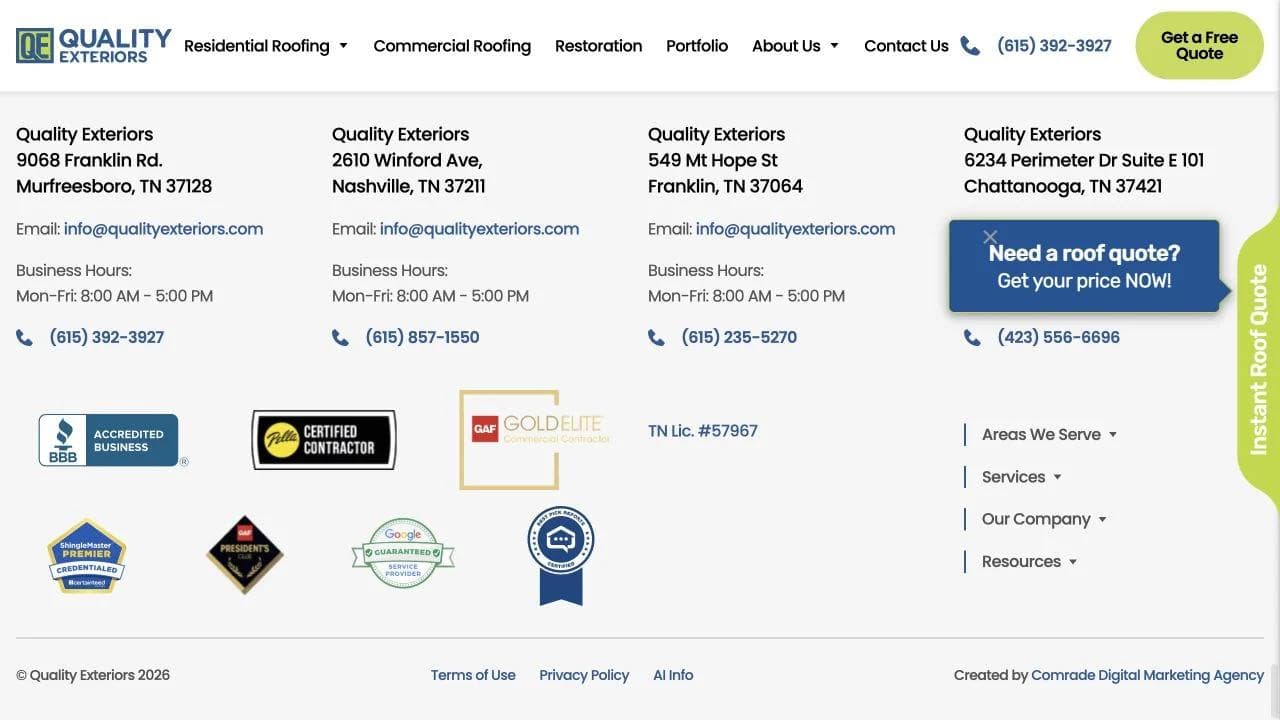
The closing layers reviews, service geography, and contact information. That sequence is useful for local-service decisions because the last questions are often whether the company serves the property and how the estimate begins.
What to borrow
- Keep roofing visible when the company also sells siding, gutters, windows, or other exterior work.
- Pair broad capabilities with real project imagery.
- Repeat geography and estimate routing after the proof sections.
What to improve
Multi-service sites can dilute the page. A roofing visitor should reach repair, replacement, storm, material, warranty, and project details in one click rather than navigating a general exterior catalog.
2. Phoenix Roofing & Repair: separate the work before explaining the company
Phoenix Roofing & Repair gives repair, replacement, inspections, maintenance, commercial, and HOA work distinct labels. That is a strong content decision because the buyer can recognize the job before reading a long company story.
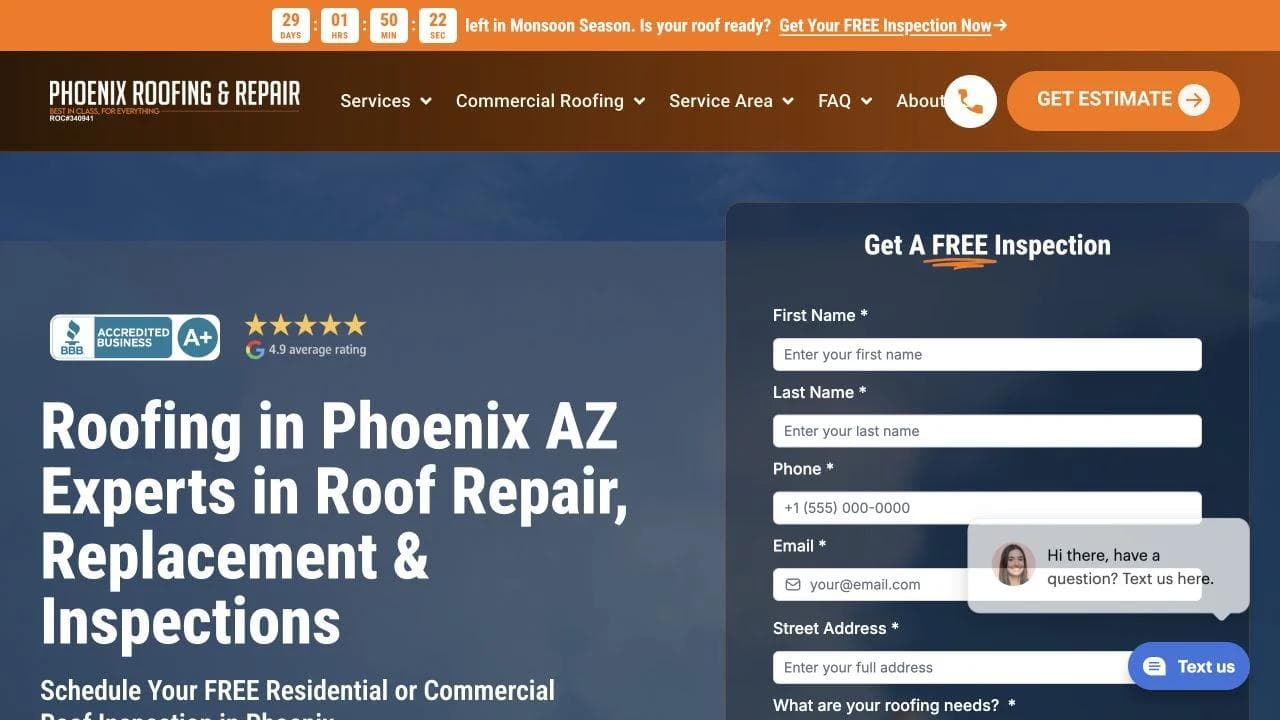
The middle of the page explains service categories and company experience while keeping an estimate action visible. The page also shows the value and risk of persistent chat widgets: they can create another contact route, but they can obscure evidence on smaller screens.
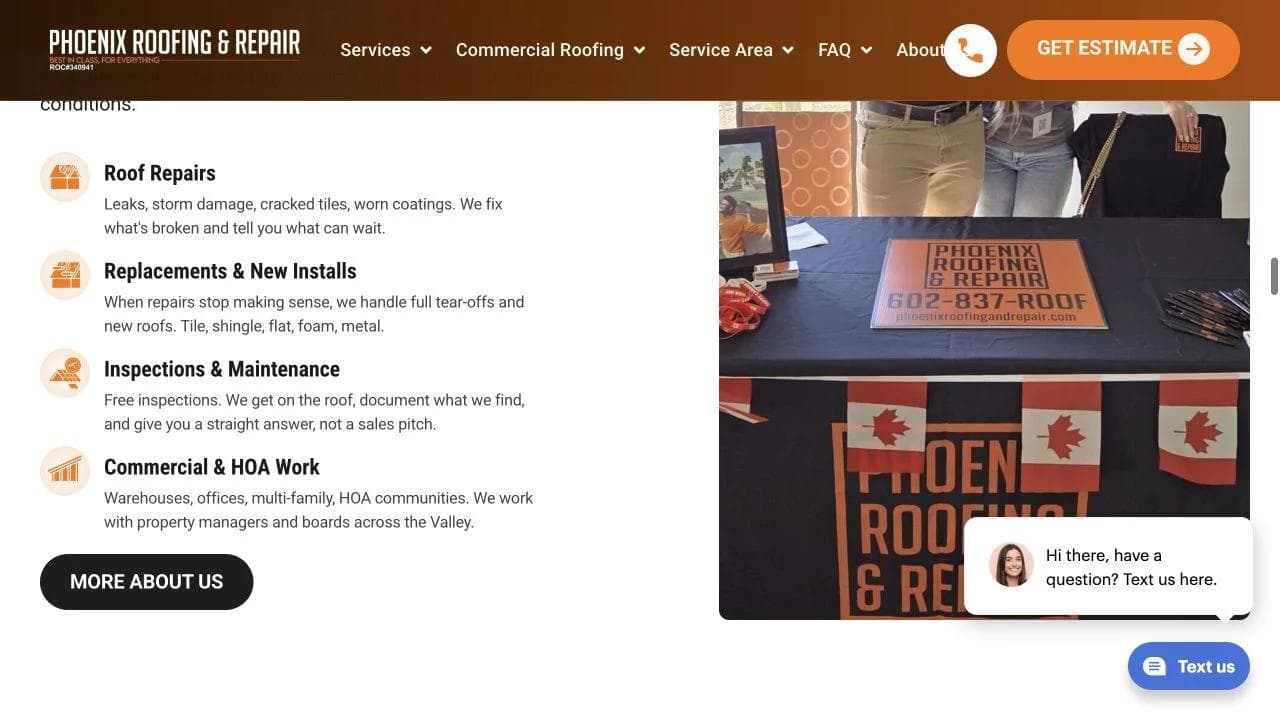
Further down, testimonials, reasons to choose the company, questions, and another estimate form complete the page. It is a full funnel rather than a hero followed by disconnected cards.
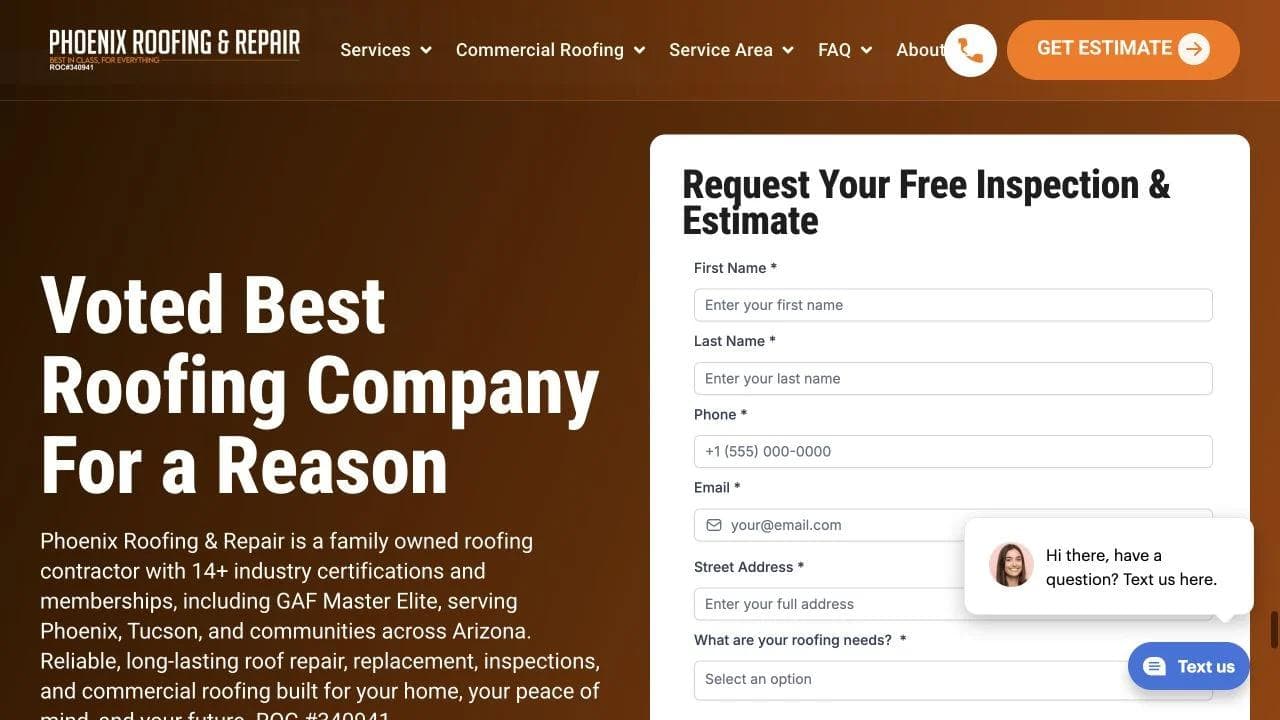
What to borrow
- Let visitors self-identify repair, replacement, maintenance, commercial, or HOA work.
- Explain what an inspection includes and what happens after it.
- Put reviews and FAQs before the final form so common objections are answered first.
What to improve
The page is long and repeats several modules. A tighter information hierarchy could keep the same proof while making material choices, warranties, and project examples easier to compare.
3. Modern Roof: use projects and materials to support a planned purchase
Modern Roof presents roofing alongside siding and gutters. Its opening is visually oriented and gives planned-project visitors a route into repair, replacement, financing, and past work.
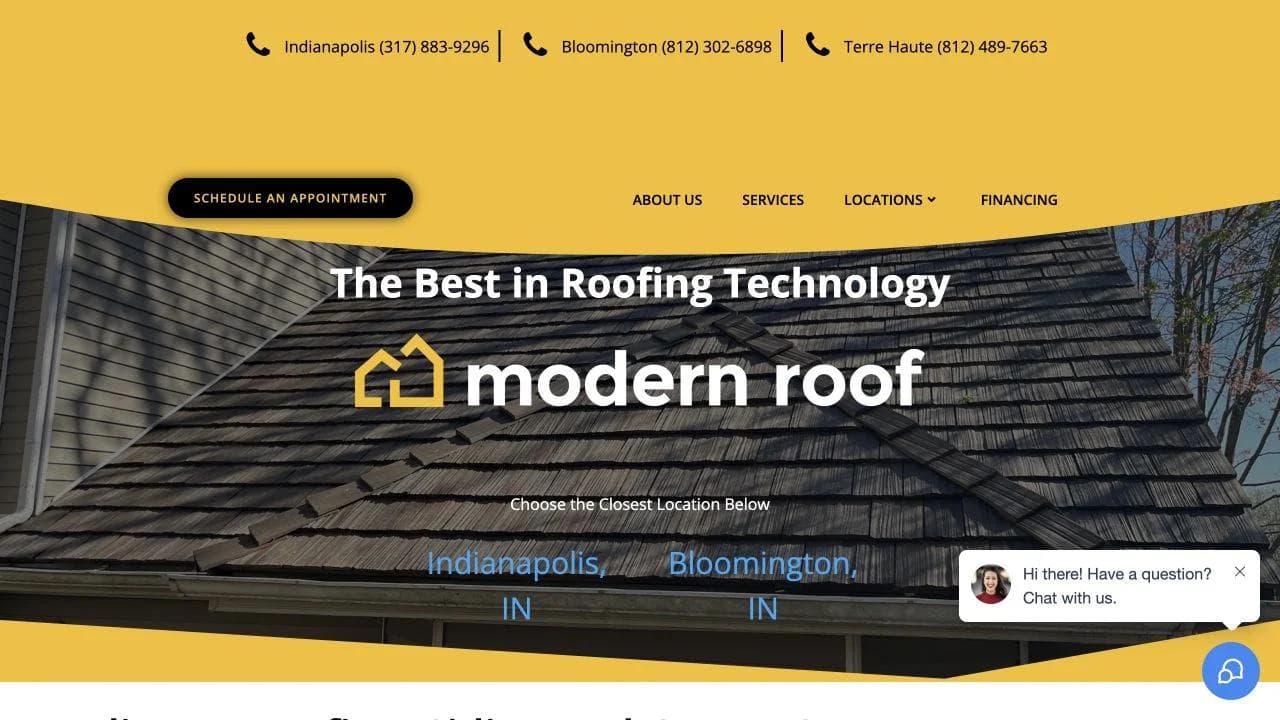
The middle of the page shifts toward services and project evidence. This is especially important for replacement shoppers because finished homes communicate material, color, and workmanship more concretely than abstract quality claims.
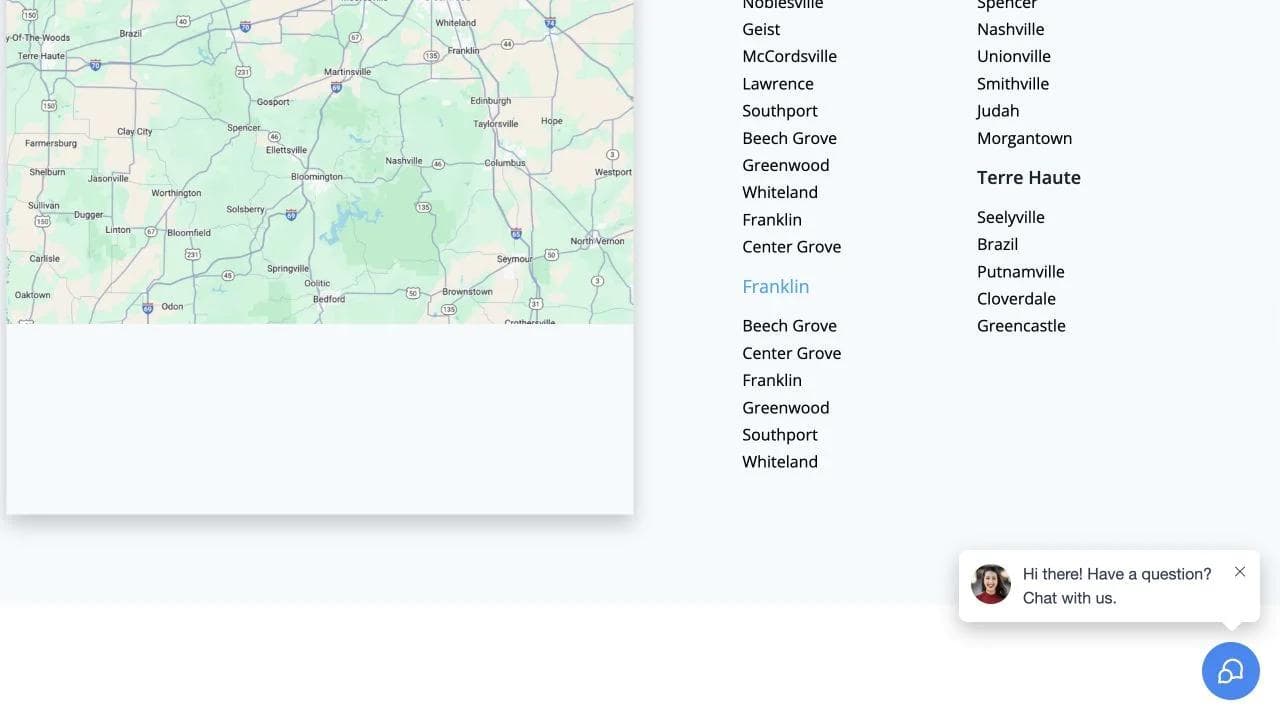
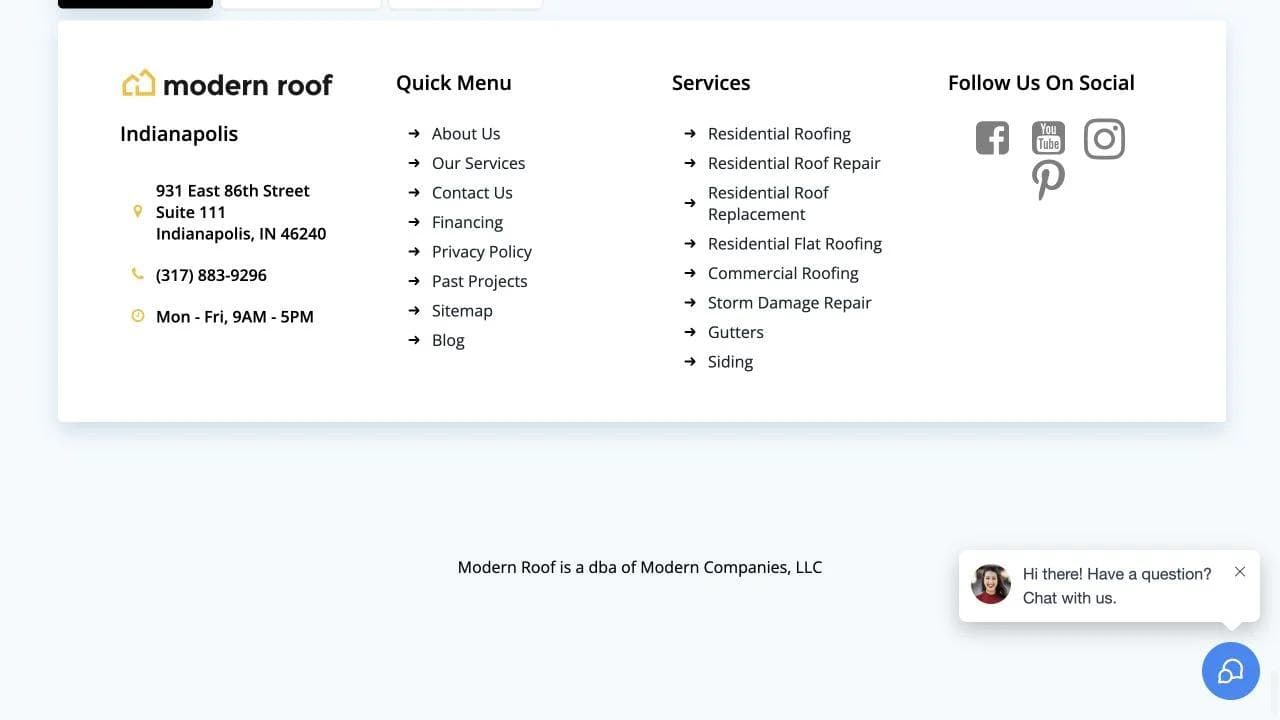
The closing brings visitors back to contact, locations, and the complete service catalog. Multi-location contractors should make branch coverage and ownership of the follow-up explicit.
What to borrow
- Treat a roof replacement as a designed purchase with material and project evidence.
- Connect financing to the relevant job rather than advertising it as an isolated badge.
- Show location coverage and a clear owner for the next step.
What to improve
Project galleries are most useful when visitors can filter by material, roof type, color, neighborhood, or problem solved. A wall of attractive homes proves activity but may not answer whether the contractor has handled a comparable roof.
4. Bill Ragan Roofing: make education the trust strategy
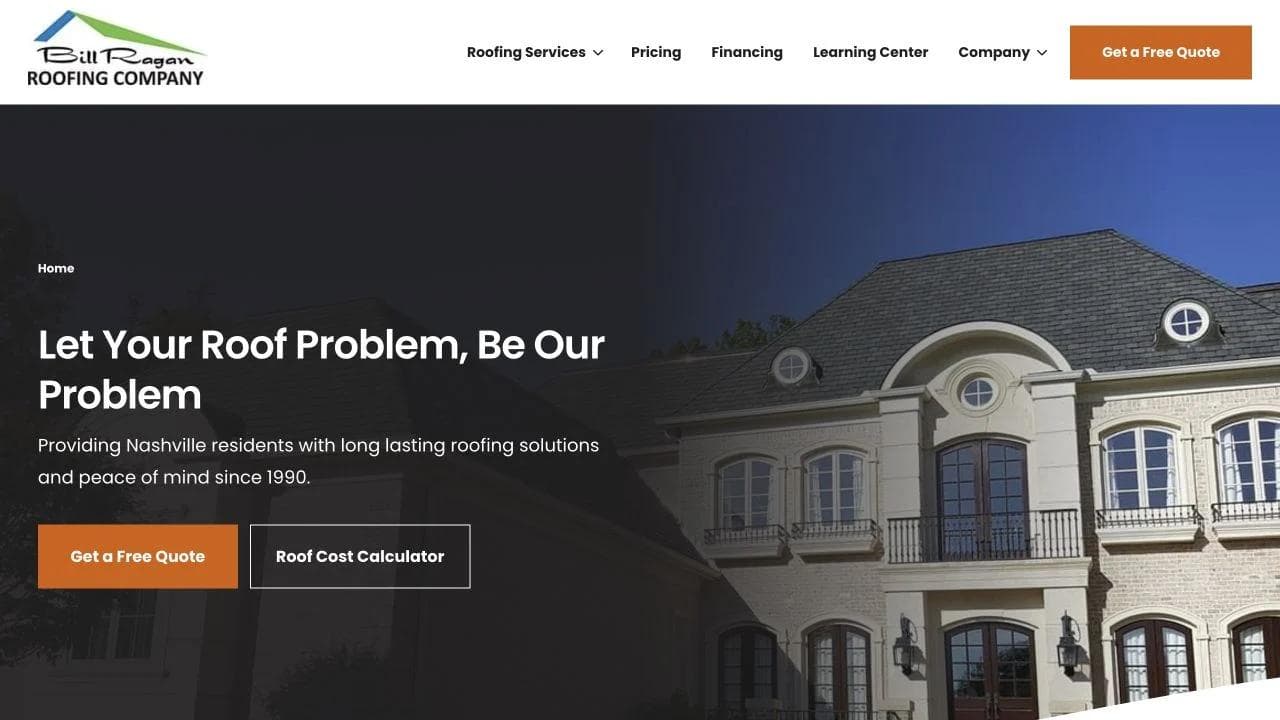
Bill Ragan Roofing leads with the homeowner's fear of choosing badly, then answers it with local history, licensing, honest assessments, and a craftsmanship guarantee. The page positions education and sales restraint as differentiators.
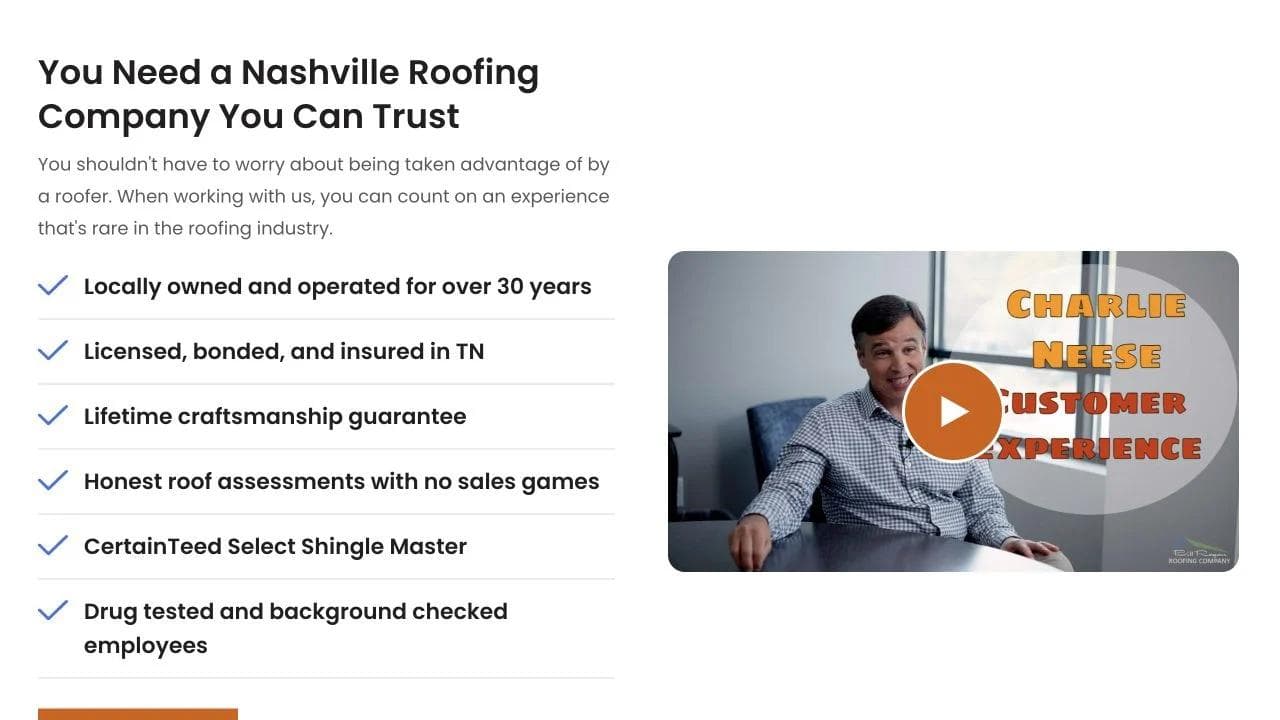
The center explains the cost of poor workmanship, what trustworthy service should look like, and why the company believes it meets that standard. This works because it translates abstract trust into recognizable risks and practices.
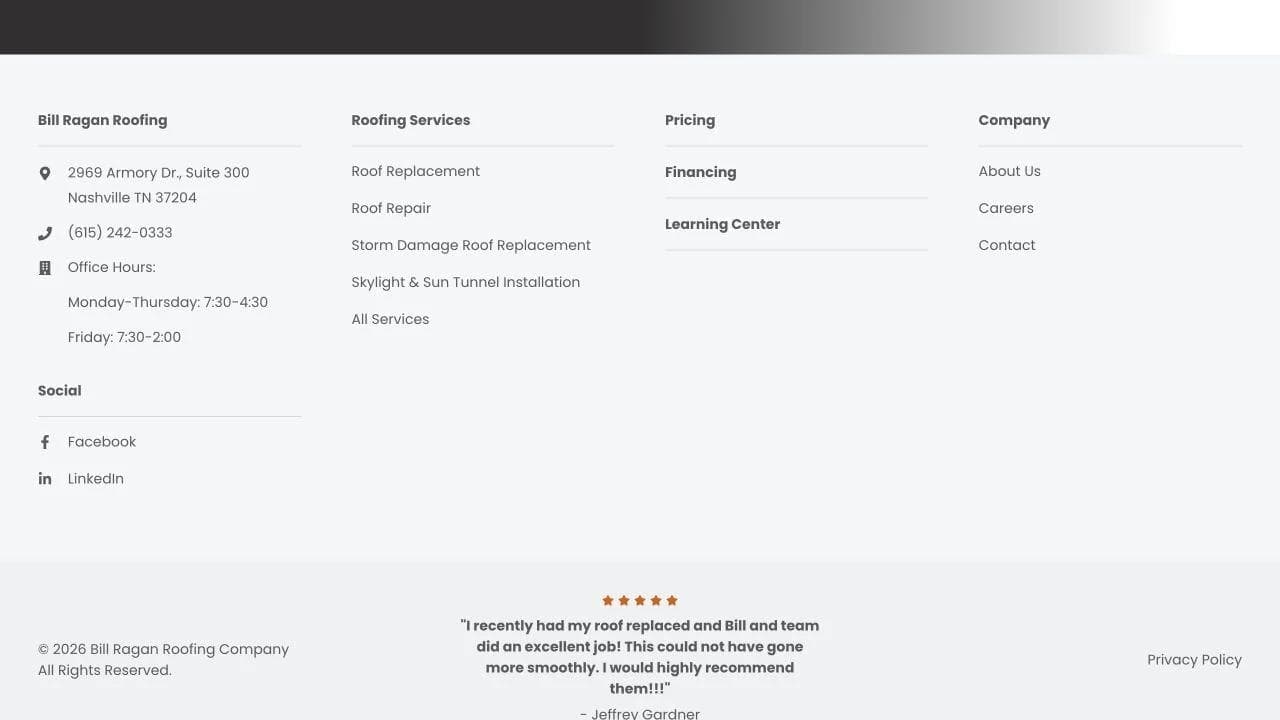
The closing connects educational resources, reviews, service coverage, and consultation. A deep learning center is strategically useful for roofing because homeowners often research materials, costs, claims, repairs, and contractor selection before requesting an estimate.
What to borrow
- Address the consequences of a poor contractor choice without using scare tactics.
- Explain the inspection and recommendation standard, including when repair is enough.
- Build educational content around real homeowner decisions, not generic seasonal tips.
What to improve
Trust-heavy copy should still lead quickly to comparable projects, materials, process, and warranty terms. A homeowner needs evidence as well as reassurance.
5. Erie Home: turn materials into a guided comparison
Erie Home is designed for a large, multi-market replacement business. The opening emphasizes an estimate, premium durability, and recognizable material categories rather than repair dispatch.
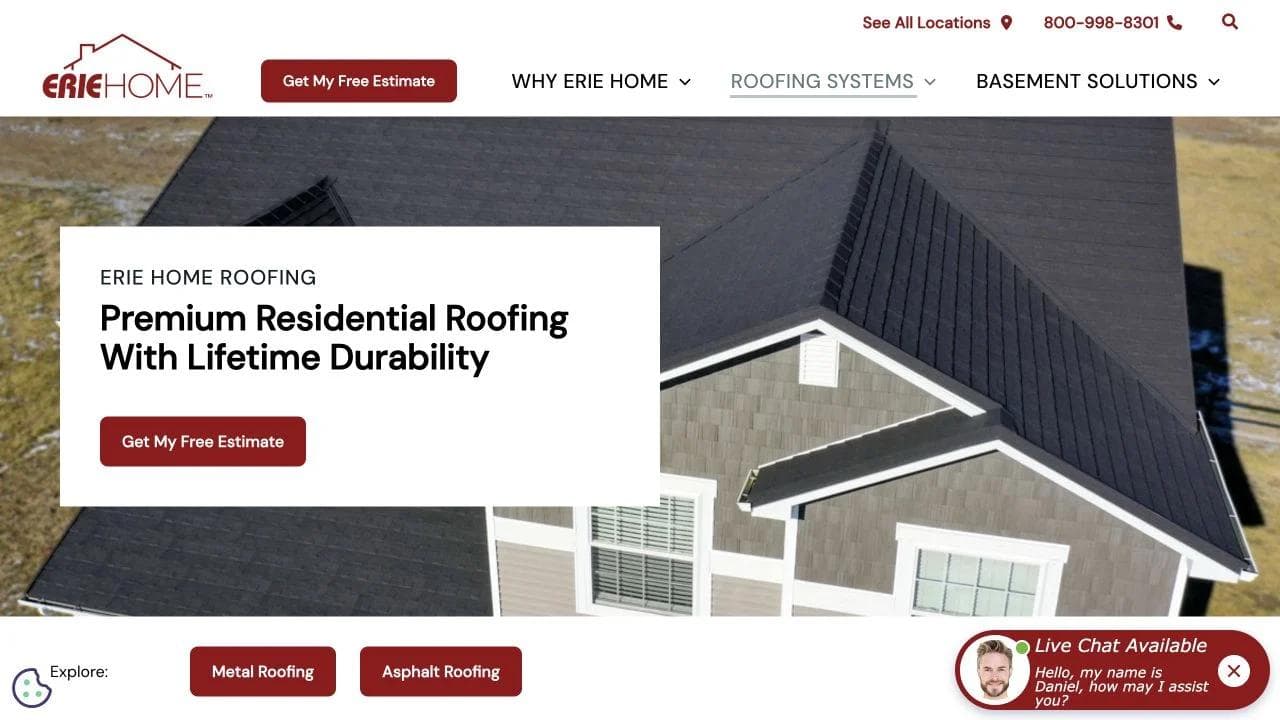
The center compares metal and asphalt options through product imagery, color choices, durability language, and homeowner education. This is closer to a considered home-improvement purchase than an emergency service page.
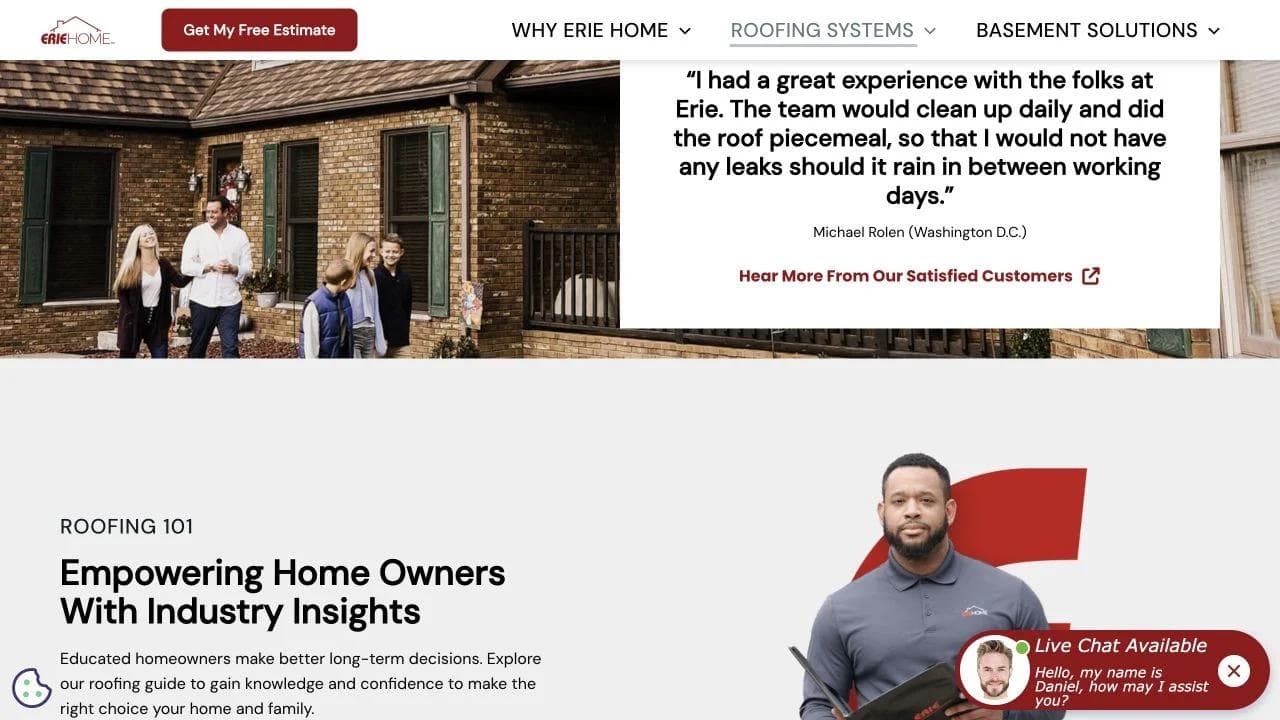
The lower journey adds scale, customer proof, financing, installation framing, and another estimate route. National scale can reassure buyers, but the actual local installer, office, and service owner must remain visible.
What to borrow
- Let shoppers compare material families, appearance, ownership tradeoffs, and warranty context.
- Connect education and financing to the replacement decision.
- Give multi-market visitors a clear local branch and follow-up owner.
What to improve
Material marketing can drift into broad lifetime claims. Make coverage, exclusions, maintenance, transferability, and installer workmanship responsibilities easy to inspect before the sales visit.
6. Baker Roofing: design for commercial portfolios, not homeowner leads
Baker Roofing is a commercial contractor with a long operating history, project work, service programs, and national-account capabilities. The opening prioritizes commercial scope and service requests rather than consumer promotions.
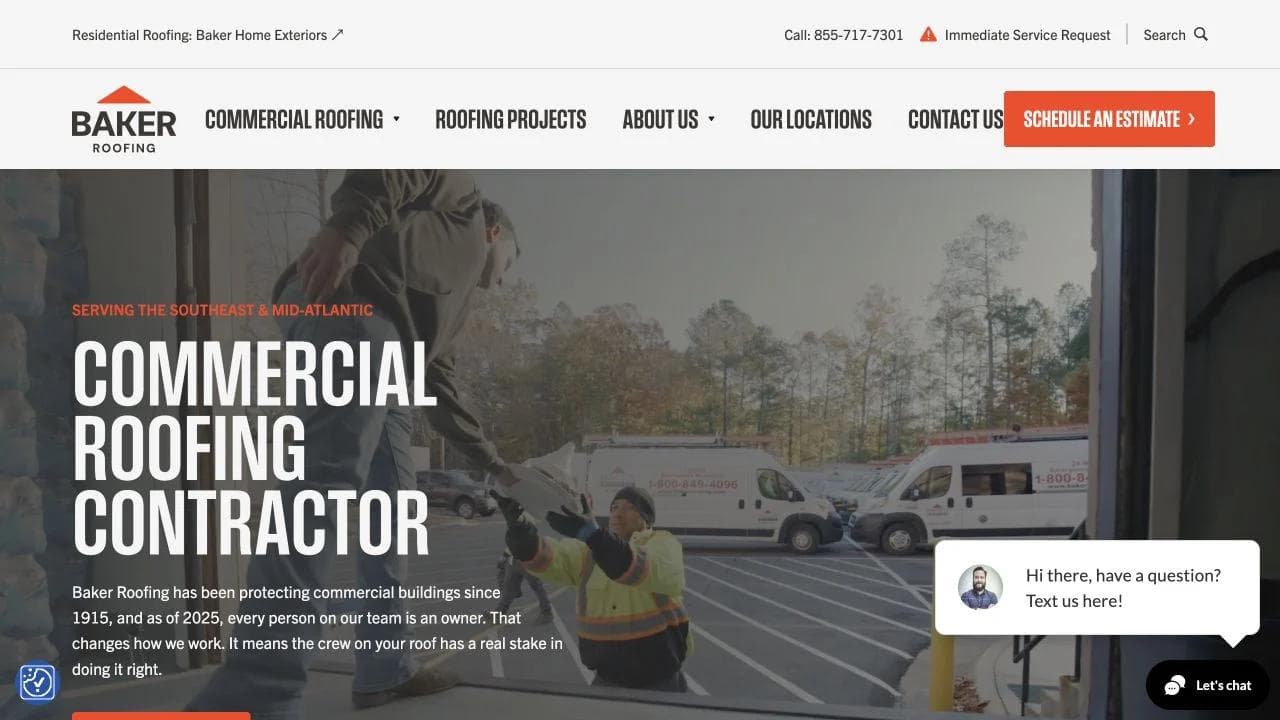
The middle explains services, national-account coordination, consistent standards, reporting, and representative projects. Portfolio buyers need this operating model because the purchase includes documentation and accountability across locations.
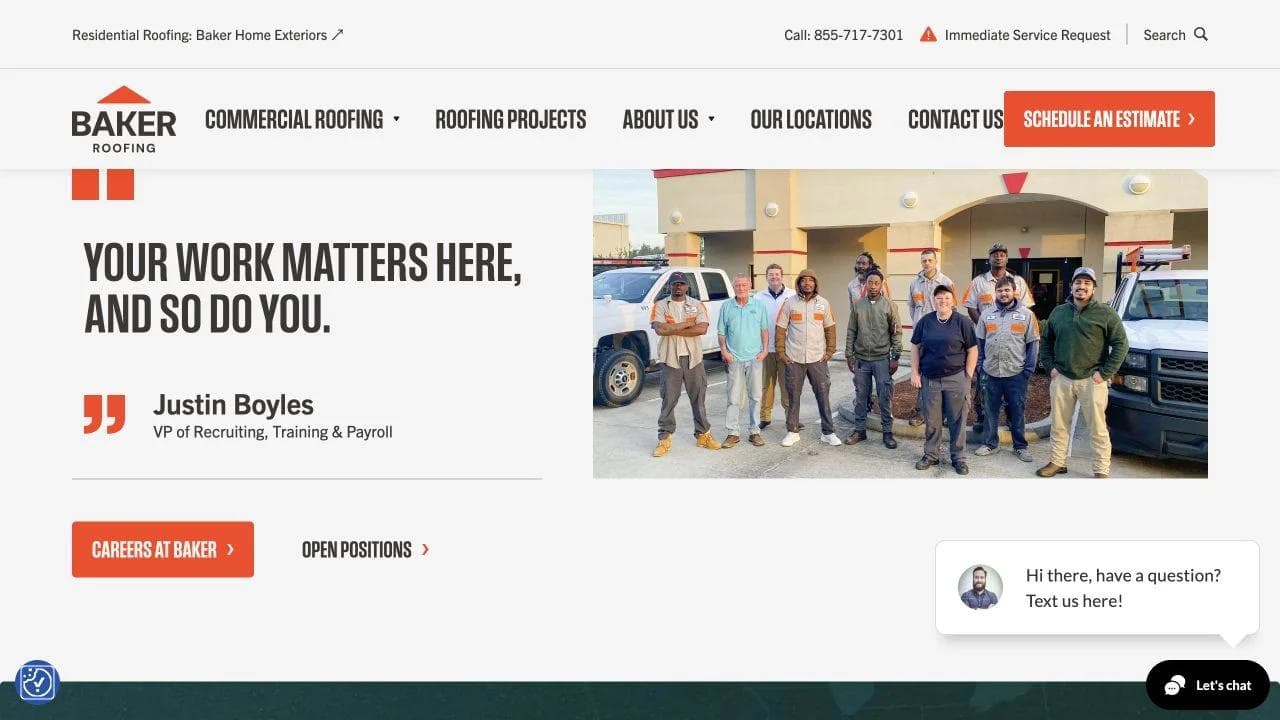
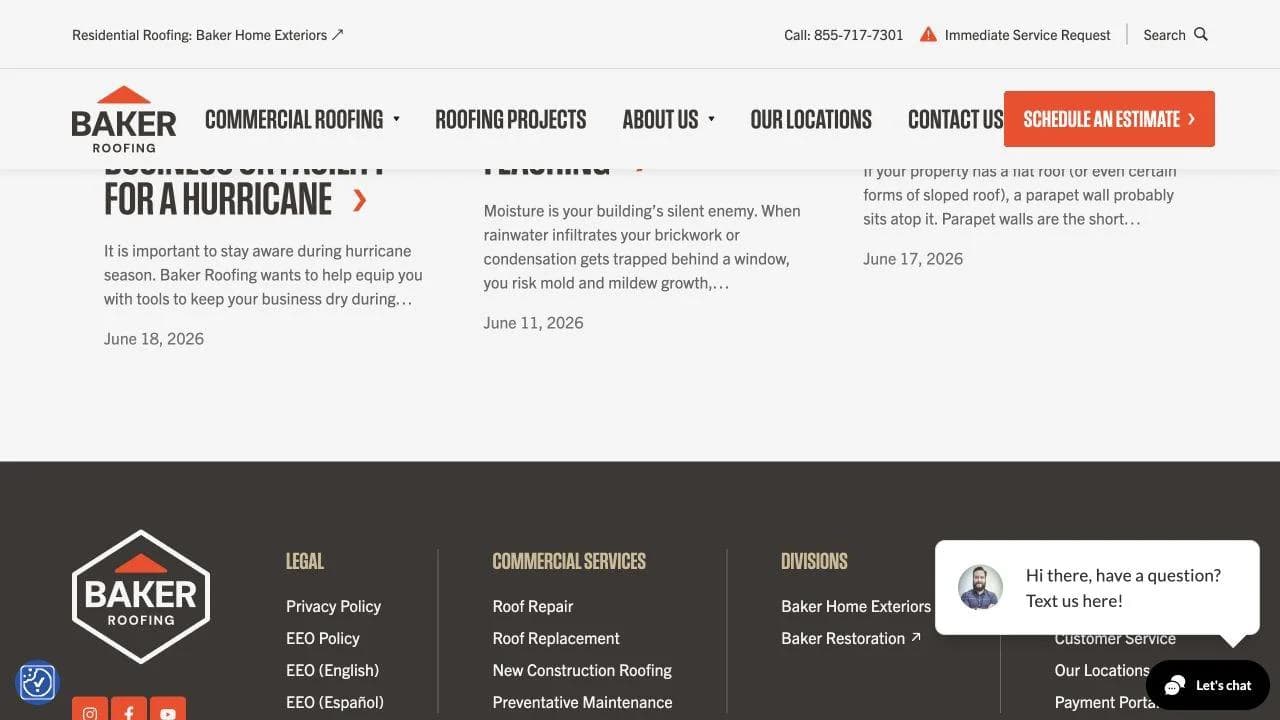
The closing adds team and ownership context, project evidence, locations, and another service route. Commercial proof should show system type, facility constraints, safety, schedule, documentation, and maintenance implications.
What to borrow
- Separate service calls, planned capital work, maintenance, and national-account inquiries.
- Explain reporting and single-point accountability for multi-site portfolios.
- Use projects to prove systems and operating complexity, not only attractive finished roofs.
What to improve
Commercial buyers often arrive with procurement requirements. Make safety, insurance, certifications, service-level expectations, bid coverage, and sample reporting easier to reach.
Six roofing examples at a glance
- Quality Exteriors: best lesson in keeping roofing visible inside a broader exterior-services company.
- Phoenix Roofing & Repair: best lesson in routing repair, replacement, inspection, commercial, and HOA work.
- Modern Roof: best lesson in using projects and materials for planned residential purchases.
- Bill Ragan Roofing: best lesson in turning education and restraint into trust.
- Erie Home: best lesson in productizing material comparison and financing at scale.
- Baker Roofing: best lesson in designing for commercial facilities and portfolios.
The examples represent different businesses. A local repair contractor should not imitate a national replacement funnel, and neither should imitate a commercial portfolio site. The best structure follows the real work.
The real forking paths in roofing website design
Leak or storm versus planned replacement
Urgent pages should prioritize safety, temporary mitigation, response area, and direct contact. Planned replacement pages should prioritize assessment, materials, process, financing, warranties, and project evidence. One generic estimate form underserves both.
Insurance-supported restoration versus retail purchase
If the company helps document storm damage, explain the contractor's role without implying control over coverage or claim outcomes. The site can describe inspection, photographs, estimates, meetings, and repair work. It should not present the contractor as the insurer or promise approval.
Residential versus commercial
Commercial buyers often need roof-system expertise, maintenance programs, project capacity, safety practices, references, and bid documentation. Homeowners need understandable choices and confidence in the people entering the property. Separate pages and intake usually work better.
Manufacturer credential versus workmanship evidence
A certification or warranty badge can matter, but it is not a substitute for explaining who installs the roof, how crews are supervised, what the workmanship warranty covers, and how issues are handled after completion.
Recommended roofing homepage anatomy
- Opening: service area, repair or replacement focus, urgent phone route, estimate route, and one verifiable proof point.
- Choose the job: leak or storm, repair, replacement, inspection, maintenance, commercial, or HOA.
- What happens next: inspection, documentation, options, proposal, scheduling, installation, cleanup, and final review.
- Project evidence: comparable roofs with material, market, and scope context.
- Materials and warranties: choices, tradeoffs, manufacturer coverage, and workmanship coverage.
- Insurance role: factual process language with no approval promises.
- Company proof: licenses, insurance, manufacturer credentials, team, reviews, and local history.
- Financing: current terms or a clear explanation that approval and offers come from a third party.
- Service area: meaningful coverage details and local office information.
- Final route: urgent help, inspection request, planned estimate, and commercial inquiry.
Where Moda fits
Moda can help a roofing company build a branded static marketing site, project case studies, service-area explainers, proposal PDFs, financing graphics, social posts, and storm-season creative. It does not replace field-service, CRM, estimating, insurance, financing, or dispatch software. Use those systems for operations and connect them to a clear public experience.
Frequently asked questions
What should a roofing website include?
Include service area, urgent leak or storm contact, repair and replacement paths, inspection process, materials, warranties, project evidence, licenses and insurance, review source, financing context, and a clear estimate route.
Should storm damage and planned replacement share a page?
They can share navigation, but their decision paths should separate. Storm visitors need safety, mitigation, documentation, and response information. Planned buyers need materials, process, financing, warranties, and comparable projects.
How should a roofer discuss insurance claims?
Describe the contractor role factually, such as inspection, photographs, estimates, meetings, and repair work. Do not imply control over coverage, claim approval, or the insurer decision.
What makes a roofing project gallery useful?
Add material, roof type, market, scope, problem, and relevant warranty context. Filterable comparable work is more informative than a wall of attractive homes without labels.
Can Moda replace roofing CRM or estimating software?
No. Moda can create the marketing site, case studies, PDFs, and campaign creative, while estimating, CRM, financing, insurance, scheduling, and field operations stay in dedicated systems.

Real editable visuals. Real canvas. Full control.
Fly through design work