Therapist Website Design: 6 Full-Page Teardowns
See six therapist websites analyzed section by section, with practical lessons for specialization, recognition, credentials, process, fees, privacy, and client fit.
 Anvisha Pai, Co-founder & CEO, Moda
A therapist website has to create recognition without diagnosing the visitor, establish professional fit without promising an outcome, and make the first contact feel understandable. It also has to protect privacy. A beautiful page is not successful if it invites someone to disclose sensitive clinical details through an ordinary marketing form.
This guide studies six complete therapist websites across child and family work, couples therapy, women's mental health, anxiety and burnout, neuropsychological assessment, and an inclusive group practice. The goal is to show how specialization changes the page, not produce one universal therapist template.
A framework for therapist websites
Use six questions:
- Recognition: Does the copy help the right visitor recognize a situation without making unsupported diagnostic claims?
- Fit: Are population, modality, location, telehealth, licensure, and specialty clear?
- Safety: Are crisis limitations, privacy boundaries, and appropriate contact methods understandable?
- Process: Does the site explain consultation, scheduling, first session, fees, insurance, and next steps?
- Person: Does the therapist feel human while professional qualifications remain verifiable?
- Access: Can visitors find practical information without reading an autobiography first?
The biggest fork is not solo practice versus group practice. It is the clinical service itself. Ongoing psychotherapy, parent-child intervention, couples work, and neuropsychological testing have different buyers, timelines, questions, and handoffs.
Six therapist websites at a glance
- Fresh Start Parenting: a focused parent-child therapy offer for caregivers and young children.
- Tania Pombeiro Psychotherapy: individual, couples, and family work organized around recurring relationship patterns.
- Jennifer Mancuso Urban: a compact solo-practice site for women's mental health and life transitions.
- State of Mind KC: sharply positioned therapy for high-achieving women experiencing anxiety and burnout.
- Dr. Sara Douglas: a specialist neuropsychological assessment site.
- Individual and Relationship Therapy Center: an inclusive group practice with several relationship and identity specialties.
1. Fresh Start Parenting: speak to the caregiver and the child
Fresh Start Parenting opens with the parent-child relationship and a consultation route, then names Parent-Child Interaction Therapy for children ages two to nine and their caregivers.
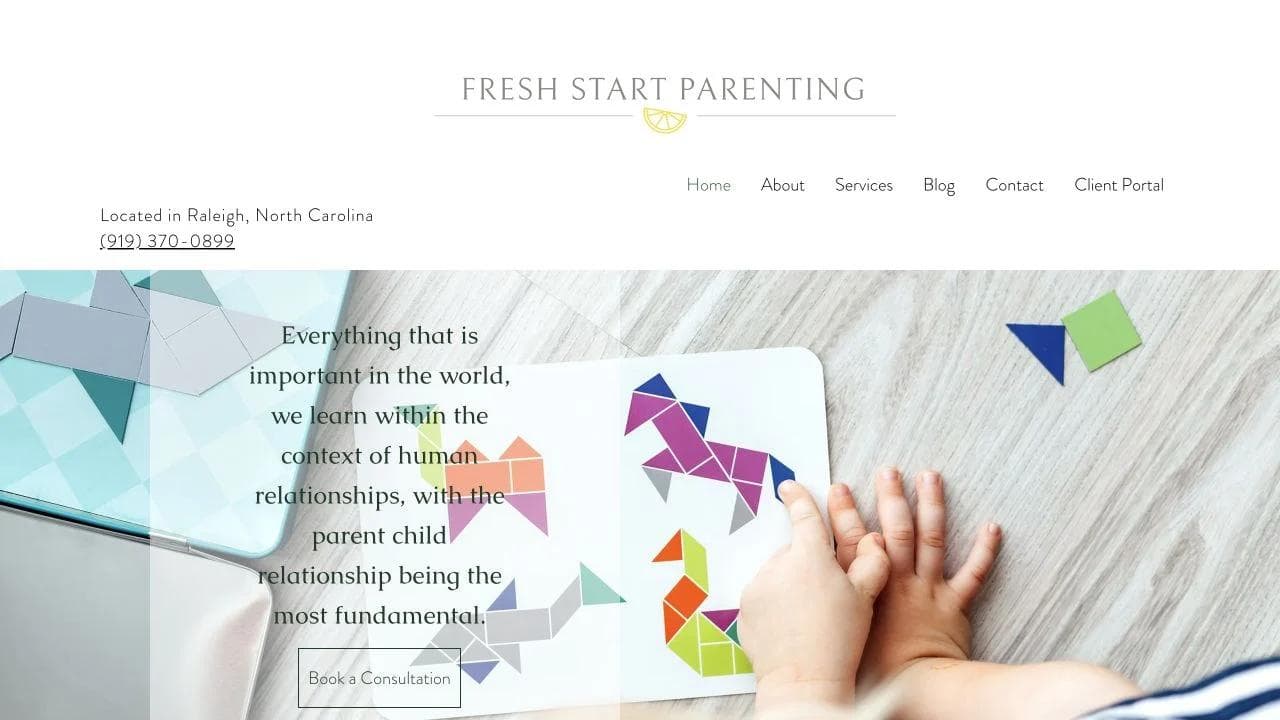
The middle identifies situations families may recognize, explains how the service works, and keeps caregiver participation central. The page does not present the child as the only person who must change.
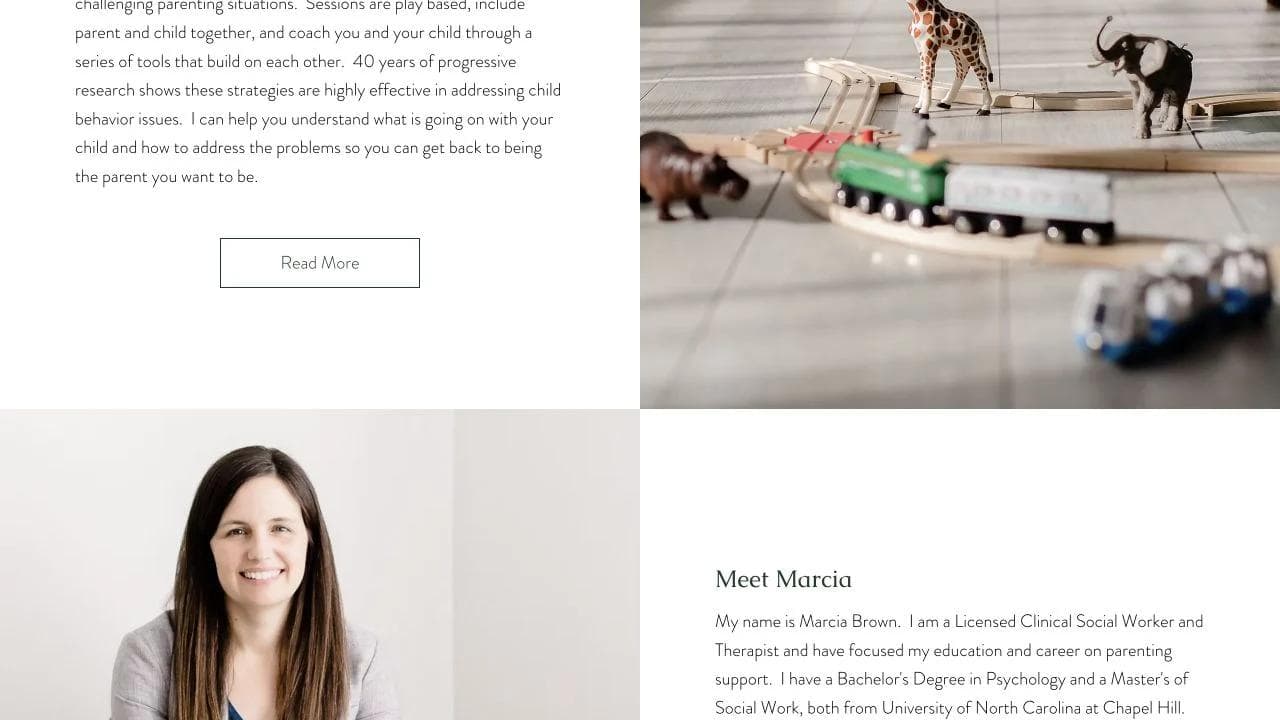
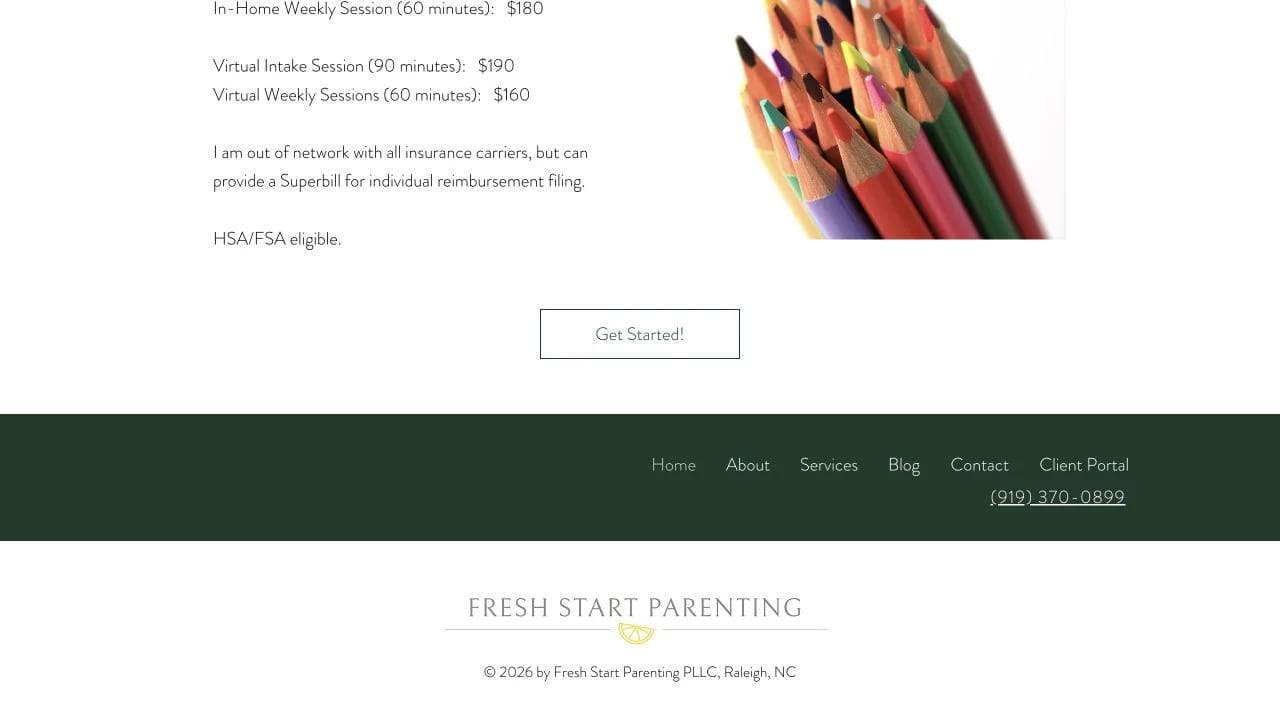
The lower page introduces the therapist, practical session information, cost, location, and another consultation path.
What to borrow
- Name the age range, caregiver role, modality, and location early.
- Describe observable situations rather than applying a diagnosis to the visitor.
- Explain what participation requires from the family.
What not to copy blindly
At-home or family-involved care needs especially clear privacy, safety, and logistics. Avoid inviting detailed descriptions of a child's behavior in a general web form.
2. Tania Pombeiro: organize around patterns, not labels
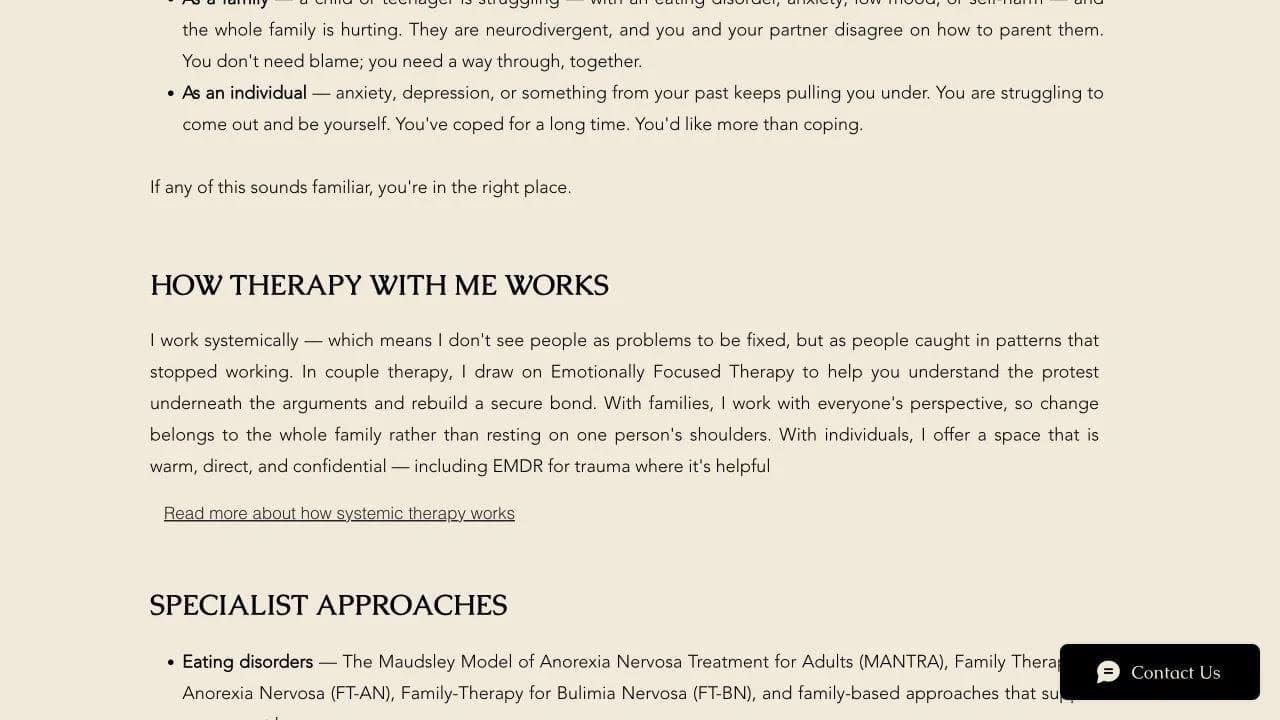
Tania Pombeiro Psychotherapy opens with individual, couple, and family psychotherapy and explains the recurring relationship cycles that often bring people to therapy.
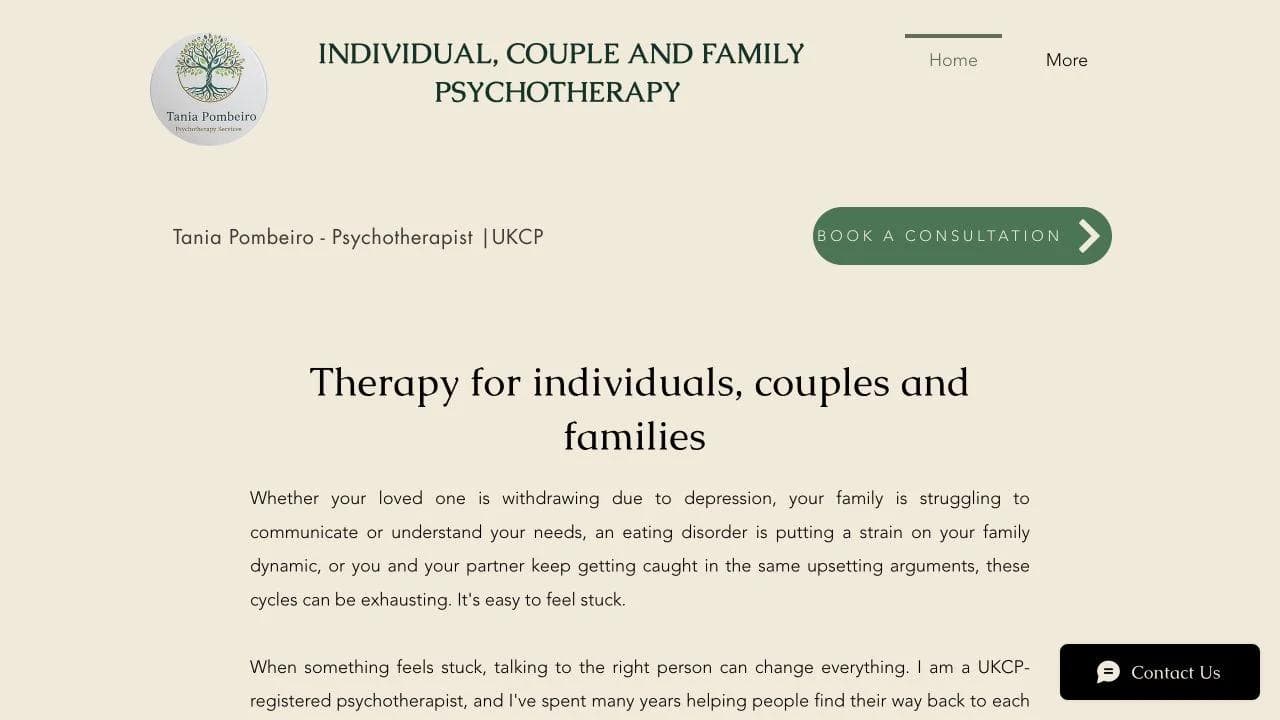
The middle separates the situations faced by couples, families, and individuals while maintaining one core promise: creating a safe space to understand patterns and strengthen relationships.
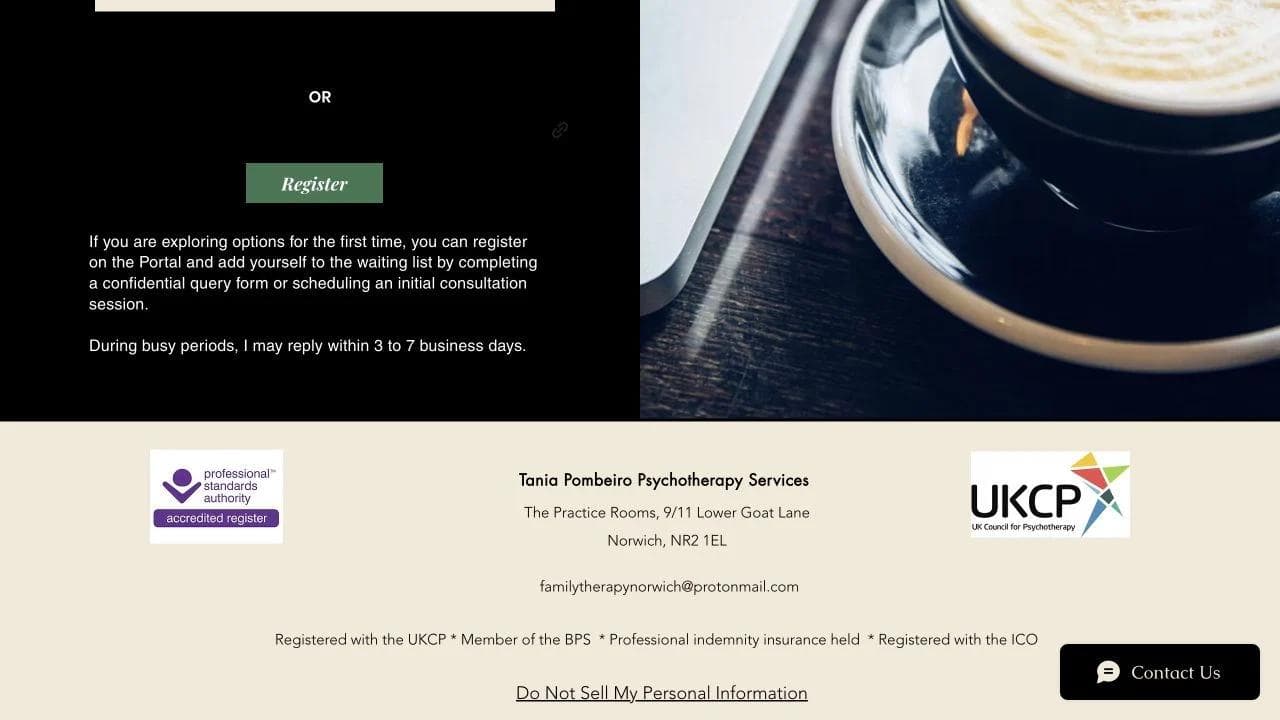
The closing clarifies services, professional registration, consultation, and contact.
What to borrow
- Use recognizable patterns to help visitors choose an audience path.
- Keep credentials near the personal introduction.
- Explain how individual, couples, and family work differ.
What not to copy blindly
Broad inclusivity still needs scope. Visitors should be able to confirm location, online availability, age groups, fees, and whether the therapist handles the specific modality they seek.
3. Jennifer Urban: let a compact site answer the fit questions
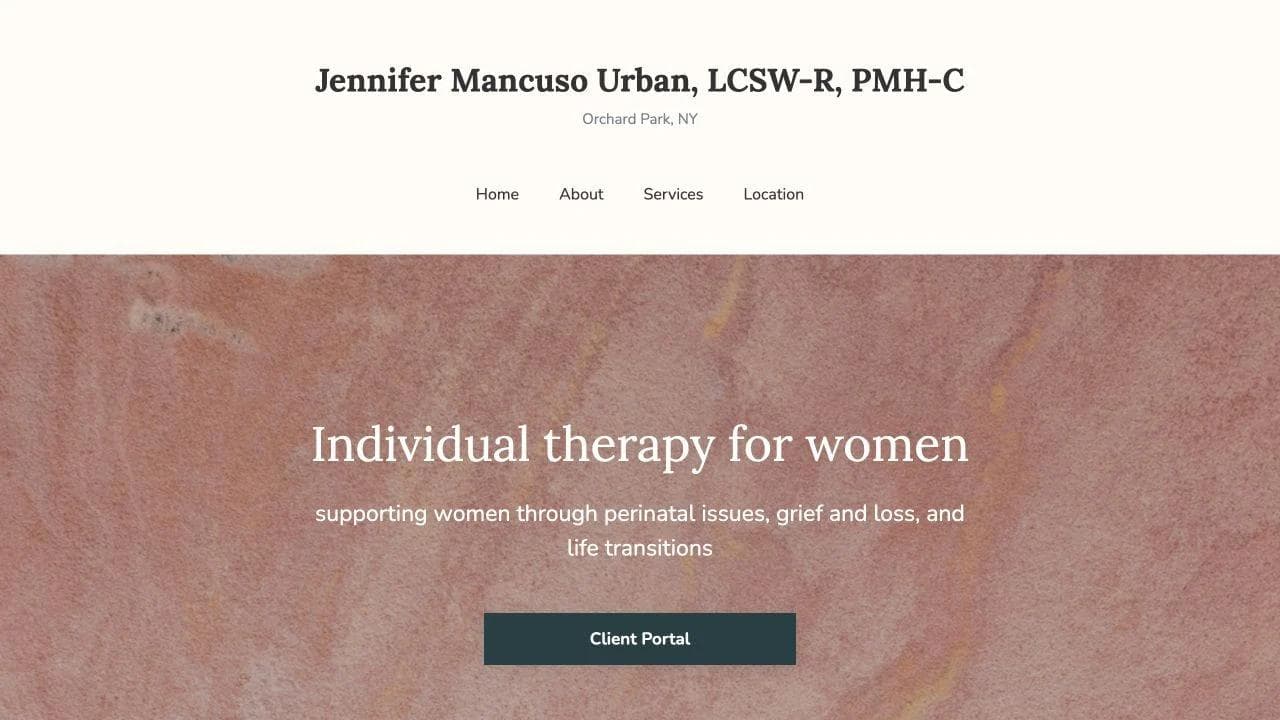
Jennifer Mancuso Urban immediately identifies location, professional credentials, and individual therapy for women, with emphasis on perinatal issues, grief, loss, and life transitions.
The middle combines a concise professional biography with service focus, telehealth, payment, insurance, and new-client availability.
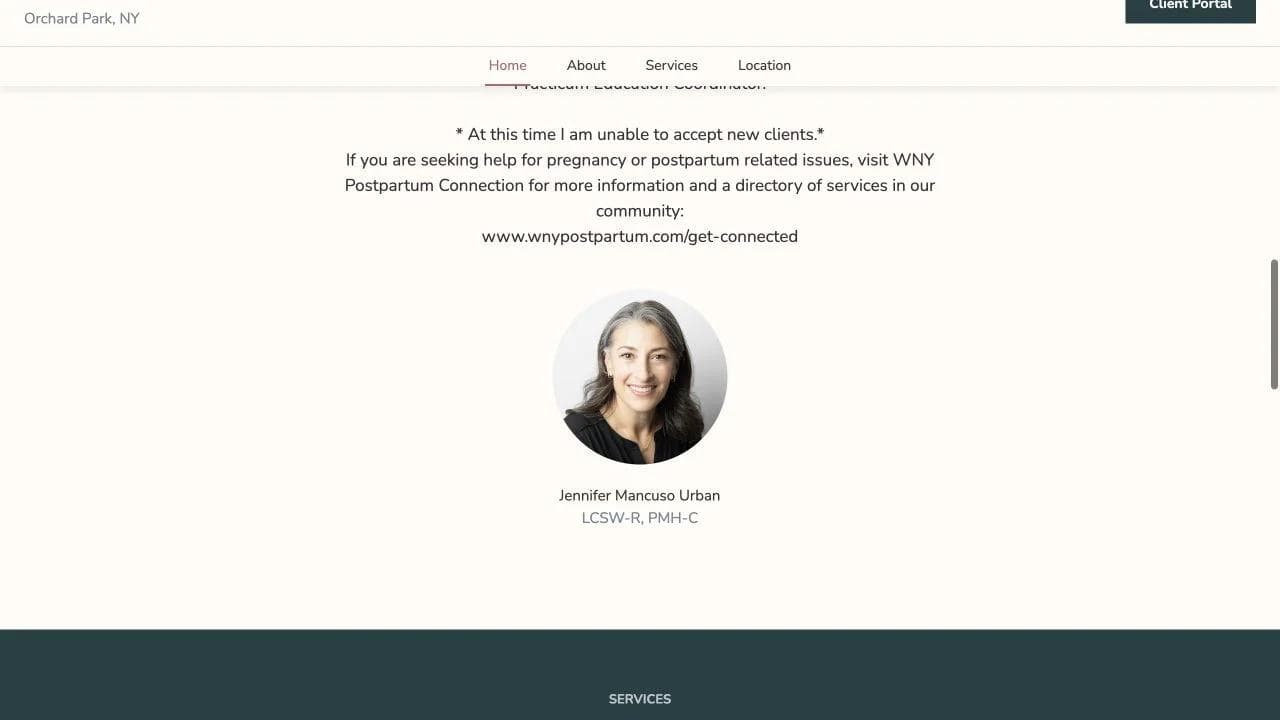
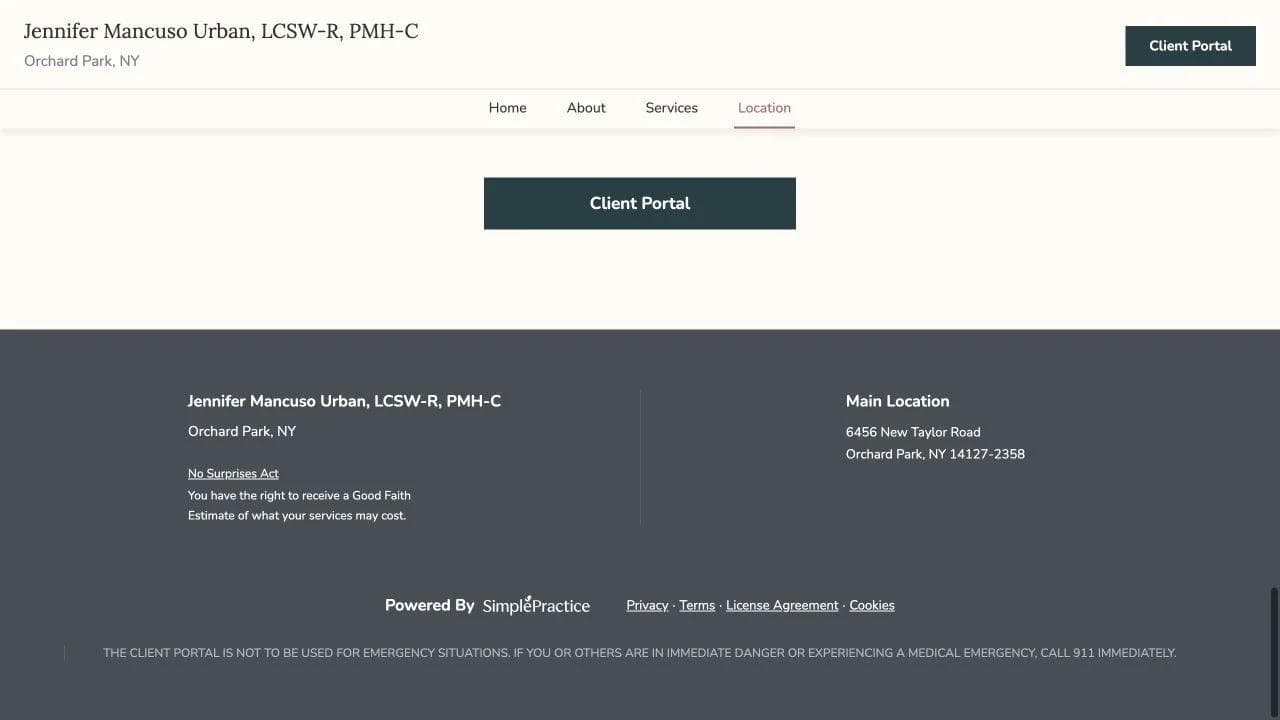
The closing provides location and a client portal route. The site stays compact because it answers practical fit questions rather than manufacturing a long lifestyle narrative.
What to borrow
- Put accepting-new-client status and practical access information near the top.
- Make a narrow specialty easy to scan.
- Separate the secure client portal from prospective-client contact.
What not to copy blindly
A compact profile-style site may need more explanation of the consultation, session format, fees, response timing, and crisis limitations when it is the practice's primary acquisition channel.
4. State of Mind KC: use a narrow audience to sharpen the whole page
State of Mind KC speaks directly to high-achieving women who feel stuck in overthinking, perfectionism, people-pleasing, anxiety, and burnout.
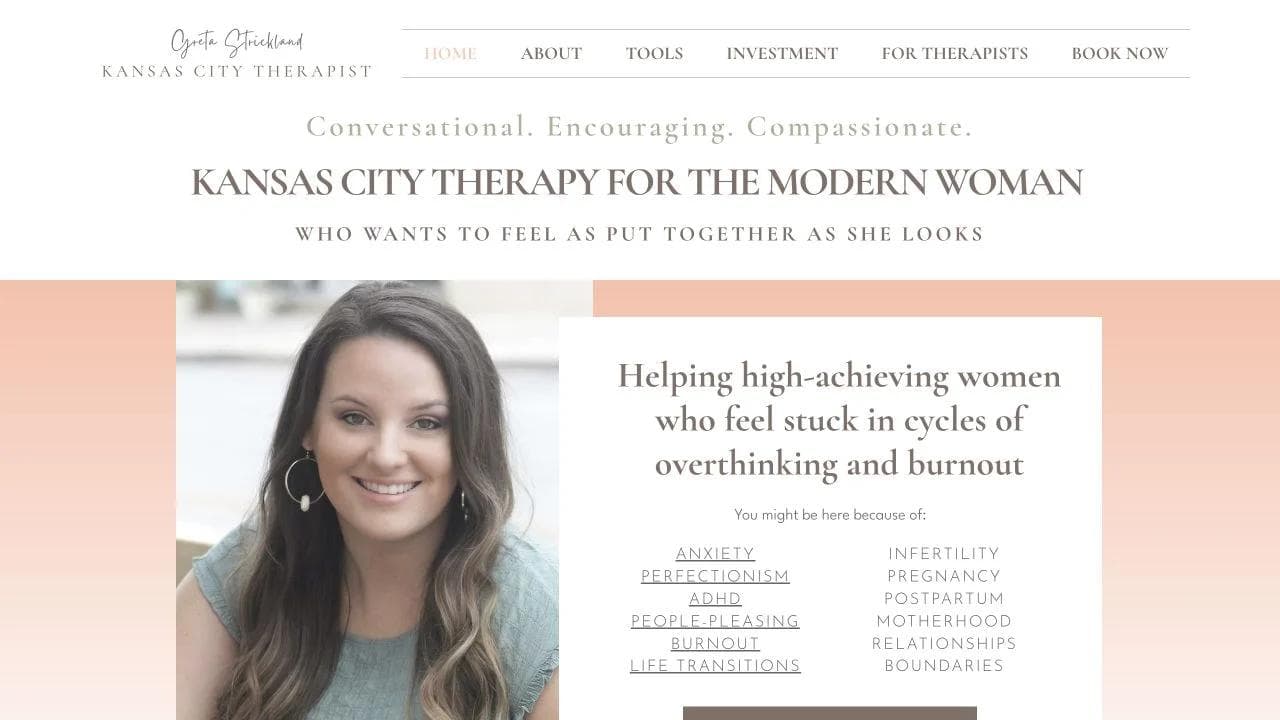
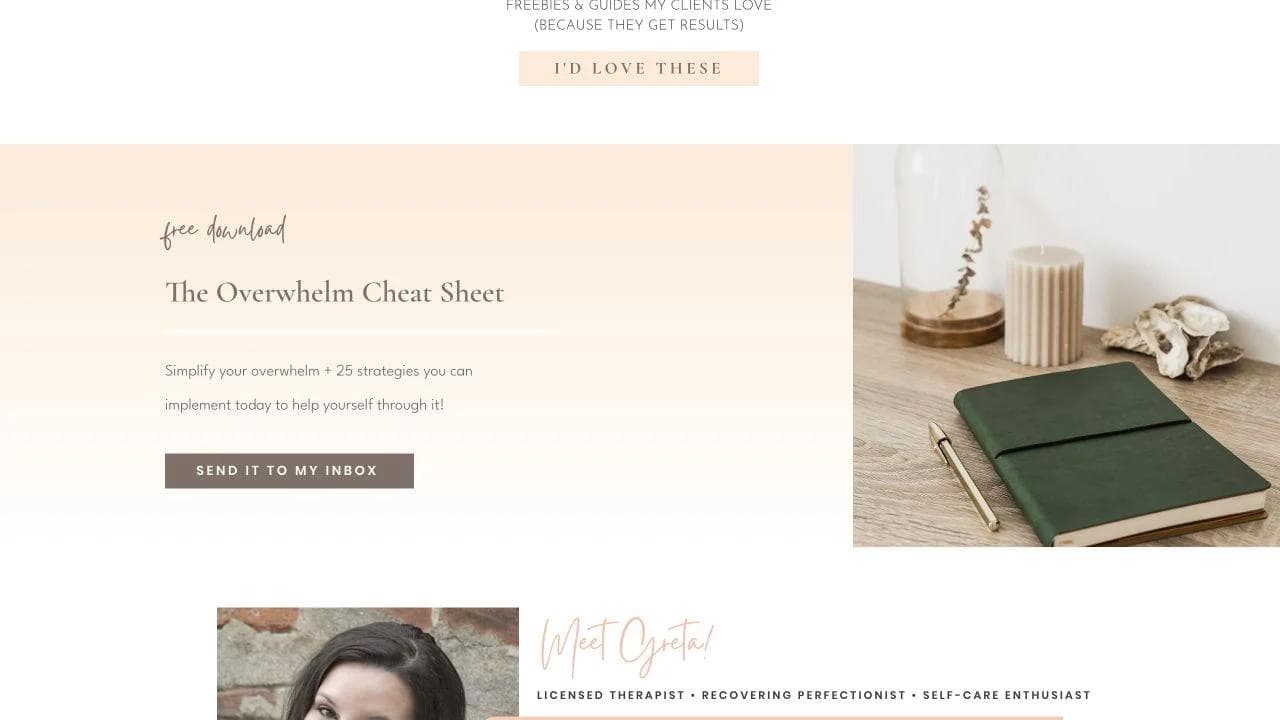
The middle routes visitors toward in-person therapy, online therapy, and self-guided tools, then introduces the therapist with a clear personal and professional voice.
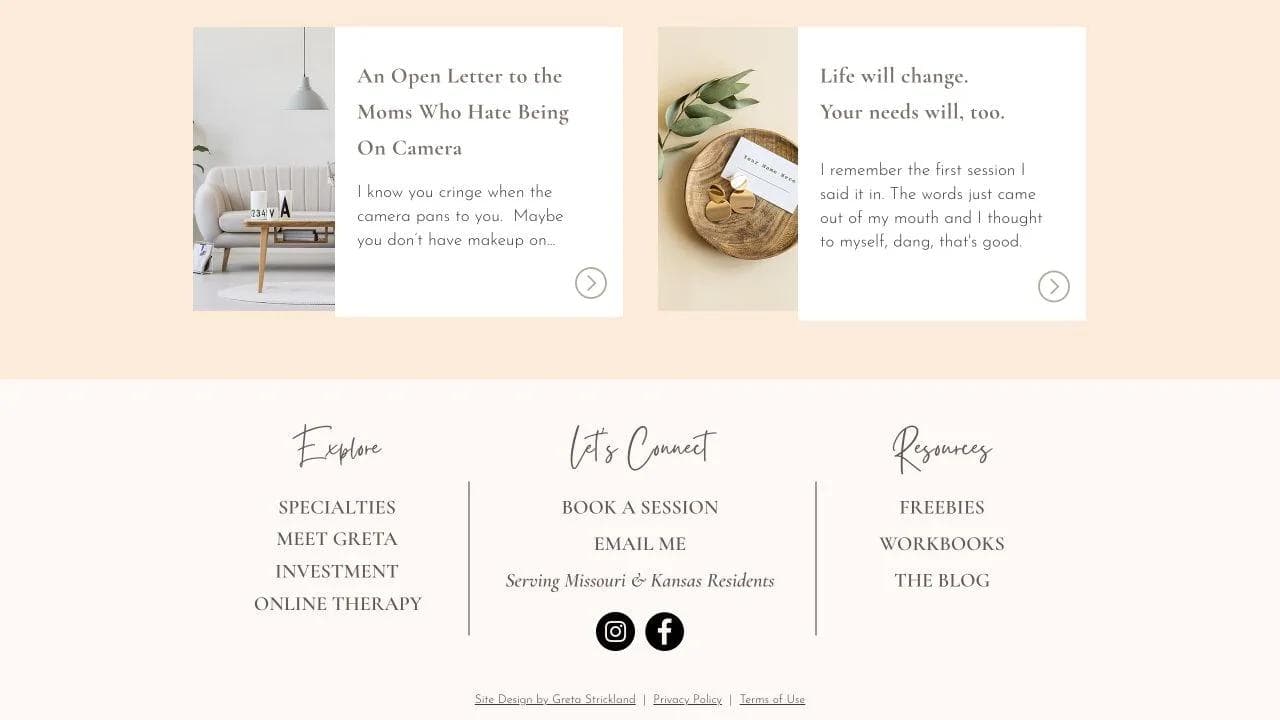
The closing includes testimonials, resources, blog content, and repeated next steps. The brand language remains consistent across therapy and educational products.
What to borrow
- Let a real audience choice shape the headline, examples, services, and resources.
- Offer lower-commitment education without presenting it as therapy.
- Keep the therapist's voice recognizable and specific.
What not to copy blindly
Identity-led copy should not imply that every visitor has the same diagnosis or life. Testimonials and self-help products also need careful boundaries so they do not imply guaranteed clinical outcomes.
5. Dr. Sara Douglas: design around an assessment process
Dr. Sara Douglas makes the service unmistakable: neuropsychological evaluations for children, adolescents, and adults with unexplained academic, behavioral, or emotional difficulties.
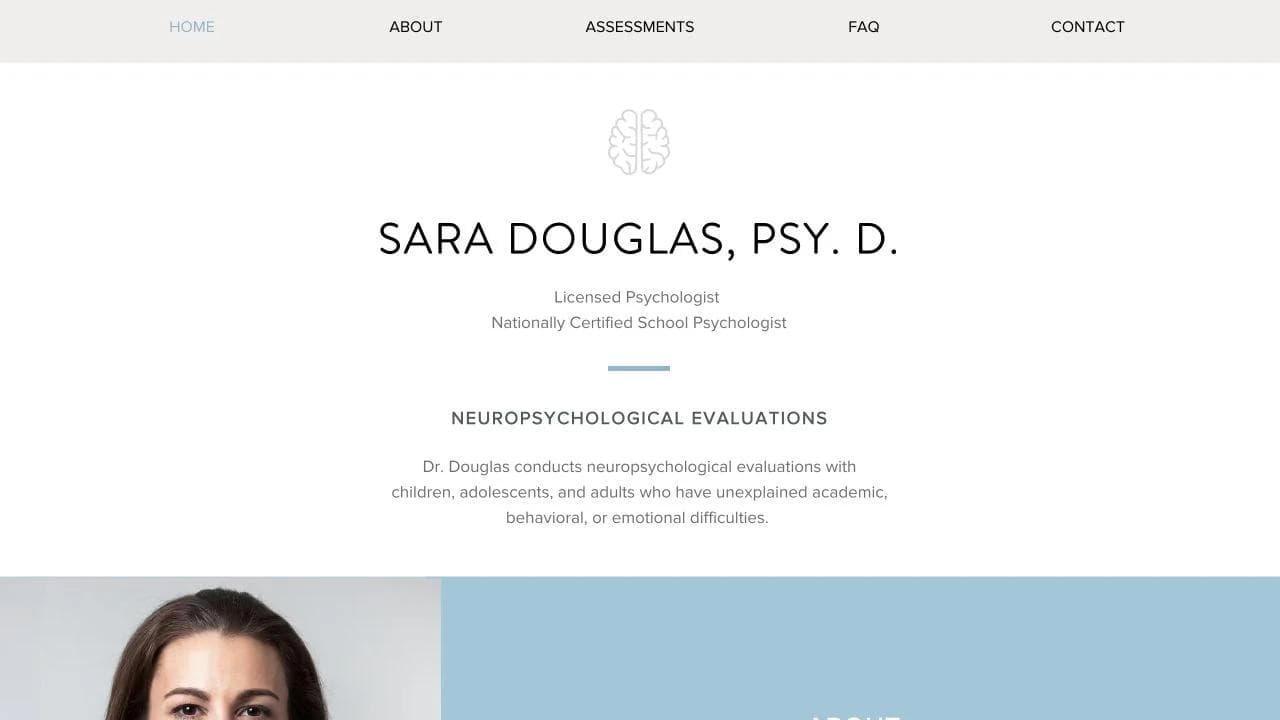
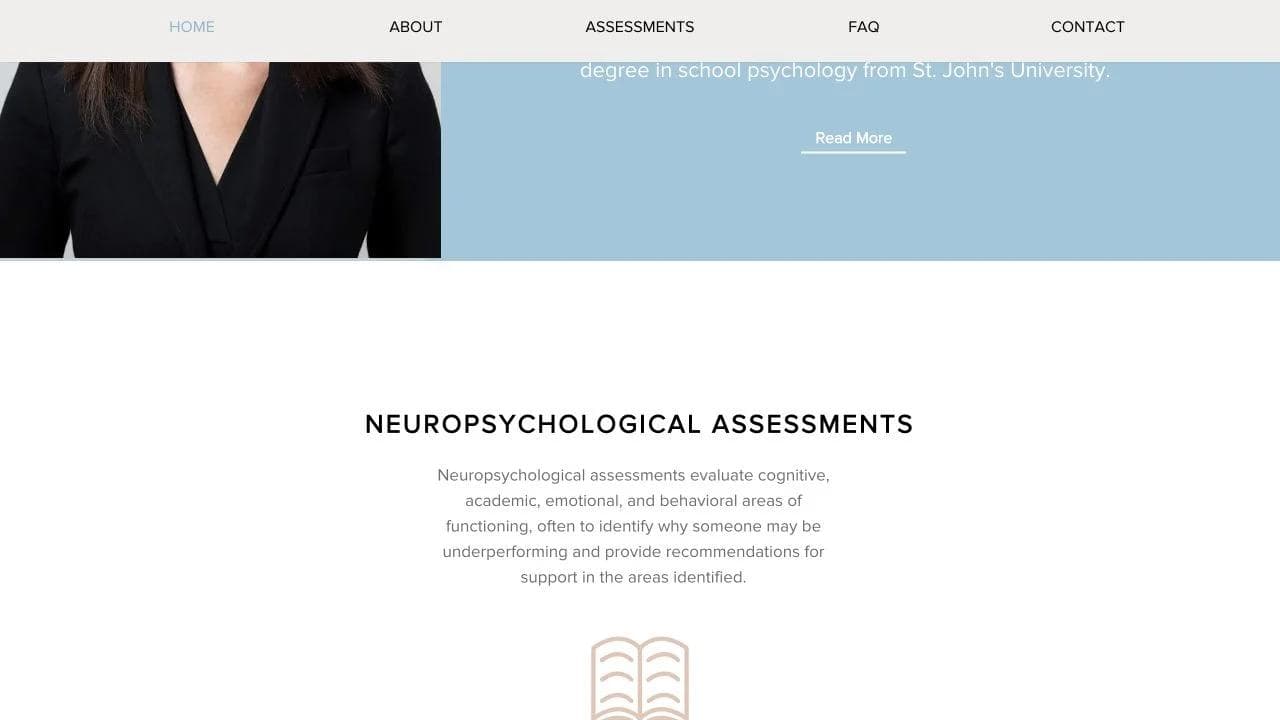
The middle explains the evaluator's credentials and what assessments examine, including cognitive, academic, emotional, behavioral, and reading abilities.
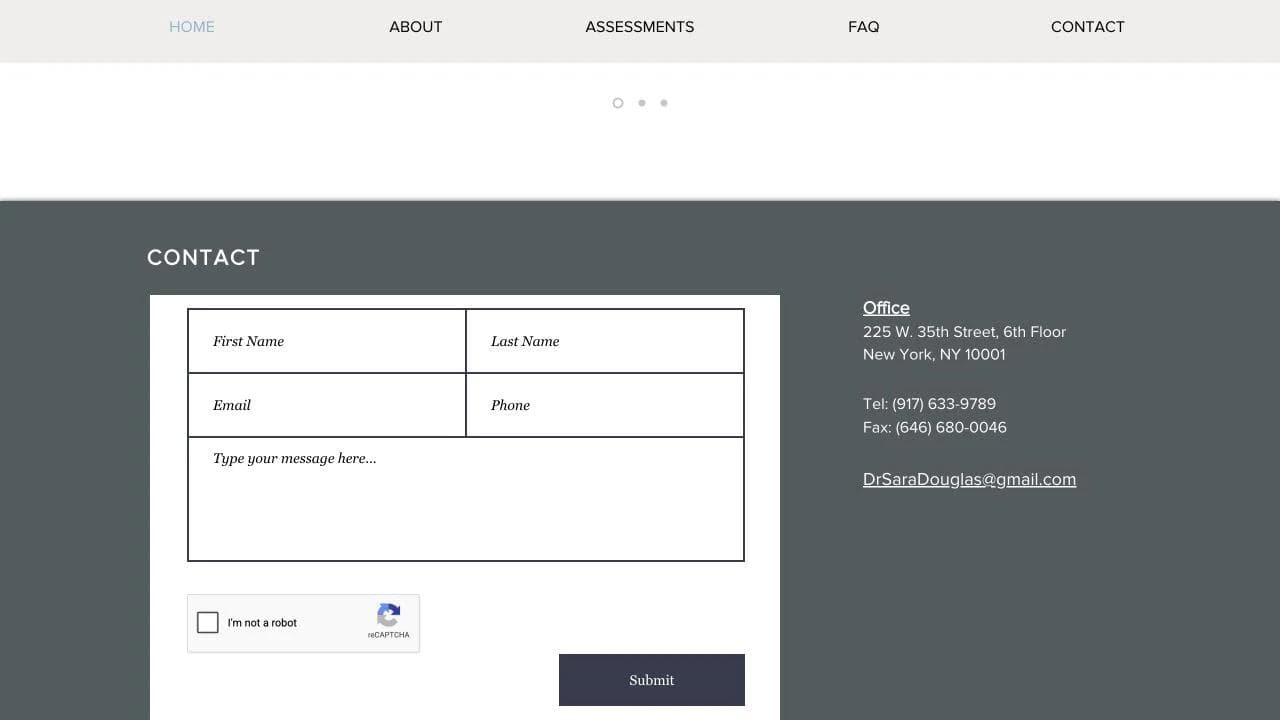
The closing gives office and contact information. The page is more informational than a therapy-practice homepage because the purchase is a defined evaluation with a different referral and deliverable structure.
What to borrow
- Name the service, populations, and reasons for referral in plain language.
- Explain what the assessment evaluates without promising a diagnosis.
- Show credentials appropriate to the specialist service.
What not to copy blindly
Assessment buyers often need more process detail: referral requirements, records, testing length, report timing, feedback session, school coordination, fees, and insurance. A short inquiry form should not collect the records themselves.
6. Individual and Relationship Therapy Center: make group-practice choice manageable
Individual and Relationship Therapy Center opens with relationship difficulty and a direct scheduling route, then states that it welcomes individuals, couples, and relationships across backgrounds and orientations.

The middle separates couples counseling, sexuality and gender support, individual therapy, and family therapy. It also explains the practice's shared Emotionally Focused Therapy orientation.
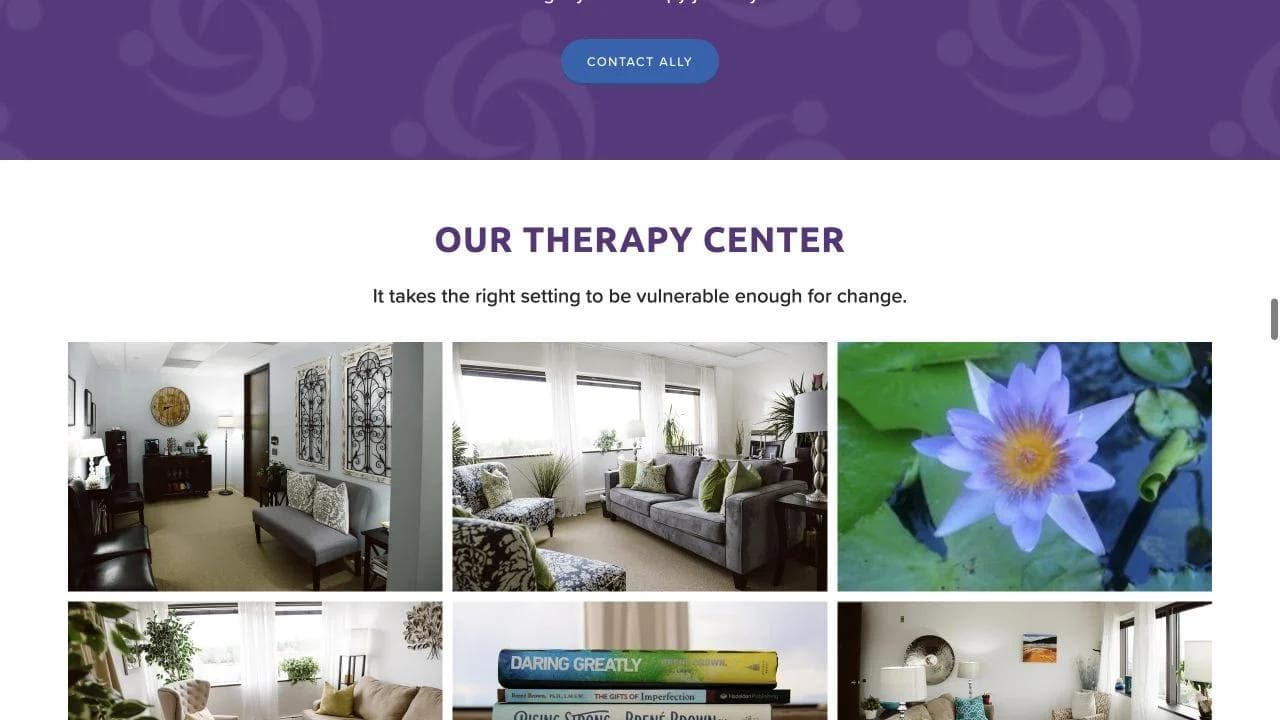
The closing introduces the team, center, testimonials, educational resources, and a guide to choosing a therapist.
What to borrow
- Explain what unifies a group practice while preserving each clinician's specialties.
- Help visitors choose a therapist instead of presenting an undifferentiated roster.
- State inclusion explicitly when it is part of clinical competence and practice policy.
What not to copy blindly
A large service and clinician menu can overwhelm someone already under stress. Matching should use a few high-value questions, offer human help, and explain whether a requested clinician is actually available.
What all six sites have in common
The strongest pages reveal population, specialty, place, professional identity, and a next step. The differences follow the service:
- Parent-child work must explain caregiver participation.
- Couples and family practices need audience and relationship routes.
- A niche solo practice can use strong recognition and concise logistics.
- Assessment services need process, deliverables, and referral information.
- Group practices need a humane therapist-matching system.
The page should reduce uncertainty without pretending to resolve clinical fit before a professional conversation.
A recommended therapist homepage sequence
- State who the practice helps, where, and through which service.
- Name recognizable situations without diagnosing the reader.
- Separate service, population, and modality paths.
- Explain consultation, scheduling, first session, and response expectations.
- Introduce clinicians with credentials and relevant specialties.
- Clarify fees, insurance, telehealth, accessibility, and new-client status.
- Separate secure client actions from marketing contact.
- State crisis and privacy limitations in an easy-to-find place.
Common therapist website mistakes
- Writing a poetic hero that never identifies the service or location.
- Using one long biography before answering practical fit questions.
- Presenting symptoms as a diagnosis.
- Asking for sensitive history in a normal contact form.
- Hiding fees, insurance, availability, or consultation expectations.
- Using testimonials or outcome language without attention to professional rules and client privacy.
Where Moda fits
Moda can create a public therapist or group-practice marketing site, plus educational PDFs, workshop materials, presentations, and social content. It should not be used as an EHR, clinical intake system, patient portal, insurance workflow, or repository for protected health information. Keep the public inquiry minimal and move clinical records and authenticated communication into appropriate systems.
Frequently asked questions
What should a therapist website include?
Include population, specialty, location, modality, licensure, consultation and scheduling process, availability, fees and insurance, accessibility, privacy boundaries, crisis limitations, and a minimal inquiry route.
Should a therapist list fees and insurance?
Yes, when professional rules allow it. State the fee, insurance participation, out-of-network process, sliding-scale availability, cancellation terms, and whether the consultation is free or paid.
What should a therapist contact form ask?
Collect only what is needed to respond, such as name, contact method, broad service interest, and availability. Do not request detailed symptoms, trauma history, diagnoses, records, or insurance documents in a normal marketing form.
How should a group practice help visitors choose a therapist?
Use a small number of high-value filters such as service, population, location, modality, availability, and insurance, then offer human matching when the visitor is unsure.
Can Moda replace an EHR or patient portal?
No. Moda can create the public marketing site and educational content, but clinical intake, records, authenticated communication, insurance workflows, and protected health information belong in appropriate clinical systems.

Real editable visuals. Real canvas. Full control.
Fly through design work