Higgsfield vs Runway: Which AI Video Platform Fits Your Workflow in 2026?
Compare Higgsfield and Runway by model access, directing controls, editing, workflow, API needs, and the type of creator each platform serves best.
 Anvisha Pai, Co-founder & CEO, Moda
Higgsfield and Runway now overlap more than older comparisons suggest. Both combine their own technology with outside image and video models, both offer purpose-built creative tools, and both are moving beyond a single prompt box. The useful question is not which company has the longest model list. It is where you want creative judgment to live: in fast presets and prompt interpretation, in a more technical production stack, or in a separate editor after generation.
Choose Higgsfield if you want quick access to many popular models, strong cinematic presets, and an interface that actively helps turn a simple idea into an attention-grabbing shot. Choose Runway if you care more about Runway’s own models, reference-driven transformation, professional output formats, an API, or a production workflow built around reusable media. Neither replaces a complete conventional video editor for every project.
Higgsfield vs Runway at a glance
| Decision | Higgsfield | Runway |
|---|---|---|
| Best for | Rapid cinematic shots, social concepts, ads, and model comparison | Reference-led generation, transformation, API workflows, and professional handoff |
| Model strategy | Multi-model platform plus proprietary Higgsfield tools and models | Runway models plus a growing catalog of third-party models |
| Creative guidance | Presets, camera language, apps, and assertive prompt interpretation | Direct prompting, references, purpose-built apps, agents, and configurable workflows |
| Workflow structure | Apps, generation tools, Cinema Studio, and a node-based Canvas | Assets, tools, apps, custom workflows, API, and professional export paths |
| Main tradeoff | Helpful automation can feel opinionated when exact prompt control matters | Broader production surface can require more setup and familiarity |
The three layers that actually decide this comparison
Most comparisons collapse model choice, directing, and finishing into one score. That is misleading because a creator can access the same underlying model through several platforms and still get a different working experience. Evaluate these layers separately:
- Generation layer: Which first-party and third-party models can you access, and which inputs does each model accept?
- Direction layer: How does the platform translate intent into camera movement, references, characters, edits, and multi-shot structure?
- Production layer: How do you organize assets, revise a sequence, export for another editor, automate work, and deliver the finished piece?
This framework also explains why output-quality claims based on a single clip are weak. If both platforms route a request to the same outside model, the differences may come from prompt enhancement, defaults, reference handling, or controls rather than the inference provider alone.
Where Higgsfield is stronger
Fast visual direction for people who do not speak cinematography
Higgsfield’s appeal is not merely access to Kling, Seedance, Veo, Sora, and other models. Its preset gallery and Cinema Studio turn camera language, optical choices, and visual effects into approachable starting points. The current Higgsfield video page describes first and last-frame references, motion control, video edits, model switching, and a Cinema Studio with virtual camera and lens choices.
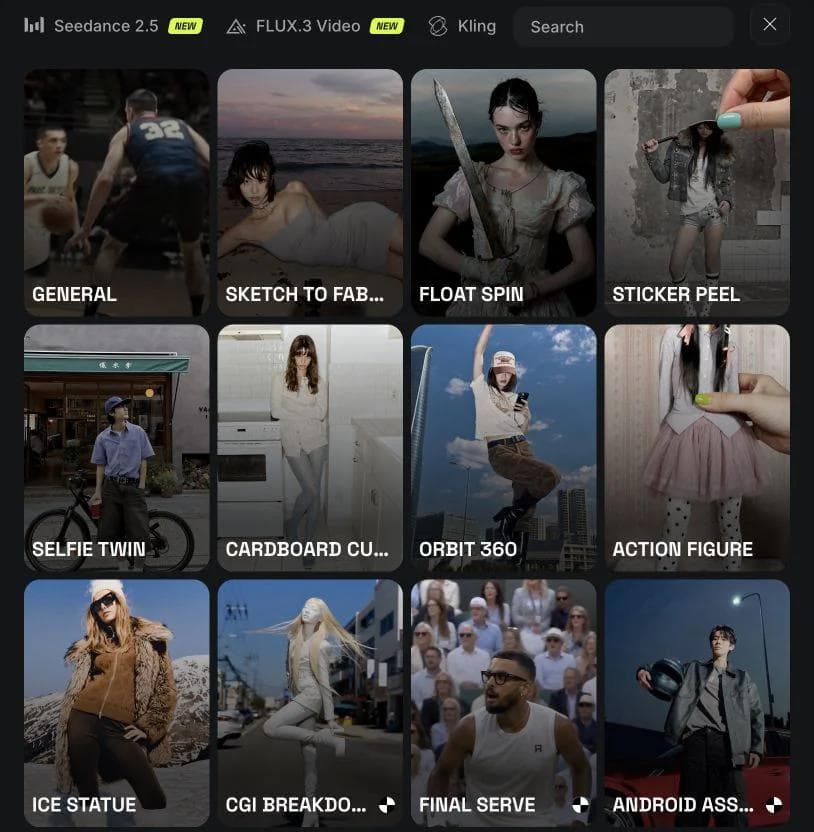
That guidance is valuable when the user knows the feeling they want but cannot write a technically precise motion prompt. It can also be a tradeoff. Power users may prefer literal prompt execution and explicit controls over a system that punches up a modest instruction. Test prompt behavior with the kind of revision you actually make, not only with a dramatic first generation.
A creator-facing route through many models
Higgsfield presents itself as a unified workspace for outside models and its own Soul, DOP, Apps, Marketing Studio, and Cinema Studio surfaces. Its Canvas documentation describes a node-based board where prompts, references, images, video models, and outputs can be connected and reused. That makes Higgsfield more than a simple reseller, even though inexpensive access to popular outside models remains a major reason people use it.
Where Runway is stronger
A deeper bridge into production and development
Runway is increasingly a platform rather than a single model company. Its official model catalog includes Runway models and third-party systems, while its developer surface exposes programmatic generation. The same documentation describes professional formats such as ProRes, PNG image sequences, 10-bit SDR, and HDR for supported flagship models. Those details matter when generated shots continue into color, compositing, VFX, or a managed render pipeline.
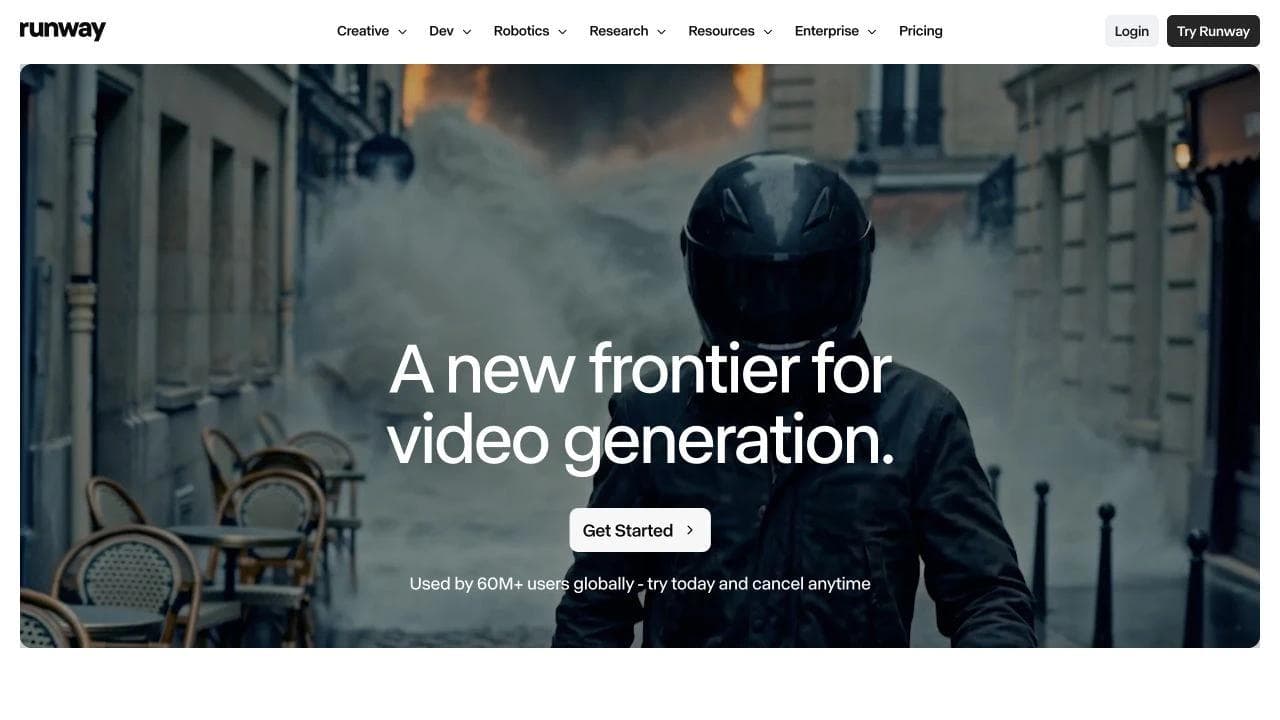
Runway also offers reference media, video transformation, performance tools, custom workflows, an MCP connection, and a public API. A studio or developer building repeatable operations should evaluate those system-level interfaces, not just which web app produces a more impressive first clip.
Its own models and transformation tools remain a reason to choose it
Runway still has differentiated first-party technology. Gen-4.5 focuses on text and image-to-video generation, Aleph on video transformation, and Act-Two on character performance. The reference-media guide also documents reusable image, video, and audio inputs addressed directly in prompts. If a workflow is built around Runway-specific tools, accessing the same outside model somewhere else is not equivalent.
Editing is the most misunderstood row
Both companies use “editing” broadly, but generation-time transformation is not the same as a conventional non-linear editor. Runway can restyle, remove, relight, extend, and transform footage. Higgsfield offers video edits, apps, Canvas workflows, and shot-focused controls. Those capabilities can eliminate manual work, but they do not automatically replace a timeline where an editor trims many clips, mixes audio, adjusts timing, manages overlays, and makes frame-accurate changes.
If the project ends as a short generated shot, this distinction may not matter. If it becomes a 30-second ad, product launch, or branded sequence, decide where assembly and finishing will happen before committing to a platform.
Where Moda fits, and where it does not
Moda is relevant when the job extends from AI generation into campaign design and hands-on finishing. It combines access to leading image, video, and audio models with an editable design canvas, a CapCut-style timeline, and an After Effects-style compositor. Moda does not try to replace Runway’s developer API or every specialized Runway transformation tool, and Higgsfield may be faster for preset-led cinematic experimentation.
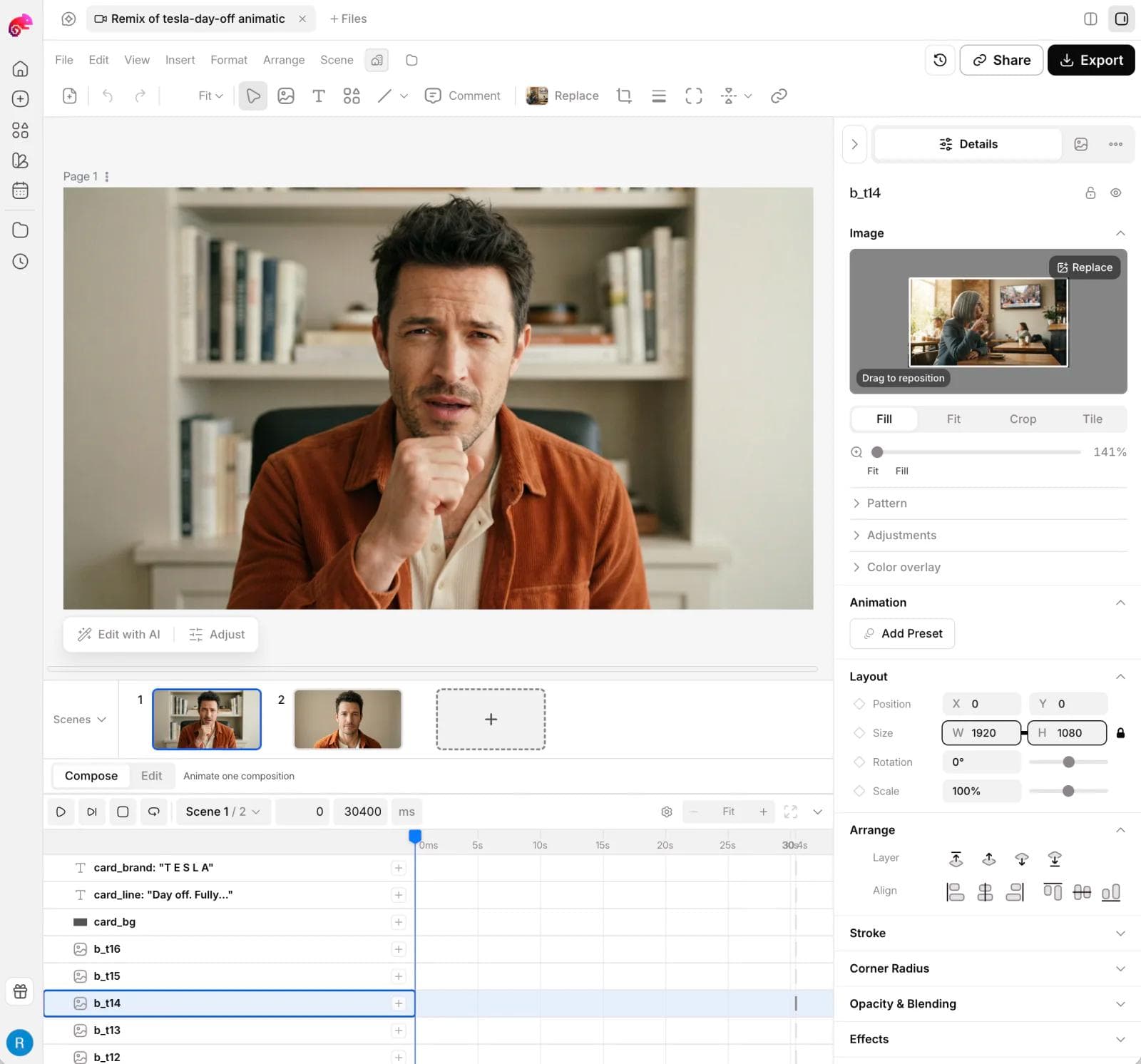
The practical reason to consider Moda is continuity after generation. A marketer can create visual directions, arrange clips, add brand elements, revise the composition, and produce adjacent campaign assets without treating each model output as the finished product.
For a wider model-platform shortlist, read our Higgsfield alternatives guide and Magnific alternatives guide. To see the generation-to-editing workflow discussed here, explore Moda.
Who should choose which?
- Choose Higgsfield when speed, cinematic presets, social-first concepts, and easy switching among popular models matter most.
- Choose Runway when first-party Runway models, reference-led transformation, professional formats, API access, or production infrastructure matter most.
- Choose Moda when a non-professional creator wants AI generation plus editable design, timeline assembly, and compositing in one approachable workspace.
- Use a dedicated editor such as Premiere Pro or DaVinci Resolve when long-form timeline depth, mature audio work, color, delivery standards, or specialist post-production dominate the project.
How the choice changes by project
A social creator exploring five visual directions
Higgsfield is usually the more approachable starting point. Presets make camera and effect ideas visible before the user has learned the vocabulary, and switching models inside one creator-facing interface makes exploration less technical. The important purchase check is how quickly credits disappear during iteration and whether the platform’s interpretation stays controllable after the first exciting result.
A VFX team transforming approved footage
Runway deserves the closer look when the input is existing footage rather than a blank prompt. Aleph, reference media, professional output formats, and production-oriented handoff make the platform more legible to teams that already have editorial and color pipelines. Test the exact transformation, input duration, resolution, output format, and round trip into the downstream application.
A developer building a repeatable media product
Runway has the clearer public developer surface. Its API documentation defines models, inputs, task execution, and output behavior. Higgsfield’s web workflows may still be the better human creative tool, but a developer should not infer automation readiness from the presence of a node canvas. Confirm authentication, rate limits, supported operations, retry semantics, and commercial terms for the actual programmatic interface.
A marketer producing a finished 30-second campaign video
Neither platform should be evaluated only on the hero shot. The job includes selecting takes, trimming clips, pacing a sequence, adding copy, logos, music, voice, disclaimers, and exports for several channels. Higgsfield may accelerate concept generation. Runway may provide stronger transformation and handoff. Moda or a dedicated editor may be the place where the campaign becomes a finished asset.
A practical evaluation checklist
- Use the same source image, reference set, aspect ratio, duration, and model when comparing overlapping models.
- Record whether the platform rewrites or enriches the prompt and whether that behavior can be controlled.
- Make one surgical revision, such as changing only the camera path, and see whether unrelated details drift.
- Export the selected result into the real finishing workflow and inspect resolution, codec, metadata, and editability.
- Price the whole successful sequence, including failed attempts and upscales, rather than one nominal generation.
Frequently asked questions
Does Runway still only offer Runway models?
No. Runway’s current web and developer surfaces include models from several providers alongside Runway’s own systems. Its first-party models and professional production interfaces remain important differentiators.
Is Higgsfield simply a cheaper wrapper?
No. Access to outside models is a major use case, but Higgsfield also provides proprietary models, presets, Apps, Cinema Studio, Marketing Studio, identity tools, and a connected Canvas. The wrapper description explains only one layer of the product.
Which platform gives more prompt control?
That depends on the selected tool and model. Higgsfield often adds useful creative direction for less experienced users. Runway exposes direct prompting and references across its tools. Power users should test a sequence of small revisions because prompt adherence is more meaningful than a single dramatic output.
The bottom line
Higgsfield is the stronger starting point for fast, guided cinematic creation across many models. Runway is the stronger choice for teams that want its own model stack, transformation tools, professional outputs, and developer-facing production surface. The deciding factor is not a headline model benchmark. It is how much control you need before generation, how you revise after it, and where the shot goes next.

Real editable visuals. Real canvas. Full control.
Fly through design work