Substack logo size
The recommended Substack publication logo size is 256 × 256 pixels (1:1 aspect ratio).
Last updated:
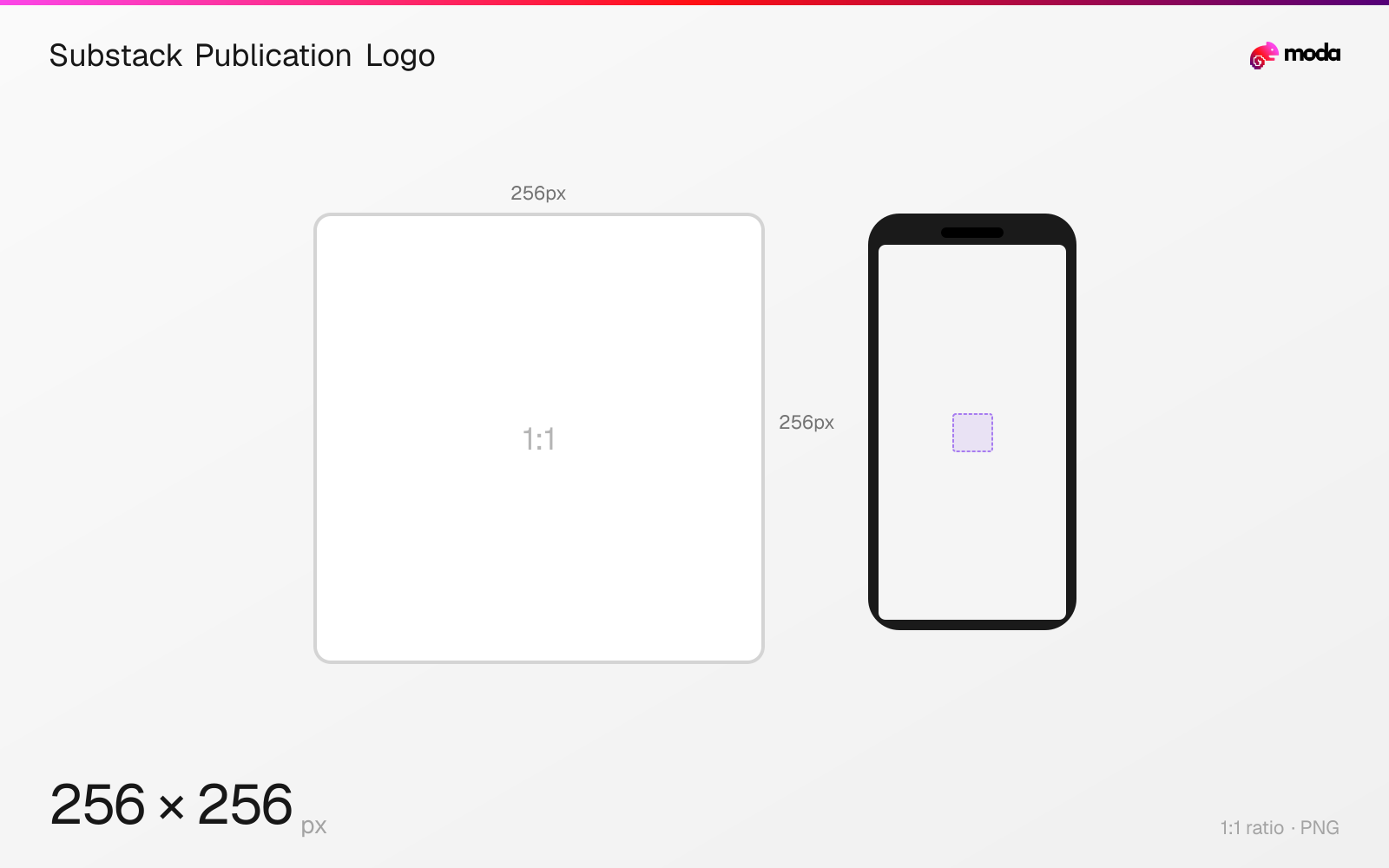
Specifications
| Spec | Value |
|---|---|
| Dimensions (px) | 256 × 256 px |
| Aspect ratio | 1:1 |
| Supported formats | PNG |
| Minimum resolution | 256x256 |
Design at this size with Moda
Start with a canvas pre-set to 256×256px and let AI generate your design.
Create a Substack publication logo →Design tips
Substack says a publication logo should be at least 256×256 pixels. Its image-dimensions guide recommends a transparent background, which keeps a square logo flexible across the publication header and related surfaces.
- •Use a square source at least 256×256 pixels.
- •Export with transparency when the mark should sit on different backgrounds.
- •Move a long publication name into the separate wordmark rather than shrinking it inside the logo.
What you need to know
Substack distinguishes the compact square publication logo from the much wider wordmark. The logo should be at least 256×256 pixels.
A larger square source is acceptable, but keep the artwork legible when Substack displays it at a smaller size. Transparent padding can prevent the mark from touching the image edges.
If your publication name is meant to appear as a wide lockup, use the separate 1344×256 wordmark format instead of squeezing long text into this square.
How to create a Substack publication logo at the right size
- 1Open Moda and create a new canvas at 256×256 pixels.
- 2Design your Substack publication logo using AI generation or start from a blank canvas.
- 3Export as PNG and upload to Substack.
Frequently asked questions
What size should a Substack logo be?
Substack says publication logos should be at least 256×256 pixels.
Is a Substack logo the same as a wordmark?
No. The logo is square at 256×256 pixels or larger; Substack's wordmark is a horizontal image at least 1344×256 pixels.
Specs last verified: August 28, 2026. Dimensions may change as platforms update their requirements.