10 Best Lovable Alternatives in 2026, by Project Type
Compare 10 Lovable alternatives by authoring model, code ownership, deployment, security, and exit path. Find the right fit for your project.
 Anvisha Pai, Co-founder & CEO, Moda
The best Lovable alternative depends on which layer you want to replace. Replit, Bolt, Base44, and Emergent preserve the hosted prompt-to-app experience but make different choices about runtime control and infrastructure. Cursor replaces the builder with an IDE agent and gives the engineering team direct ownership of the codebase. Bubble and Softr use managed visual systems. Framer and Moda are better answers when the deliverable is a polished website rather than an application.
Do not reduce that decision to whether a tool can export code. Compare the authoring workflow, durable source, runtime dependencies, deployment path, security controls, and recovery process separately. A Git repository can make the source portable while authentication, data, storage, functions, monitoring, and the AI editing environment remain tied to managed services.
The best Lovable alternatives at a glance
| Tool | Best for | Ownership and exit path | Main tradeoff |
|---|---|---|---|
| Replit | Broad software projects in a browser | Git-based code with Replit or external runtime choices | More development surface to understand |
| Bolt | Fast JavaScript web and mobile prototypes | Generated JavaScript code plus Bolt or Supabase services | JavaScript-focused stack |
| Base44 | Nontechnical builders who want an all-in-one app | Managed app with GitHub sync on qualifying plans; data and backend remain separate concerns | Less infrastructure freedom inside the managed workflow |
| Emergent | Agent-built web and mobile apps with automated testing | Full-stack code with managed hosting and integrations | Complex builds and ongoing deployments consume credits |
| v0 | Next.js and Vercel teams | Git-backed Next.js application and Vercel project | Strongest when you accept its preferred ecosystem |
| Bubble | Complex no-code logic and databases | Proprietary visual application on Bubble’s runtime | No conventional source-code handoff |
| Softr | Portals and internal tools over structured data | Managed blocks, permissions, data connections, and workflows | Less suitable for bespoke consumer software |
| Cursor | Developers extending an owned codebase | Team-owned repository and engineering stack | Not a no-code app builder |
| Framer | Marketing sites with CMS and precise visual control | Managed Framer website rather than a portable application stack | Not a general application backend |
| Moda | Brand-led static websites and campaign pages | Editable website project published through Moda, not a conventional app repository | Not viable for authenticated or backend-heavy applications |
First decide what you are replacing
Most Lovable alternatives lists start with a ranking. Start with the deliverable and the layer your team actually wants to replace.
Vibe coding, sometimes written as vibecoding, describes a prompt-led authoring workflow, not one technical architecture. A hosted prompt-to-app builder, a coding agent inside an IDE, a visual no-code runtime, and a design-first website builder can all begin with natural language. They leave you with very different things to operate after the prompt succeeds.
You need a real application
Your users sign in, create records, receive permissions, upload files, make payments, or trigger server-side actions. Stay in the app-builder category. Replit, Bolt, Base44, Emergent, v0, Bubble, and Softr all belong here, though they expose very different levels of code and infrastructure.
You need an engineering environment
You have an existing repository, need to choose frameworks, want to inspect logs and terminal output, or expect developers to maintain the result. Replit, v0, and Cursor are the strongest candidates in this list. Lovable also supports two-way GitHub synchronization, so leaving it is not automatically necessary just to own the code.
You need an internal tool or client portal
You care more about permissions, records, forms, and operational workflows than a unique software architecture. Softr or Bubble may be easier to operate than a generated codebase.
You need a website
Your output is a landing page, portfolio, campaign site, event page, or company website. Visitors mostly read, navigate, and perhaps submit a simple form. Framer and Moda remove application complexity from the problem. Choose this category deliberately instead of generating an app that happens to look like a website.
Compare the replacement layer, not just the first output
Use four layers to separate products that can look similar in a demo:
- Authoring layer. Lovable and other hosted builders combine prompting, preview, and revision in one product. Replit adds a fuller cloud development workspace. Cursor puts the agent inside an engineering environment. Bubble, Softr, Framer, and Moda keep more of the durable work in a proprietary visual or hosted project.
- Durable source and export. Ask whether the source of truth is a Git repository, a downloadable snapshot, a visual project, or a hosted site. Then clone or export it. Code export matters, but it does not automatically include production data, secrets, identity configuration, storage objects, or the managed AI editor.
- Runtime and deployment. Separate the frontend from the backend and data plane. Lovable documents fully managed, hybrid, and self-managed paths, but replacing Lovable Cloud still means supplying equivalent authentication, storage, realtime, edge functions, backups, and operations. Review Lovable’s deployment, hosting, and ownership options before treating Git sync as a complete exit.
- Security and operations. A security scan is a useful control, not a transfer of responsibility. Verify authorization rules, secret placement, dependency findings, data recovery, environment separation, logs, and the person who will respond when production fails. Lovable’s own security guidance says row-level security findings require regular review, especially after authentication or schema changes.
The lowest-lock-in option is not always the best purchase. A managed platform can be the right choice when the team values one operating model and accepts its boundaries. The mistake is calling a source-code export a complete migration plan or calling convenient hosting production-ready without testing the application’s specific risks.
Why people use Lovable in 2026
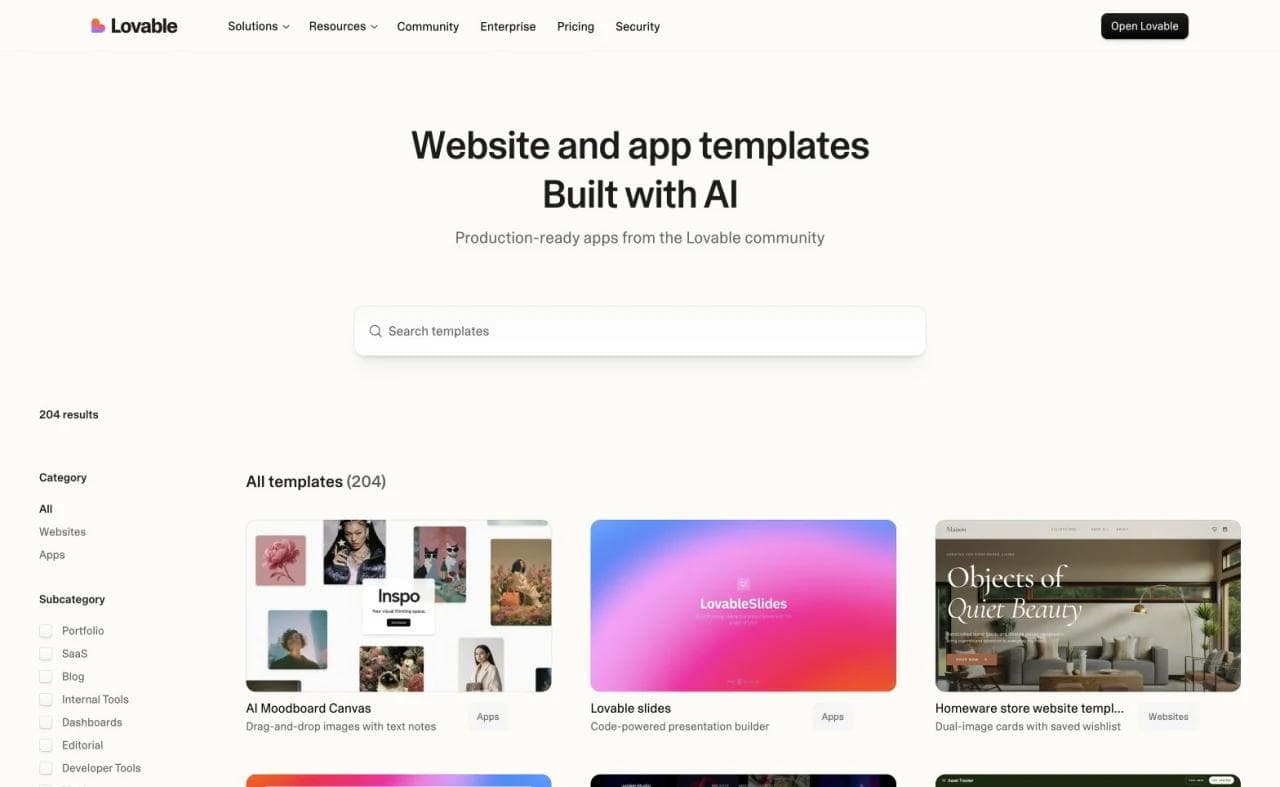
Lovable remains one of the defining vibe-coding products for builders who want to describe a web product, inspect a working preview, and refine it through conversation. Its scope is broader than many older comparisons suggest. Lovable Cloud and its Supabase integration cover databases, authentication, storage, serverless functions, and secrets. It also supports GitHub synchronization, custom domains, security scans, and Test and Live environments for eligible Cloud projects. See Lovable's product FAQ, GitHub documentation, and security overview.
Keep Lovable if its integrated prompt, preview, backend, and publishing workflow is helping you move quickly and you do not have a specific constraint it fails. Switch because you need a different operating model, runtime, source-of-truth workflow, or deployment boundary, not because another tool produced a more exciting homepage from one prompt.
1. Replit: best for a broader browser-based development environment
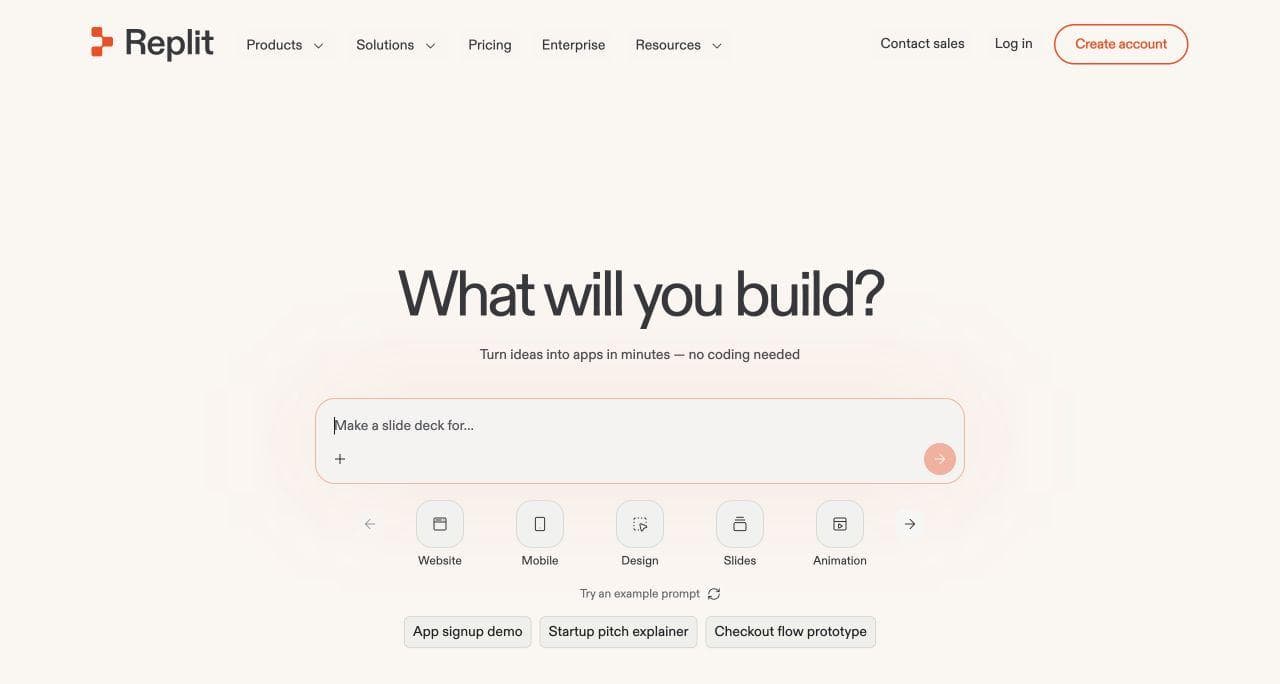
Replit is the strongest Lovable alternative when the project is outgrowing a guided web-app builder and needs a broader development environment. Agent can plan, write code, run commands, test applications, and recover through checkpoints. The Project Editor also exposes files, console output, secrets, version control, databases, and deployment controls in the same browser workspace.
Its Project Editor lists web apps, mobile apps, slides, animations, and designs among its project types. Replit also offers static, autoscale, reserved VM, and scheduled deployments, with Git and GitHub built into version control. See Replit's Project Editor, version control, and publishing options.
Choose Replit over Lovable when runtime flexibility, direct code access, terminal work, existing repositories, or non-web software matters. Keep Lovable when the narrower guided workflow reduces complexity and the application fits its web stack.
2. Bolt: best for fast JavaScript prototypes with visible code
Bolt is a close conceptual replacement for Lovable. You prompt an agent, watch a web project take shape, inspect the files, connect data, and publish without setting up a local environment.
The meaningful boundary is technical scope. Bolt focuses on JavaScript technologies, including Node.js backends and browser-native JavaScript frameworks. It can provision Bolt Database with authentication, storage, secrets, logs, and server functions, or connect to Supabase. Bolt can also create Expo-compatible mobile projects. Its built-in hosting publishes to a .bolt.host address, with custom domains on qualifying plans. See Bolt's supported technologies, database documentation, and hosting overview.
Choose Bolt if you want Lovable-like prompt speed but prefer its JavaScript-centered workspace or mobile path. Do not choose it because you expect unlimited technical flexibility. Python, PHP, and other backend ecosystems are outside Bolt's documented focus.
3. Base44: best for an all-in-one managed application
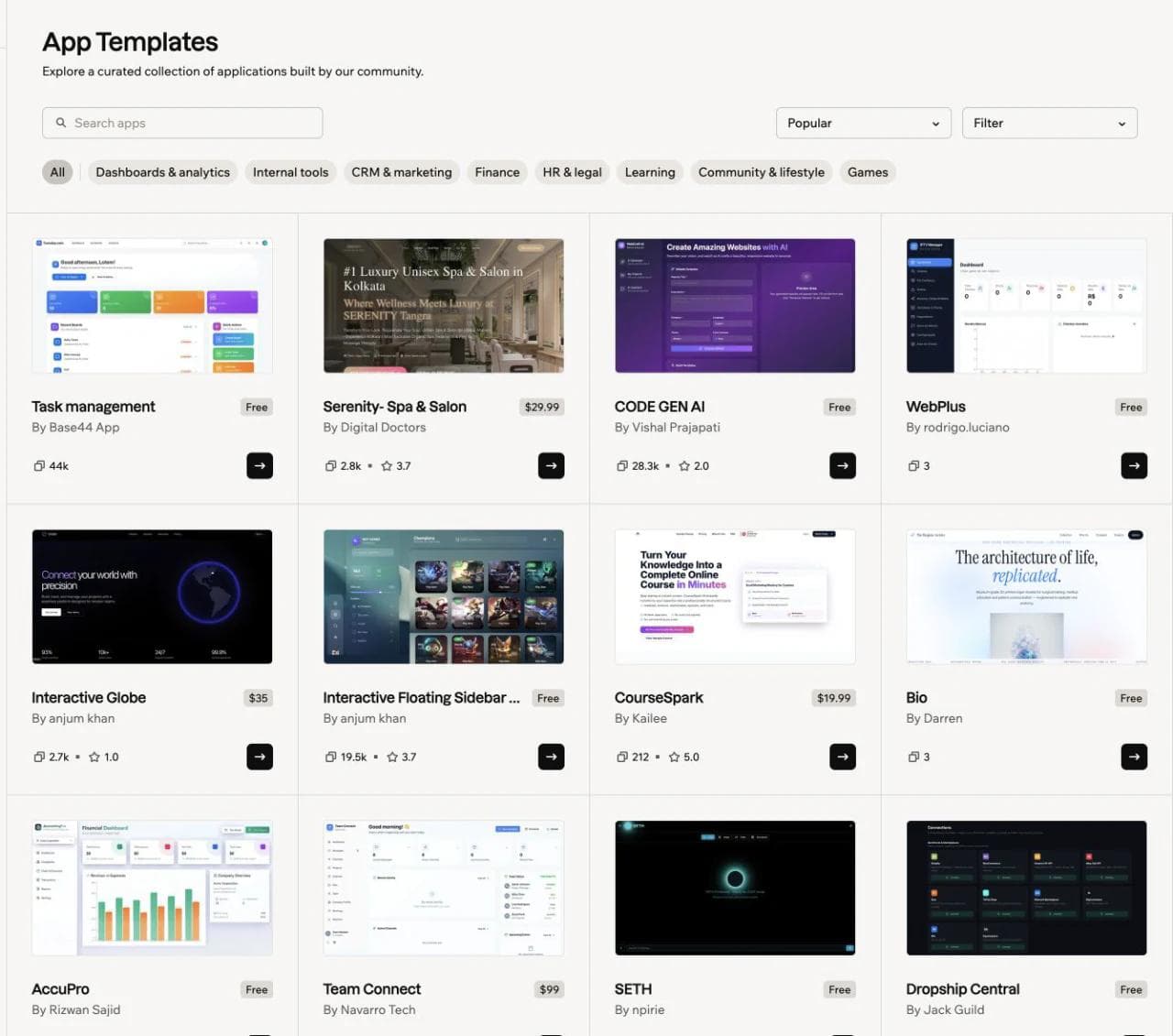
Base44 is a credible option for a nondeveloper who wants the platform to handle more of the application stack. It generates and hosts the app, provides direct code access, exposes activity and data tools, and lets builders clone projects before large changes.
The handoff story has improved. On qualifying plans, Base44 documents two-way GitHub synchronization. Its CLI can also pull frontend and backend resources into another Base44 development project, although that workflow does not copy application data and is not equivalent to moving the entire managed stack to arbitrary infrastructure. Base44 also publishes projects through its built-in hosting. See the Base44 quick-start documentation, GitHub integration guide, and CLI eject documentation. For the ownership and infrastructure distinctions, see the full Base44 vs Lovable comparison.
Choose Base44 if minimizing service setup matters more than selecting every infrastructure component. Before committing, verify that the plan includes the GitHub, custom-domain, integration, and collaboration controls you need.
4. Emergent: best for agent-built web and mobile products
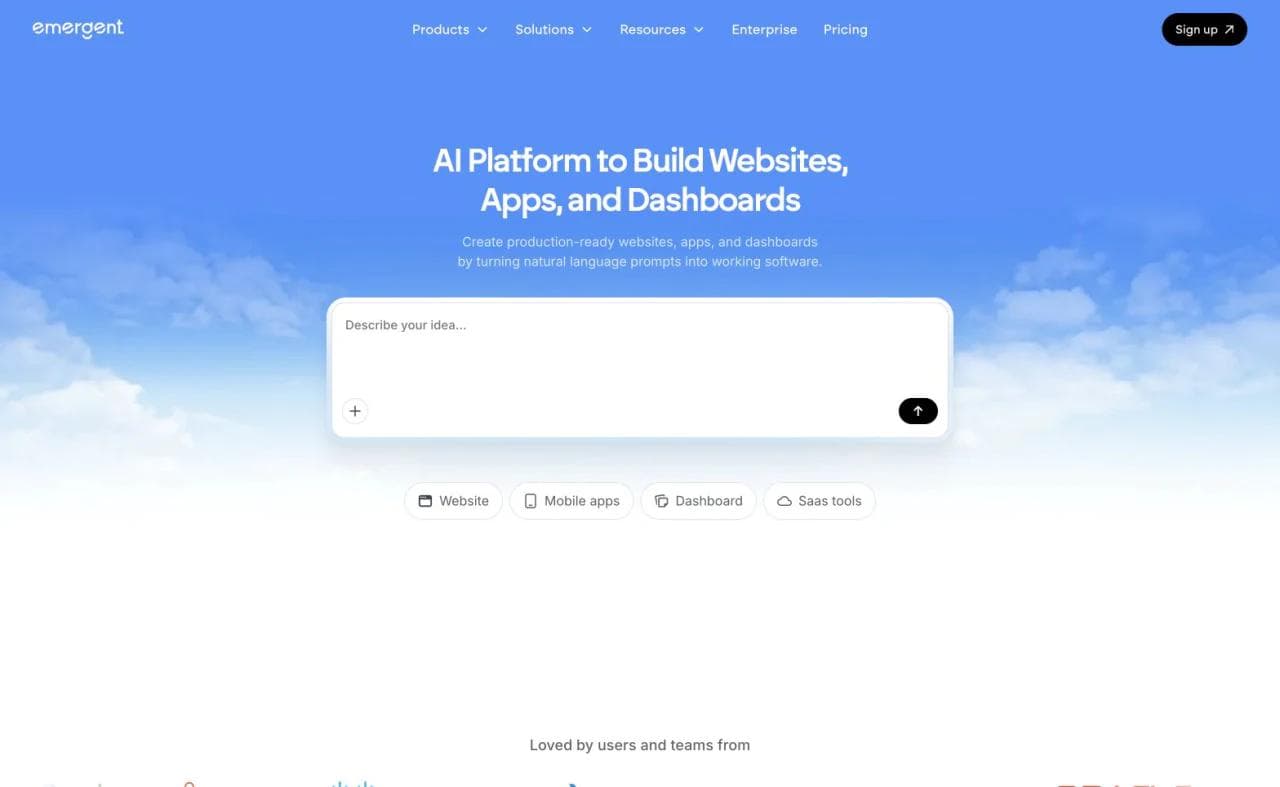
Emergent is designed around a team of specialized agents that plans, designs, codes, tests, and deploys a product. It offers distinct starting points for full-stack apps, mobile apps, and landing pages. Its documented stack includes managed deployment, database choices, authentication and payment integrations, plus GitHub synchronization on qualifying plans.
The dedicated testing step is the differentiator worth evaluating. Emergent shows the commands and tests its agents run, and its deployment workflow includes a readiness check. You still need your own security and acceptance testing. See Emergent's build walkthrough and deployment guide.
Choose Emergent when you want a more autonomous path across web and mobile. Check the credit cost of building, testing, and keeping deployments live for your expected workload before moving a serious product.
5. v0: best for Next.js teams deploying on Vercel
v0 is a strong Lovable alternative when the destination is a modern web application in the Vercel ecosystem. It defaults to Next.js and can generate server actions, API routes, database integrations, and authentication. Its 2026 workflow also includes a full code editor and production-like sandbox previews.
GitHub integration is unusually structured. Each connected chat works on its own branch, commits changes automatically, and opens a pull request rather than pushing directly to main. Deployment, environment variables, domains, and integrations connect to a Vercel project. See v0's full-stack guide, GitHub workflow, and deployment documentation.
Choose v0 if Next.js, GitHub pull requests, and Vercel are already reasonable defaults for your team. Choose a broader environment if you need other backend languages or do not want your workflow centered on Vercel.
6. Bubble: best for deep visual no-code logic
Bubble replaces generated source code with a mature visual programming system. You design pages, define data types, and build workflows from events and actions. Those workflows can update the database, create users, call APIs, send emails, and run server-side.
That makes Bubble attractive when a nontechnical operator needs to understand and maintain the application's logic after launch. The tradeoff is architectural commitment. Bubble applications run on Bubble's hosted engine and database rather than becoming conventional source repositories. See Bubble's platform overview and workflow documentation.
Choose Bubble if visual ownership of data and workflows matters more than code portability. Do not choose it as a temporary code generator if your plan is to hand the result to a conventional engineering team.
7. Softr: best for portals and internal tools over structured data
Softr is not trying to generate arbitrary software architecture. It is strongest when the job is a portal, dashboard, directory, or internal tool built around structured records.
Custom user groups control which pages and blocks people can see and which actions they can perform. Native workflows can respond to app actions or database changes and connect data to external services. That opinionated model can be safer and easier to operate than maintaining generated code for a standard business workflow. See Softr's user-group documentation and workflow overview.
Choose Softr when the data, roles, and workflow are more important than a bespoke user interface or backend. Choose Lovable, Replit, or another code-generating platform for custom consumer software.
8. Cursor: best for developers who want an owned codebase
Cursor is the right alternative when you do not actually want another managed app builder. You want an AI coding agent working inside a repository that your engineering team owns.
Cursor Agent searches a codebase, edits multiple files, runs terminal commands, fixes errors, and can work with configured MCP servers. It is useful for building features, refactoring, tests, and debugging inside an existing engineering workflow. It does not choose and operate the entire product stack for a nontechnical user. See Cursor's Agent documentation and agent tools.
Choose Cursor when a developer will review the diffs, own deployment, and maintain the system. It is not a drop-in replacement for Lovable's no-setup experience.
9. Framer: best for a marketing website with a mature CMS
Framer is the better category when the requested “app” is really a marketing website. Its AI agents can create and revise pages, while the canvas provides direct control over typography, responsive breakpoints, components, effects, and layout. Framer also includes CMS collections, forms, hosting, analytics, and SEO controls.
That combination suits company sites, portfolios, blogs, directories, and campaign landing pages. It avoids creating an authentication and database architecture when the actual conversion event is a form submission. See Framer's AI website builder, CMS documentation, and forms guide.
Choose Framer over Lovable when visual website operations and structured content matter more than application logic. Choose an app builder when users need accounts, private records, or custom server behavior.
10. Moda: best for brand-led static websites and campaign systems
Moda fits a narrower website job. Its agent creates an editable HTML website, applies a brand kit, and publishes it to a hosted URL. It is a strong option for landing pages, launch sites, portfolios, event pages, and branded company sites. Simple lead capture can be part of that website workflow.
The main advantage is campaign continuity. The same brand context can inform the website, presentation, social assets, ads, one-pagers, and launch graphics. If the website is one piece of a broader visual campaign, this can matter more than owning an application framework. Moda can also build a brand kit from an existing website.
The boundary is firm. Moda is not a vibe-coding platform, does not hand you a conventional application codebase, and is not viable for SaaS products, authenticated user systems, or complex backend logic. Choose Replit, Lovable, Base44, Bolt, v0, Bubble, or another application platform for those jobs.
Use one representative project to test every contender
A generic prompt rewards attractive first screens. A representative brief exposes the differences in data modeling, permissions, revision control, deployment, and handoff before you commit.
Representative test brief
Build a client portal for a small services firm. Clients sign in, see only their own projects, upload files, approve a milestone, and receive an email confirmation. Staff can view every client, change a project status, and export a CSV. Apply an existing type scale and color system, support mobile layouts, keep development data separate from production, and document how a developer would run the project locally.
Five checkpoints
- Build: record the services, frameworks, database objects, secrets, and platform-specific APIs the tool selected. Do not score only the generated interface.
- Revise: change the shared status component, add an auditor role, and undo one deliberately bad change. Check whether the diff is understandable and whether unrelated screens or data changed.
- Secure: test client and staff accounts against every read and write path, inspect browser-delivered secrets, review dependency and database findings, and confirm that a scan does not replace manual authorization checks.
- Deploy and recover: publish a test version, promote a controlled change, inspect logs, restore a known-good version, and verify what happens to the database during rollback.
- Rehearse the exit: clone or export into a clean environment, inventory every managed dependency, restore representative data, and estimate the work needed to host the frontend and backend elsewhere.
This is a buying test, not a Moda benchmark. Moda did not run cross-product hands-on tests for this article. An independent TechRadar review found that Lovable handled a straightforward build and follow-up revisions well, which supports testing the revision loop, but one successful project does not establish security, maintainability, or portability for your application.
How to choose a Lovable alternative
Use this sequence before comparing generated screenshots:
- Define the post-launch behavior. Static sites, internal tools, and customer-facing SaaS products need different foundations.
- Identify the long-term operator. Marketers may prefer a canvas, operations teams structured workflows, and engineers Git and a terminal.
- Check the backend boundary. Verify authentication, authorization, secrets, migrations, storage, and environment separation.
- Inspect recovery. Ask how you preview, compare, roll back, and separate test from live systems.
- Price the lifecycle. Include revisions, hosting, data, bandwidth, collaborators, and external services.
- Plan the exit. Check what exports and whether a developer can run the result elsewhere.
The bottom line
For direct replacements, choose Replit for a broader development environment, Bolt for a JavaScript prompt-to-app workflow, Base44 for bundled infrastructure, Emergent for web and mobile autonomy, or v0 for a Next.js and Vercel workflow.
Bubble and Softr suit visual no-code operations. Cursor suits developer-owned software. Framer and Moda fit when the deliverable is a website rather than an app.
Do not choose the tool that produces the most impressive first screen. Choose the system whose source, runtime, security boundary, and recovery process the right person can still understand after the twentieth change.
Frequently asked questions
What is the best Lovable alternative?
Replit is the broadest direct alternative for people who want AI generation plus a complete browser development environment. Bolt, Base44, Emergent, and v0 may be better depending on your preferred stack and operating model. Framer or Moda is a better category when you only need a marketing website.
Is there a free Lovable alternative?
Replit, Bolt, Base44, v0, Bubble, Framer, and Lovable offer free starting access. Allowances and publishing restrictions change frequently, so verify the current plan before choosing.
Is Replit better than Lovable?
Replit is usually better when you need a broader runtime, direct terminal and code workflows, Git-based version control, or several deployment types. Lovable is often easier when you want a focused, guided path to a web application. See the full Replit vs Lovable comparison.
Can Lovable build production applications?
Lovable documents managed backend services, authentication, databases, security scans, GitHub synchronization, and test and live environments. Those are production-oriented capabilities. You still need to test application behavior, authorization, data handling, recovery, and security for your own risk level.
What should I use instead of Lovable for a static website?
Use a design-first website builder such as Framer or Moda. Framer is stronger when you need a mature CMS and established website operations. Moda is a strong fit when brand fidelity and creating the surrounding campaign assets matter. Neither should be presented as a replacement for Lovable's full-stack application features.
---

Real editable visuals. Real canvas. Full control.
Fly through design work